Search this Blog

Wednesday, September 28, 2022

The Fascinating Story of Hester Wheeler - an Inspiration for Colonel Brandon's foster child?

Whenever I study the life and times of Jane Austen, I come across interesting stories of her contemporaries. One such story is that of Hester Wheeler - foster child of the Chute family, who lived at the Vyne, an estate close to my home. Did the story of Hester Wheeler inspire Jane Austen in her writing? 

                                                                   The Vyne from across the river. 

You may remember reading about my
earlier visits to the Vyne. The Vyne is a tudor mansion located in Sherborne St John, close to Basingstoke, and was the home of John and Eliza Chute, friends of the Austen family. James Austen was vicar of Sherborne St John and the Austen brothers were close to the Chutes. The brothers often went hunting with John Chute, and the Austen family sometimes visited the Vyne. Jane, however, didn't seem to warm to Eliza Chute, as discussed in my blog. 


                                                            The Georgian style staircase inside the house.


The Chutes got married in 1793 and had a long marriage, but it is unlikely to have been a happy one. Eliza Chute was a well-read and intelligent woman, who like other women of her times, lacked the freedom of independence and was lonely in the big house, and never managed to have a child of her own. 


                                                        A botanical painting by the talented Eliza Chute. 

After 10 years of marriage, the Chutes adopted Caroline Wiggett, a distant cousin of Mr Chute, in 1803 when she was 3 years old.


                                                                                Caroline Wiggett

Caroline considered Eliza and John as her aunt and uncle, and some say that the story of Caroline's adoption inspired the story of Fanny Price. She is said to have had a lonely childhood at the Vyne (like Fanny Price), but Jane Austen seems to have considered Eliza Chute a loving foster mother, as in 1817 when Caroline Wiggett was severely ill, she writes, "I am sorry to hear of Caroline Wiggetts being so ill. Mrs Chute would feel almost like a mother in losing her". Adoption by wealthy relatives was relatively common at the time and, despite the similarities, I feel that Fanny's story may equally well have been inspired by Jane's own brother, Edward's story, don't you think?


                                                                                 Playroom in the orangery. 

The Chutes then took in another child, Hester Wheeler, to live with them in 1814. Caroline Austen, Jane Austen's niece, was very fond of Hester and fascinated by her dramatic life story, and recalls in 1814: "In the summer of this year, I had the great pleasure of a friend and companion in Hester Wheeler, a girl about thirteen, whom Mrs Chute had brought to The Vyne about twelvemonth before. I had heard a great deal of her from my brother and brother's being so often there...To me she was a very delightful companion, the first I had ever felt really fond of, and it seemed afterwards that our intimacy must have lasted much longer than the twelve days, which I see  was the term of her visit, so deep was the impression she made on me. Long before, I had eagerly listened to her history, all that I could hear of it, and how it was that she came to be at The Vine." 
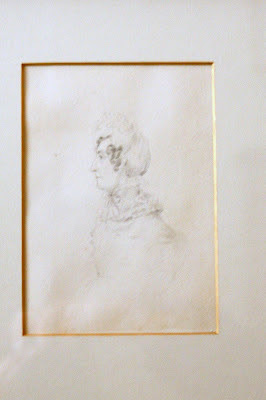
                                                                                      Eliza Chute 
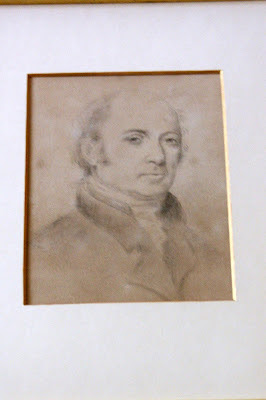


                                                                                  John Chute 

Caroline explains how Hester's great-aunt had been governess to the Chute family and Mrs Chute had acknowledged "a strong claim of charity towards the family". "They were in very humble life, as Hester never sought to conceal. They must have at one time kept a shop, for she told me of a recollection of standing on her grandmother's counter." 

And now to the scandalous part, as Caroline recollects: "Hester's mother was singularly beautiful; and unhappily a Captain Wheeler, stationed in the town, fell in some sort of love with her, and married her. He also deserted her, a few months afterwards, before Hester's birth, and never reappeared. In time it came to be rumoured that he was a married man when he first made her acquintance, and even that Wheeler was not his real name - but nobody ever knew. How much his young wife had loved him, and how much she grieved for him, as I never heard I will not pretend to say; but she was left in sad straits and difficulties, and had to seek maintenance for herself and her child, and leaving the little girl with her relations, she entered the family of Mr Beach as governess to his daughter. The position was different then from what it is now; for she acted as lady's maid to my Aunt Mrs Fowle... her health soon failed, and she fell into a decline." 

Caroline then recounts how Hester's mother (and Hester) had been looked after by the Chutes at The Vyne until she died, and had then taken Hester in to live with them. Hester had been home educated and grew up to become quite a rebellious teenager, and eventually became a governess like her mother and died young of the same disease as her mother had.  

The story of Hester echoes that of Colonel Brandon and his foster child by Eliza. Hester's story may well have inspired Jane Austen when writing about Eliza, but Captain Wheeler's promiscuous character also reminds me of Willoughby and Wickham. Jane Austen certainly drew inspiration from the local gossip and stories whispered by her friends and neighbours, and wrote about things actually happening around her. 

References and further reading: 

Reminiscences of Caroline Austen. (1986) The Jane Austen Society. 

Jane Austen’s Letters Collected and edited by Deirdre Le Faye (Third Edition). Oxford University Press (1997).

Tomalin, C. Jane Austen - A Life. Viking (1997). 

My visit to the Vyne: https://austenised.blogspot.com/2016/08/visiting-chutes-at-vyne.html

Tony Grant's visit to the Vyne (Jane Austen's World): https://janeaustensworld.com/tag/chute-family/


Sunday, August 21, 2022

Following "Miss Austen's" Footsteps Through Historic Kintbury

I recently read Gill Hornby's moving book, "Miss Austen", which focuses on the close relationship between Jane Austen and her elder sister, Cassandra. The Austens were family friends with Reverend Fowle's family, and Cassandra was engaged to be married to their son, Tom, who had been George Austen's pupil at home in Steventon. We know that, after tragically losing Tom to yellow fever, Cassandra continued to stay in touch with the Fowle family, and in this fictional story she visits Tom's sister Isabella in Kintbury at old age in 1840. The story centres around Cassandra's plans to destroy a large collection of Jane's letters in order to protect her legacy - which is generally thought to have happened, but we do not know the real reason for this - and Hornby explores the possible motives that Cassandra might have had at the time. 


Hornby became fascinated with Cassandra's story when she moved into the old vicarage in Kintbury and was told that the house had a Jane Austen connection. The vicarage was where the Fowles lived, and the Austens are said to have visited them on the way to Bath or Cheltenham. 

I came across a heritage walking tour of Kintbury online and was intrigued to explore the milieu familiar to Jane and Cassandra. I drove to Berkshire on a hot August's day and I enjoyed the 3-mile-long walk across the fields and past interesting old properties that the Austens would have seen on their walks. 

                                                                    St Mary's Church 

The walk started from the medieval St Mary's Church, which originates from the 12th Century. 

It would have been interesting to find some tombstones of the Fowle family members, but I decided not to spend time browsing through the dozens of moss-covered stones as I had a long walk ahead.   

                                                                            The Old Vicarage

I then walked on and found the Old Vicarage that had been home to the Fowles. The vicarage was in a beautiful, peaceful leafy setting right by the canal of the river Kennet. 

In an interview (linked below), Hornby says that the original house had been pulled down and the current house was built in 1860, but the cellar and the garden have remained as they were at the time of Jane Austen.


The bridge right next to the property that takes you across is known as the Kintbury Vicarage footbridge and was built in 1810.  


You can get a glimpse of the vicarage from across the canal.  

The garden looks large and beautifully landscaped, and we can just imagine the Austen sisters having a pleasant walk around with the Fowles, taking in the lovely landscape - the lush greenery and glittering water on the canal and ducks swimming past. 


The walk then took me a long way down the canal, past the Kintbury Lock and and some Roman sites as well. 

                                                        Can you spot the horse ahead?

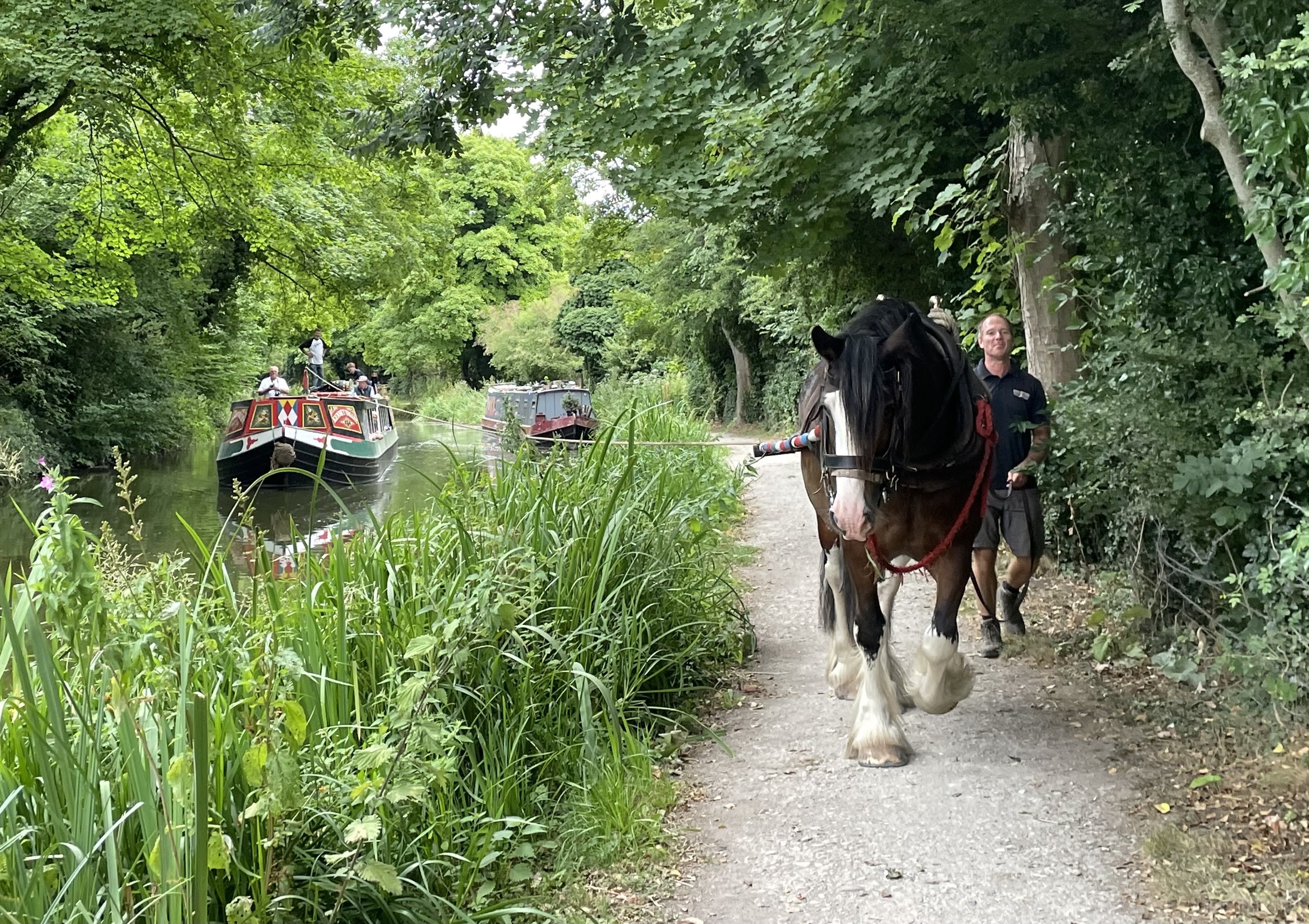
To my surprise, I came across a large canal boat carrying dozens of tourists, being pulled by a shire horse - an old but painfully slow way to get around. 


I asked "Drummer's" handler whether the horse would feel tired lugging such a heavy load, and he replied, "no! It's just like when you go through the water", whatever that means!


I then walked across the ancient fields, still marked by medieval field boundaries, admiring the rolling hills and golden harvest ready to be reaped. 

I reflected on how generations of farmers would have ploughed on these fields and built houses around this historic village. 

I then walked through the village streets and came across some quaint cottages. 

                                                            White Lodge (on the right). 

White Lodge is a 17th century timber house that had been divided into two cottages. 

                                                                            Kennet House 

Kennet House would also have been familiar to the Fowles, having been built in the 18th Century. 

I walked back to the church and finished my tour there. I thoroughly enjoyed my walk through this quintessential country village so steeped in history. 


References: 

Interview with Gill Hornby: https://www.cambridgeindependent.co.uk/whats-on/gill-hornby-interview-the-literary-mystery-that-sparked-a-novel-idea-9104810/

Heritage walking tour of Kintbury: https://www.westberkshireheritage.org/wp-content/uploads/2016/07/Kintbury-Heritage-Walk-V2.pdf


Thursday, July 21, 2022

Persuasion 2022 - Jane Austen for the Instagram Generation


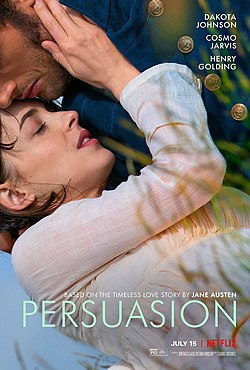
I thought I should jump in the bandwagon and mention my thoughts on the new Persuasion film on Netflix, starring Dakota Johnson as Anne Elliott. Having seen some screenshots, I didn't have high hopes for the film, but I decided to watch it through with an open mind and find both positives and negatives about the film. I always seem to revert back to the 1990s adaptations on Austen novels, preferring a more traditional true-to-the-book approach and struggled with the positive list to be honest, but I have made an effort! 

Here is a list of my 10 positive and 10 negative thoughts about the film: 

Pros:

1) The cinematography is beautiful - the vivid colours, lighting, angles and handheld camera shots which make some scenes seem realistic. 

2) The landscapes are lovely, especially the dramatic seaside shots in Lyme regis that remind me of Sanditon. 

3) There are several nature scenes with quaint countryside shots, which I enjoyed. 

4)  The sets are gorgeous, with a lovely range of colourful decor and stunning wallpapers and furnishings. 

5) Most of the costumes are wonderful and several look authentic - with the exception of Anne Elliott's strange wardrobe and the lack of bonnets. 

6) I enjoyed the lively scenes where Anne plays with her little nephews and nieces. I imagine Jane Austen herself would have messed around like this with children! 

7) The plot follows Jane Austen's Persuasion quite closely (although some significant scenes and characters have been omitted/changed as below). 

8) Most of the acting is decent, and I particularly enjoyed the grumpy Mary Musgrove (Mia McKenna) and the charming William Elliott (Henry Golding). (I was disappointed with Richard E Grant's Sir Walter, however, as I was looking forward to an amazing performance by him). 

9) The film is entertaining and easy for a Jane Austen novice to follow. 

10)  Persuasion 2022 introduces Jane Austen to younger generations in a fun way so that youngsters can relate to the characters - think Instagram, TikTok, Fleabag. 

The cons (which do not end here): 

1) The overall feel of Persuasion changes here - the original feel of the book is somewhat sad, autumnal, reflecting on lost opportunities. 

2) In the book, Anne is described as past her bloom, plain and melancholy and only brightens up later in the book as she begins to realise that Captain Wentworth loves her after all. Dakota Johnson's Anne, on the other hand, is gorgeous, confident, fun-loving, sarcastic and an upbeat character - even ridiculous in places, as opposed to the sensible, mature Anne of the book. 

3) The film is oblivious of formal Regency manners and etiquette, which the upper class characters would certainly have abided by. 

4) The dialogue is not taken from the original and I miss Jane Austen's beautiful language and classic quotations in this - the language here is far too modern, with phrases such as 'in-laws', 'narcissist', 'electrifying', 'playlist', 'cappuccino', 'fart around' and 'out of my league' casually thrown in. The accents don't sound right either... 

5) Anne's strange costumes, modern makeup and hair are so out of place and distract from the rest of the characters, who are much more appropriately dressed. 

6) I did not enjoy the monologues, which I only tend to appreciate in Lovejoy - but each to their own in this case. 

7) Captain Wentworth lacks charisma. He is supposed to be the head of a ship and of dozens, perhaps hundreds, of sailors, and would have to have had a strong presence to get to that position. Cosmo Jarvis' Wentworth looks dreamy and lethargic, as opposed to Ciaran Hinds' perfect rendition of the confident, charismatic captain who Anne looks up to. 

8) Period lifestyle details have been overlooked, such as in the swimming scene. Ladies of the gentry would access the water through a swimming machine to protect their modesty, as seen in Sanditon. 

9) Don't get me started on the rabbits, octopuses, 'wild wees' and Anne's drunkenness in this film!

10) Last, but not least, the plot moves too fast and a scene has been added in the middle of the film where Wentworth and Anne discuss their true feelings on the beach. Highly disappointing, as the story ought to be a slow burn, culminating in the intense letter scene at the end of the novel. 

In conclusion, if you watch Persuasion 2022 with the same mindset that you would have while watching Bridgerton, looking for easy entertainment, you might just enjoy it. The film certainly has its cringeworthy moments, but it is a quirky, modern take on a classic for the Instagram generation. 

Wednesday, June 22, 2022

Kirsten and Jörg in Jane Austen’s World


During Regency Week, I happened to meet Kirsten and Jörg, whose You Tube channel I really enjoy watching. Like myself, Kirsten and Jörg are true Anglophiles, and the couple feature travel around Britain in their beautiful cinematographic videos and visit various interesting and beautiful places, exploring historic houses, gardens, antiques and other things quintessentially British. I loved their beautiful footage of Alton and Chawton and especially the Regency picnic that I participated in too, you might just be able to spot yours truly in the video! 😉


Monday, June 20, 2022

Regency Week Has Kicked Off in Alton

This week, the Regency Week in Alton is in full swing after a long break of three years. It's been delightful to be able to attend events like this and meet likeminded people here in Hampshire, not far from my home. 

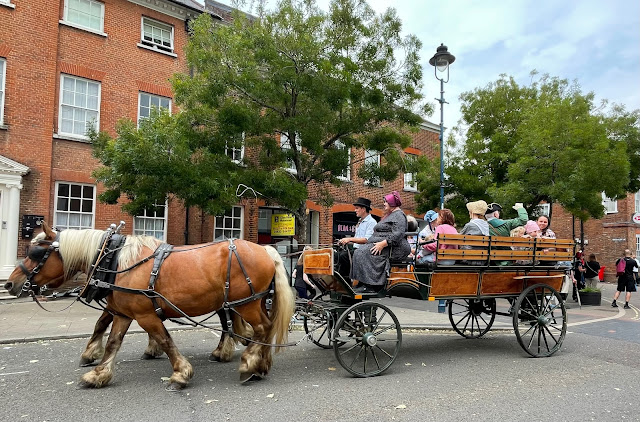
On Saturday, I attended the Regency market in Alton, browsed the various stalls and enjoyed the lively atmosphere and catching up with other Austenites there. 


                                    The best way to get into Regency mood! 


Local militia - I think Lydia Bennet would approve.


Freddie aka Captain Wentworth looking dashing in his uniform. Freddie (who belongs to Jenny Colquhoun) is a familiar furry face from the Bath festival parade. 


                                Sophie (Laughing with Lizzie) and Abigail Rose

Velocipedes were fun to see, although strictly speaking, they aren't Regency, as they hadn't been invented until the 1860s. 


I always feel proud walking past Miss Jane Austen (disputably) near Henry Austen's bank building in Alton.  

On Sunday, I visited Jane Austen's House, had a look at the new exhibition and attended a fascinating talk on Martha Lloyd's Household Book by director Lizzie Dunford (in lieu of food historian Julienne Gehrer). I then joined the Jane Austen Literacy Foundation Parade for Literacy to Chawton House, lead by Caroline Knight, a great-niece of Jane Austen's, who grew up in Chawton House and now runs the foundation. It was lovely to see so many familiar faces back in Chawton and some new as well. 


Caroline lead us to the barn at Chawton House for a picnic in aid of the foundation, in support of literacy projects for the children of Ukraine. 


Despite predicted rain, we had fine weather and enjoyed the picnic outside, catching up on the last three years and hearing readings. The finalists of the foundation's writing competition were also announced, and the winning story was read by Susannah Harker (Jane Bennet - Pride and Prejudice 1995) who performed at the previous picnic as well. 


                                                        Susannah Harker 


                                The lovely Kirsten from "Kirsten and Joerg"


Geoffrey Hall and Julia Grantham (author of Mr Darcy's Guide to Pemberley) with attendees from Tennessee, USA. 

What a memorable weekend!


Monday, March 14, 2022

The Abbey That Sparked Young Jane Austen's Imagination

Having read Jane Austen's Northanger Abbey, we learn about young girls' fascination with the gothic and "horrid" novels in particular. Northanger Abbey parodies the gothic romances that were popular in the 1790s, such as The Mysteries of Udolpho by Ann Radcliffe. These novels are often set in remote, crumbling castles or abbeys, and in Northanger Jane Austen certainly plays around with the idea of a gloomy, romantic medieval abbey as a setting. 

But were you aware that Jane herself lived next to the ruin of a notable medieval abbey? In my previous post, I discussed Jane Austen's experience of boarding school in Reading. When Jane Austen was 10 years old, she followed her older sister Cassandra to boarding school in Reading, "The Abbey School", which was attached to the Reading Abbey ruins. 

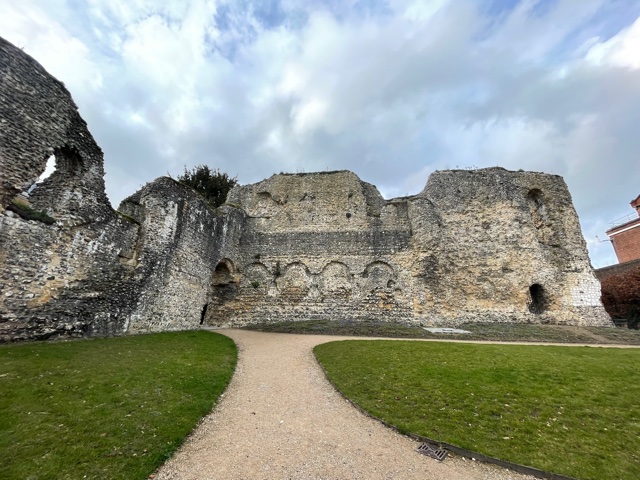
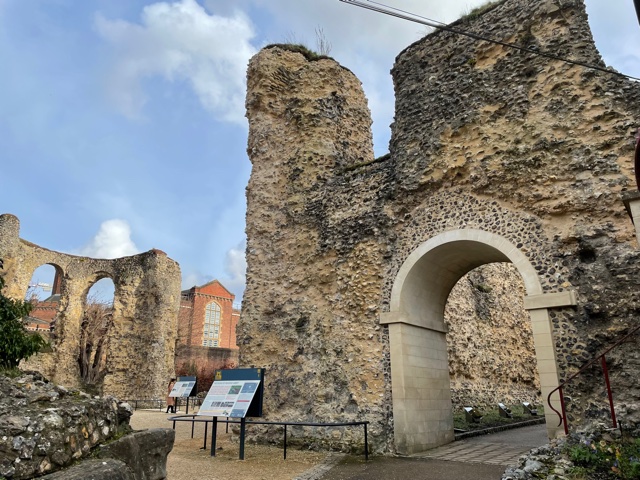
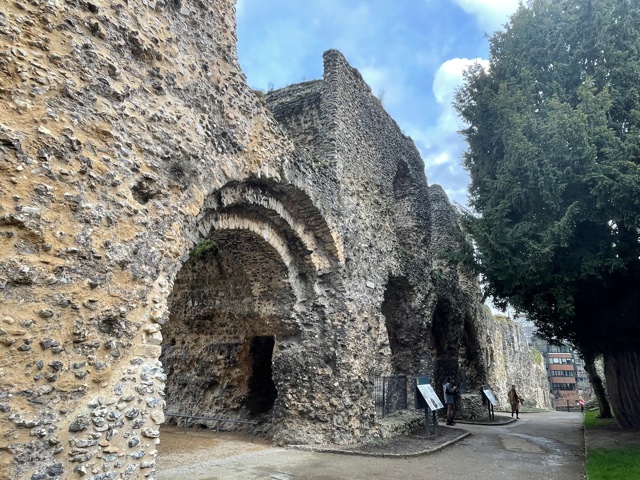
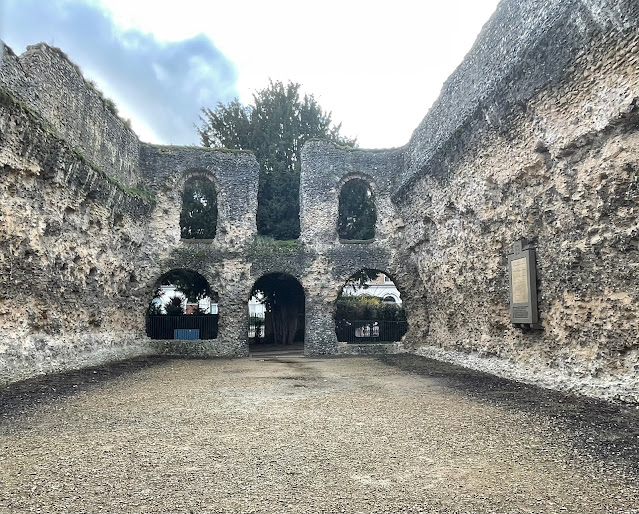
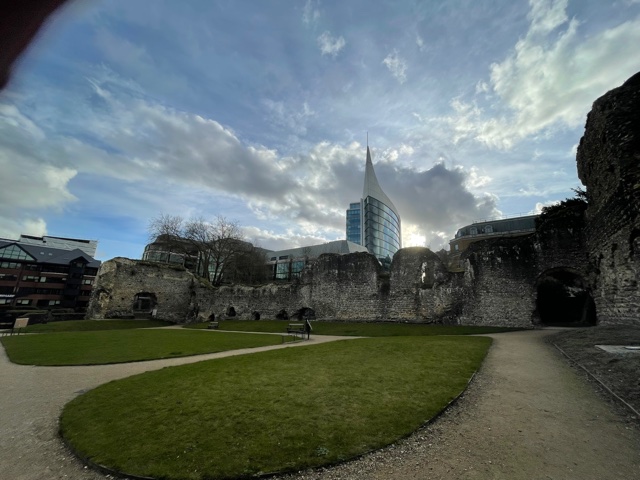
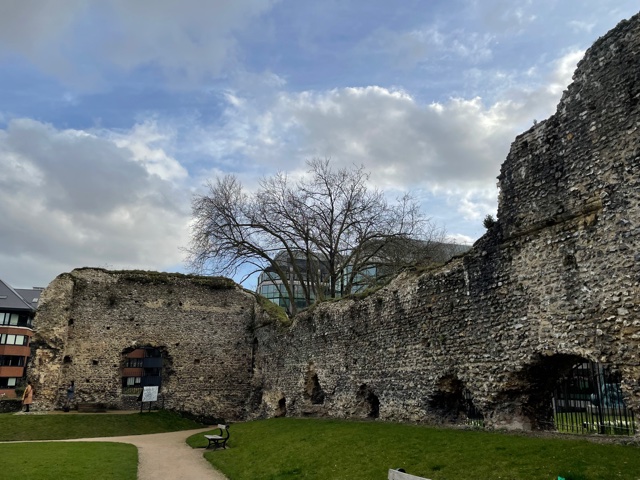
Reading Abbey ruins. 

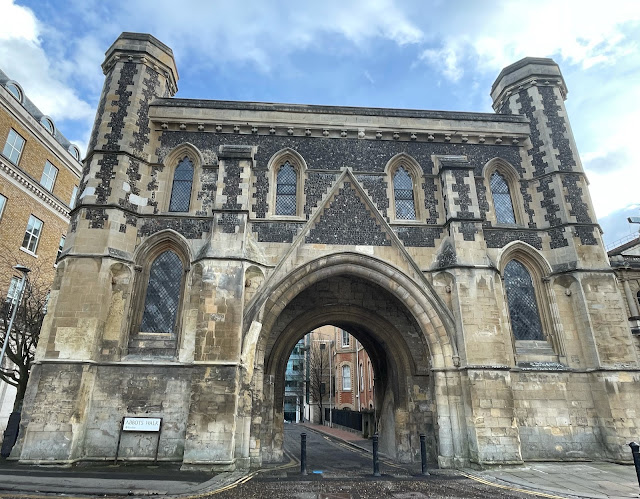
The girls stayed at the school for just 18 months, and the school was known to focus more on the learning of feminine accomplishments rather than classical learning. The girls lived and studied in what is now the Abbey Gateway and a more modern building attached to it (no longer there), but they certainly had plenty of free time to play in the afternoons, and the sizeable abbey ruins will have been their playground. 

The Abbey Gateway

A few years ago, I had the chance to visit the Abbey Gateway for a special event and see the building where Jane lived and studied. But it wasn't until today that I actually visited the Reading Abbey ruins, as the site has not been open to visitors for a very long time. It was fascinating to see the place that must have inspired young Jane's vivid imagination!   

The entrance into the abbey. 


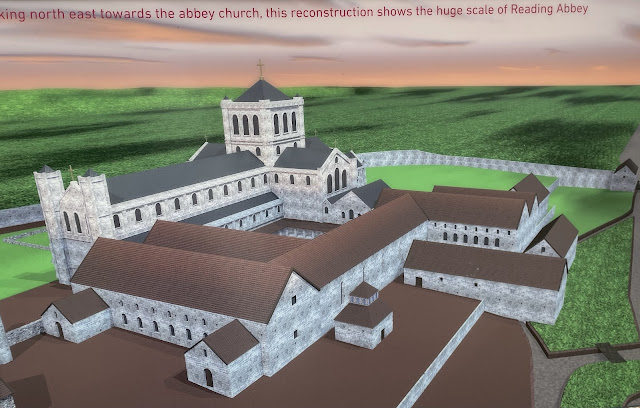
Reading Abbey was built in the 1100s by King Henry 1st and took several centuries to build. It was a religious community centred around a magnificent church - the fourth largest in Britain! - and one of the largest monasteries in Europe. Monks lived and practised a religious life in the Abbey for 400 years, but the buildings were later destroyed in wars and to make way for private buildings. Jane Austen is the most famous alumnus of the Abbey Girls School. 


Reading Abbey ruins nestled amongst the modern buildings.

The area is large and this image shows just how majestic the monastery had originally been. 


What a perfect setting to inspire a young writer's imagination!

Saturday, October 30, 2021

What did Jane Austen and Fanny Burney have in common?

What inspired Jane Austen to write those famous first lines of Pride and Prejudice?

"It is a truth universally acknowledged, that a single man in possession of a good fortune, must be in want of a wife."

Perhaps this sentence echoes Jane Austen's contemporary, Fanny Burney's (1752-1840) Camilla, where she writes: "It is received wisdom among match-makers, that a young lady without fortune has a less and less chance of getting off upon every public appearance". 

Jane Austen took several influences from authors that she admired, such as Maria Edgeworth, Samuel Johnson and Jane West. Did you know that, during Jane Austen's lifetime, there were plenty of proliferous female authors around? While Jane Austen herself wasn't famous for her works and only became slightly better known as an authoress towards the end of her life, Fanny Burney (also known as Frances D'Arblay) was a well-known and celebrated Georgian author and much admired by young Jane Austen herself. Fanny Burney only became overshadowed by Jane Austen much, much later during the Victorian era. 

In fact, in Fanny Burney's novel Cecilia (1782), the term, Pride and Prejudice, is mentioned three times, in block capitals. One example reads:  The whole of this unfortunate business,” said Dr Lyster, “has been the result of PRIDE and PREJUDICE.” The powerful alliteration must have stuck firmly to young Jane's mind. 

I have written a more detailed analysis of Fanny Burney's most famous book, Evelina. I believe that Jane Austen's creation of Mr Darcy is influenced by Burney's male hero, Lord Osbourne, Evelina's broody and moody love interest in the novel. They meet at an assembly and get on very badly to begin with but are eventually united. There are many more similaries in Camilla as well. 


I recently read Claire Harman's biography of Fanny Burney, and it was fascinating to learn more about the author who was one of the most popular authors of her generation and who had a very eventful life. Based on my reading, I thought I might compare the two authors and their similarities and differences. 

Similarities between Jane Austen and Fanny Burney: 

-Both authors grew up in the Georgian era, although Fanny Burney was 23 years older than Jane Austen, having been born in 1752.

-Both wrote about young female protagonists. Burney's titles include 'Evelina', 'Cecilia' and 'Camilla', while Austen had 'Elinor and Marianne' (early title of Sense and Sensibility), 'Susan' (early title of Northanger Abbey), 'Catharine' (an early fragment) and 'Emma'.

-Austen's Northanger Abbey follows a similar pattern of a coming-of-age novel to Burney's Evelina. Like Evelina, Catherine Morland is a simple, naive character entering the world and "society", makes mistakes and learns as she matures in the novel.  

-Both authors have adopted a highly stylised, complex style of writing and write about manners and morals. Both use clever, often comical dialogue to portray characters and their voices.

-Both authors lived in Bath at around the same time, but it is not known if they met. 

Differences between Jane Austen and Fanny Burney: 

-Unlike Jane Austen, who lived a relatively quiet life as the daughter of a country clergyman, unknown to the public, Fanny Burney was born into a cultured family of authors. Her father, Charles Burney, was a music historian, composer and musician. Burney grew up in London, in the middle of fine society, mingling in theatrical and literary circles, and was always well known and recognised throughout her lifetime. 

-Although Jane Austen was invited to Carlton House to meet the Prince Regent's librarian, she never met members of the royal family. Austen was famously sceptical of the Prince Regent, sympathising with his long-suffering wife, Princess Caroline. She wrote, "Poor woman, I shall support her as long as I can, because she is a Woman and because I hate her Husband." Fanny Burney, on the other hand, was a firm monarchist and had, a few decades earlier, been appointed Mistress of the Robes to Queen Charlotte (The Prince Regent's mother). Burney suffered greatly during her five year stint in the palace, but continued to support the queen after leaving her royal duties. Burney also mingled with the French royal family while she lived in Paris. 

-Although Jane Austen was well travelled in the south of England, she never ventured abroad. Burney, on the other hand, married a French exile, General D'Arblay, and they lived across both countries and had a bilingual family. The couple were stranded in France for over a decade due to the war between England and France in the early 1800s. 

-While Jane Austen sets most of her scenes inside people's houses, Fanny Burney's books are mostly set in London and often outdoors - at the theatre or in a pleasure garden and so on - reflecting the sociable life that Burney led. 

Monday, September 13, 2021

Beaus and Bonnets Back in Bath

Yesterday, I was excited to attend the Jane Austen Festival in Bath after a long break of 2 years. I wasn't sure how grand the festivities would be this time around and, unsurprisingly, the number of visitors was somewhat reduced this year, but you wouldn't notice it, as it felt as festive as always (with some precautions of course). 

As usual, I attended the day of the Promenade, which is my favourite event in the festival. It's always an exciting moment to enter Bath and spot many others in beautiful Regency attire walk down the ever-so-elegant streets of Bath. 


The promenade started off with a gathering at Holburne Museum (in Sydney Gardens opposite a house where Jane Austen used to live!), with dancing from a group of young dancers and music by a military band. Then, the town crier solemnly announced the departure of the parade. 


This time, we promenaded the streets of Bath for an hour, chatting away in the glorious sunshine until we reached Parade Gardens where we dispersed to catch up with acquintances. 


After the promenade, I attended the Festival Fayre to browse some Regency clothes and accessories. I also attended a theatrical walk called "Austen Undone", a production by the Natural Theatre Company, which is a hilarious adventure into Regency Bath, including some ideas from Jane Austen's characters and her humour. 


A day well spent - I wish I could have stayed longer but look forward to next year's festival, fingers crossed!