Search this Blog

Showing posts with label Her Life. Show all posts

Thursday, August 14, 2025

Finding Highbury in Jane Austen's Surrey

Have you ever wondered if Jane Austen's fictional locations were inspired by real places? 

There are several places in Surrey that claim to have been inspirations for Highbury in Jane Austen's Emma, and I was recently inspired to visit some of these villages, having read my fellow blogger, Tony Grant's detailed blog post about this area. Janeite Deb also recently visited the area with Tony Grant and shared some detailed blog posts, making me more intrigued! 

Leatherhead

Leatherhead Museum

I started my tour from Leatherhead Museum, which currently has an exhibition for Jane Austen 250. There are some lovely exhibits on display, such as this incredible doll's house portraying Ford's, the draper's featured in Emma. 


Ford's Drapers. Picture Courtesy: Leatherhead Museum Curators Lucy Quinnell and Cathy Brett. 

The museum have collated evidence to prove that Emma was set in this area, and there are detailed quotes from Jane Austen's novels with references to the local area. It's really fascinating to read some of these snippets of local history. I will mention just a few of these, but I highly recommend that you visit this exciting exhibition museum to learn more.


Picture Courtesy: Leatherhead Museum Curators Lucy Quinnell and Cathy Brett. 

For example, Jane Austen describes Highbury as a "large and populous village, almost amounting to a town" (Chapter 1), which resembles the size of Leatherhead at the time. Interestingly, I learned that the names of two key estates in this area were called Highlands and Norbury! Moreover, there was a large timber-framed house here called Randalls on the east bank of River Mole, which was coincidentally owned by Jane Austen's distant relative, Sir John Coghill. If you remember, Randalls is also the name of the estate where Mr and Mrs Weston live in Emma.

Leatherhead

Names of local people are also mentioned in the exhibition, which might have given inspiration to Jane Austen when writing Emma; there was a wealthy girl called Emma Boulton, a local poet called James Woodhouse and  even a Mr Knightly living locally; many other names from Emma have been found in local parish records. 

However, the inn mentioned in Emma (Crown Inn) could point us to nearby Great Bookham, a village that lies in the centre of Surrey, 30km from London Bridge. There is a Crown Inn in the middle of the village. 

Crown Inn (left) in Great Bookham

In Chapter 26, Emma goes on a walk with Frank Churchill and Mrs Weston: "Their first pause was at the Crown Inn, an inconsiderable house, though the principle one of the sort, where a couple of pair of post-horses were kept... in passing it they gave the history of the large ball-room visibly added."

The Crown Inn at Bookham (currently under renovation), as seen from "Austen House". 

We know that Highbury is a populous village but small enough for every villager to know each other and considered "a particularly healthy spot". According to the 1801 and 1811 census, there were 120 people living in Bookham. Bookham also fits in with Jane Austen's description of its location, as it would takes about 7 miles to Box Hill by the old roads, the scene of the disastrous picnic in Emma.  

There is a further, stronger connection that Jane Austen has to Great Bookham. Jane's godfather, Rev Samuel Cooke, was vicar of St Nicolas Church in Great Bookham. In 1768, Samuel Cooke married Cassandra Leigh, a cousin of Jane's mother (who is also also named Cassandra, as is Jane's sister!). 

St Nicolas Church

Samuel Cooke is listed as one of Jane's godparents in the Austen family Bible on the day of her babtism on 5th April 1776: "Born 16th December 1775, received into the Church, 5th April 1776, Rev'd Mr Cooke, Rector of Bookham, Surrey, Mrs J Austen of Sevenoaks, Kent, Father's uncle's wife, Mrs Musgrave of Chinnor, Oxon." (Matts)

Jane first visited the Cookes in Great Bookham on 14th May 1799, staying until the 2nd June. Initially, Jane wasn't excited about the visit, perhaps due to the fact that the family were evangelicals and Jane didn't like the evangelicals at the time. Jane wrote to her sister, "I assure You that I dread the idea of going to Bookham as much as you can do" (Letter 17). However, she used her time here to learn more about the area to collect ideas for her next novel, The Watsons, which is set in nearby Dorking. Sadly, the book was left unfinished, but the fragment does contain several references to this area.  


Interestingly, Jane paid a second visit here in 1814 after she had begun to write Emma. Perhaps this time, she had a task in mind to gain more knowledge about this area so that she could use Bookham as the setting for Emma. 

I found St Nicolas Church right in the middle of the village. Jane would have worshipped in this church several times during her visits here. 

St Nicolas Church

The exterior of the church is similar to how it looked in Jane Austen's times, but the interior is somewhat changed, as there would have been wooden boxed pews here at the time. 


I found a memorial to Samuel Cooke on the left-hand side of the altar. 

There were also information booklets for sale and posters about Bookham's Jane Austen connection. I bought this helpful booklet published by the church council, which is a very interesting read with images and details about Bookham at the time of Jane Austen and other authors who resided in the area. 


From the booklet I learnt that the Cooke family had 11 children of which sadly only 3 survived to adulthood. Jane liked her second cousins and was close to Mary Cooke in particular. As mentioned, the Cookes had evangelical leanings, and Jane wasn't always kind to the clergy in her novels. The Cookes, however, appreciated Mansfield Park, as Jane writes in a letter from 1814: "Mr Cooke says "it is the most sensible book he ever read" - and the manner in which I treat the Clergy delights them very much" (letter 101). The Cookes interpreted the novel as "a protest against lax views on clerical duty" (Chapman in Matts et al), considering Edmund's strong sense of duty and moral standards in the novel.  

What is fascinating to learn is that Cassandra Cooke was also an authoress and published a historical novel called "Battleridge" in 1799. Once more, we can see once more how literary Jane's extended family was and how she would have been inspired by several of her family members on her way to becoming a writer herself. 

The Cookes first lived in Gothic House opposite the church. 

Gothic House was the earlier rectory and home of Rev Cooke's family. 

Later, the family moved to a newly built rectory set back from the road, which was later known as "The Old Rectory", but has since been demolished. 


The site of the new rectory is on the right where the parade of shops is. 
 
Another famous resident of Great Bookham is Fanny Burney (later Fanny D'Arblay) who lived right across the road from St Nicolas Church in a house called Fairfield Cottage, now called "The Hermitage". 

"The Hermitage", the home of Fanny Burney. 

Fanny Burney was one of Jane's favourite authors and a huge influence on her writing. Jane particularly liked her novels Evelina, Cecilia and Camilla, using these as an inspiration for her own work, such as the opening line in Pride and Prejudice and the characterisation of Mr Darcy. It would be interesting to know whether Jane ever met Fanny Burney, as it is likely that they did come into contact in such close proximity, given that the Cooke family knew her well. 

Mickleham

Fanny Burney moved to Bookham after getting married to French emigré, General D'Arblay, in another village called Mickleham in 1793. 

Mickleham Church where the D'Arblays got married. 

Inside Mickleham Church 


Evidently, the D'Arblays were happily married! 

When the D'Arblays moved to Bookham, Fanny had already published Evelina and Cecilia. After making more money from the publishing of Camilla in 1802, the D'Arblays could build a new house in West Humble, a tiny village at the foot hill of Box Hill. The house was designed by D'Arblay himself. The new house built on the site of the original house is now called Camilla Lacey, but it is not visible to the road and I was unable to stop to take photos, as the road was very narrow. I did spot a road sign saying "Burney Road", named after the most famous resident in the village. 

The area's literary connections don't end here. Another French emigré, Germaine De Stael, whose writing Jane also admired (but who did not admire Jane, calling her novels "vulgaire"!) briefly stayed down the road at Juniper Hall. Juniper Hall is where the French emigréwere first settled when they sought refuge in England, and this is also where Fanny Burney first met D'Arblay. I understand that the building is now a school. Germaine De Stael was friendly with Fanny Burney at the time and visited her in West Humble (although they later parted ways). The playwright R.B. Sheridan also lived at the large local estate, Polesden Lacey, now known as a popular National Trust property with wonderful views across the hilly countryside.

Juniper Hall

As we have learnt, Jane Austen was surrounded by literary genius all around her, and it is now wonder that she ended up a writer herself. Although her stories are fictitious and there may not be a specific village that was intended to be Highbury, given the plethora of local references there's no doubt that this area was a huge inspiration for Jane Austen when creating the imaginary setting of Highbury in Emma.


References and further reading:

Le Faye, Deirdre. (2011) Jane Austen's Letters. Fourth Edition. OUP.

Matts, Fenner, Renn & Whitman. 1800 - Great Bookham at the Time of Jane Austen, Fanny Burney and R. B. Sheridan. The Parochial Church Council of St Nicholas Great Bookham. 


My visit to Box Hill: https://austenised.blogspot.com/2016/05/they-had-very-fine-day-for-box-hill.html

Tony Grant's tour of the area: Jane Austen's Surrey: The Novels as Inspiration by Tony Grant (Jane Austen's World)

Janeite Deb's visit to the area: Adventures with Jane! Jasna Tour Day II - off to Kent (Jane Austen in Vermont)

Brenda Cox's Visit to St Nicolas: Visiting Great Bookham: The Church of St Nicolas (Jane Austen's World)

My blog posts about Fanny Burney: 

What did Jane Austen and Fanny Burney have in common? 

Jane Austen A-shopping with Burney's Evelina

Picture Courtesy: Leatherhead Museum Curators Lucy Quinnell and Cathy Brett. 

Tuesday, July 15, 2025

"Scrambling...into a little education without without any danger of coming back prodigies" - Exploring Jane Austen's Classroom in Reading

In a previous post, I discussed boys' boarding school life at the time of Jane Austen. Have you ever wondered what life was like for school girls in Georgian times? In this post, I will tell you more about girls' boarding school life, having re-visited Jane Austen's school in Reading. 

You may already have read my previous blog about Jane Austen's schooling here at Reading and my previous visit to the Abbey Gateway and Reading AbbeyThis year, marking 250 years since the birth of Jane Austen, many towns in the UK have been celebrating her life, and Reading is no exception. Reading Museum has hosted a series of talks about Jane Austen this spring/summer, and I recently attended a talk about her education by Jane Austen Society member, Joy Pibworth, at the Reading Abbey Gateway where Jane briefly went to school.


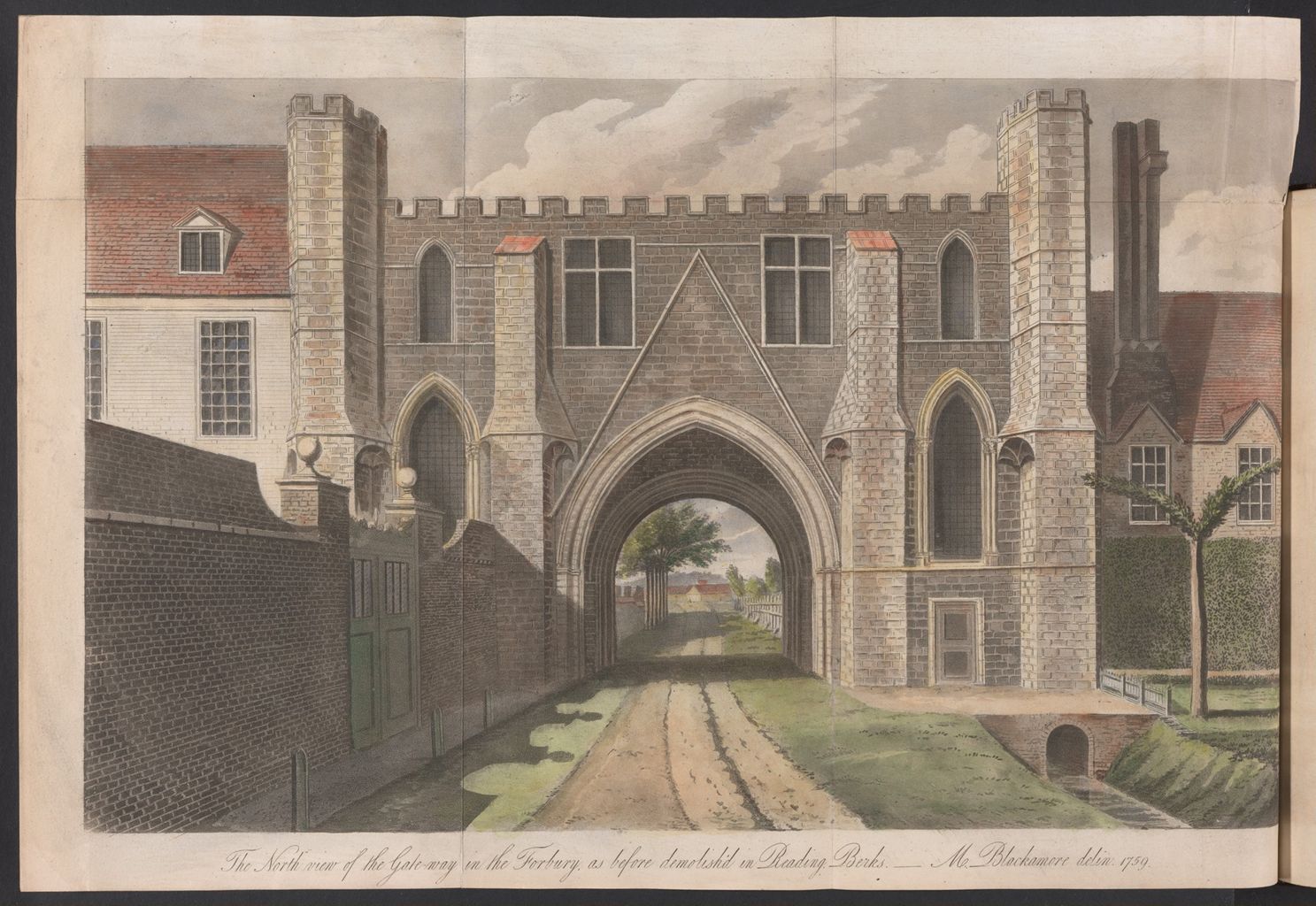
The Abbey Gateway at the time of Jane Austen taken from the North side. Image: The Yale Centre for British Art.


The Abbey gateway now.


It was very interesting to have a closer look at what Jane's classroom may have looked like and to hear what Joy Pibworth had to say about Jane's "Scrambling Into a Little Education". We learnt that Jane went to boarding school three times. She first went to school at the age of seven in Oxford in 1783. Jane, Cassandra and their cousin, Jane Cooper, only stayed there for six months until their school mistress, Mrs Cawley, moved her school to Southampton due to a measles outbreak in Oxford. However, this experience was short-lived, as soldiers brought with them an outbreak of typhus, and all the three girls caught the illness and were rescued and brought home by Mrs Cooper (who, sadly, later died of the illness). 

After some time, the Austens started looking for a new boarding school for the girls. Joy Pibworth explained that it was Jane Cooper's father, Rev. Cooper, who was then Vicar of Sonning, who managed to find a new school for the girls in 1785 when Jane was ten years old. Mrs Latournelle's Reading Ladies' Boarding School was advertised in the Reading Mercury newspaper, as was customary at the time. The Austens thought this a good idea, as Rev Cooper lived nearby, and Jane's aunt and uncle, the Leigh Perrots, lived in Wargrave and could help look after the girls. Jane stayed here from 1785 to 1786.


A plaque to commemorate Jane Austen was unveiled in an official ceremony here last month.

Mrs Latournelle wasn't actually French despite her fine name; her name was originally Sarah Hackit, but she used a French name to attract parlour boarders. According to Joy Pibworth, Mrs Latournelle was an eccentric personality who wore traditional clothes and had a "cork leg", i.e. a false leg acquired from Cork Street in London. Her school had a good reputation, and she didn't have to advertise her school much although she owned two (the other one being in Henley, not far from Reading). 

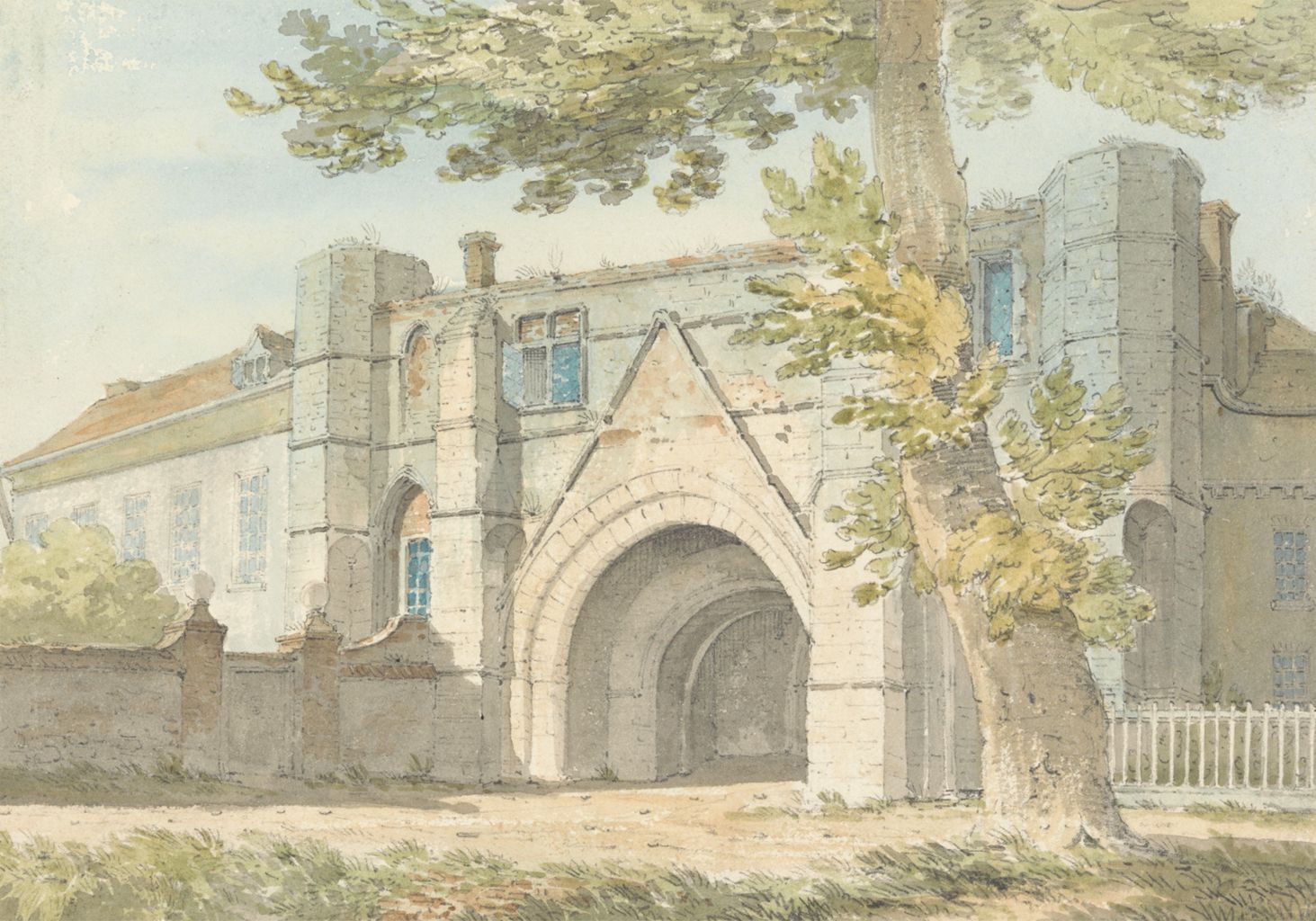
Image of the Abbey Gateway: The Yale Centre for British Art. 

The Abbey Gateway was an attractive gothic style building with gilt balustrades and many nooks and crannies. In true Georgian style, weeds were encouraged to grow through the bricks allowing for a more romantic look. 


Gothic style windows.

Jane's father paid 37 pounds 19 shillings (roughly the equivalent of 3400 pounds in today's money) per girl per half year. This amount included board, tuition, learning materials and having their clothes washed. 

The girls were grouped by knowledge rather than age, just like it was customary in the boys' school. The girls attended lessons in the Gateway, and their living quarters were in the building next door to the Gateway built in Queen Anne style (but no longer there). The girls shared bedrooms, and Joy Pibworth explained that there were 4-6 beds in each bedroom. There were 40 bedsteads in the school, giving us an idea of the number of parlour boarders at the school. 

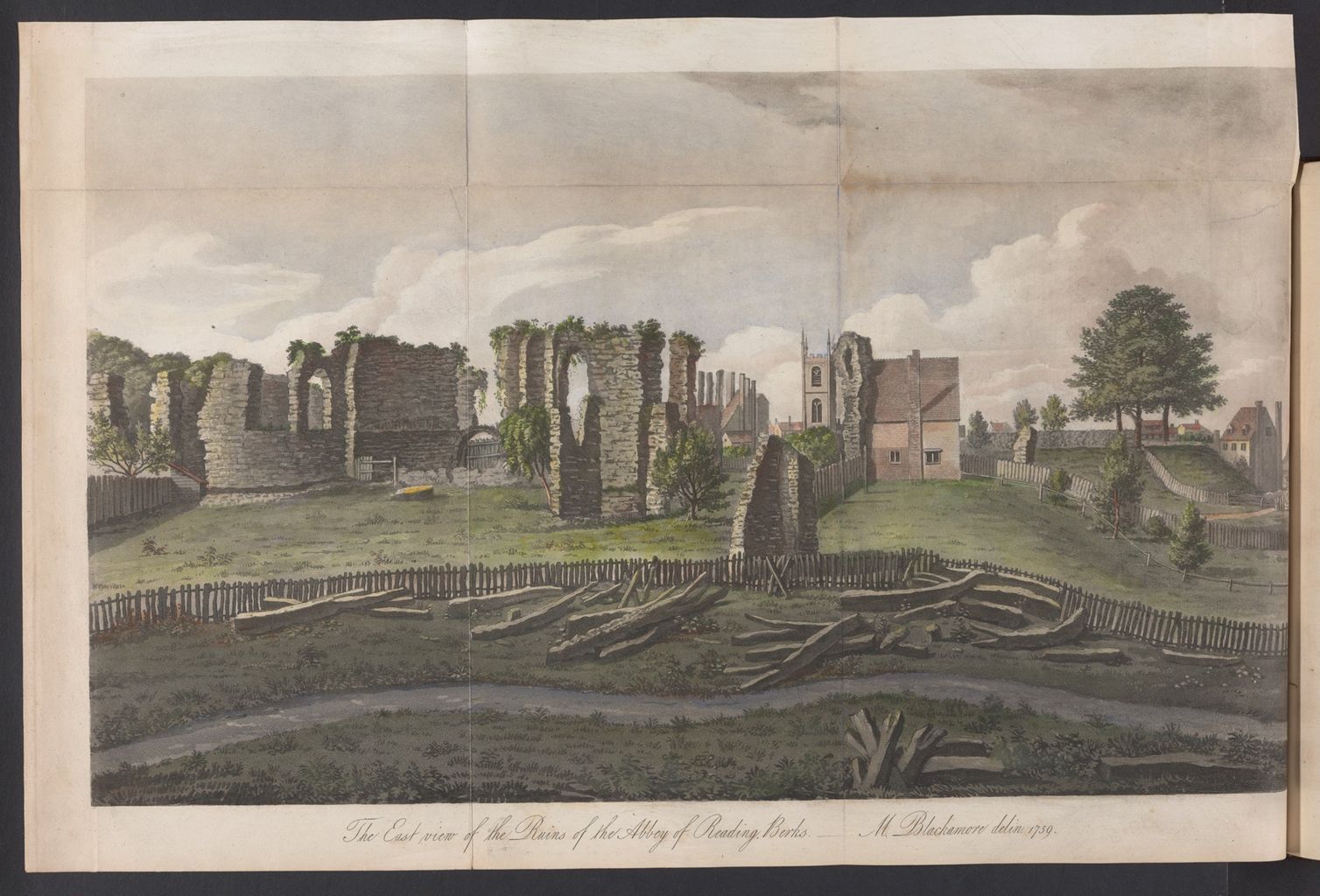
There was a beautiful, old-fashioned garden with tall trees where the girls could spend their evenings after lessons and an artificial embankment from where you could watch the ruins of the abbey. 

Abbey ruins now.

I believe that studying in a Gothic building and living in such close quarters to a medieval abbey had a profound influence on young Jane Austen and perhaps inspired her when writing Northanger Abbey later in life. 

As Reading Museum has started offering tours of the Reading Abbey Gateway to schoolchildren, the building has been done up to resemble a Victorian-style girls' boarding school classroom. 


In the mornings, after breakfast, the girls would have their lessons in the Gateway, learning sewing, reading and writing and perhaps some French.


The girls also learnt dancing, and Mrs Latournelle would invite guests so that the girls could practise their social skills. Dinner was between 4-5pm, and the girls would have some free time in the evenings. 

Downstairs in the Gateway. There is a small exhibition telling Jane's story here. 

Some girls would hang from windows to watch boys from the boys' school playing outside on the field where Forbury Gardens is now. There had been a boys' school next to the field since 1486. The school was situated in a former Reading Abbey Hospitium (guesthouse) where (in medieval times) visitors to the abbey could stay for two nights when visiting the abbey for services. At the time when Jane was here, the  school's headmaster was Richard Walpy who was a strict disciplinarian, and boys would often get caned. The boys at the school would learn Classics, Maths and Biblical studies, much like the boys at Winchester College. However, Jane was a little too young at this point to mess around with the boys! 

Reading School for the boys in the Hospitium of St John the Baptist. 

It is believed that Jane created Mrs Goddard's school in Emma based on her experience of Mrs Latournelle's school. Jane Austen describes Harriet Smith's school as 'A real old-fashioned Boarding School where a reasonable quantity of accomplishments were sold at a reasonable price and girls might be out of the way and scramble themselves into a little education without any danger of coming back prodigies'. This was Jane's way of saying that the girls learnt a little bit of this and that, but nothing much of value! 

After 18 months, Jane's time at Reading came to an end, and the girls were sent home to be educated there. Perhaps the schooling became too expensive and wasn't considered that important for the girls. Luckily, Jane had access to her father's excellent library and read widely, wrote stories from an early age and only had tuition for music and other special skills from home. Mrs Latournelle's school was later sold and became St Quentin's Grammar School. 

Many thanks to Jo Pibworth and Reading Museum for an informative afternoon and for the wonderful opportunity to visit Jane Austen's classroom. 

Further reading: 


My previous visits to the Reading Abbey Gateway: 


To read more about Jane Austen's Reading, click here: 

To read about Reading Abbey, click here: 


Friday, July 11, 2025

Steventon Country Fair - Celebrating 250 Years of Jane Austen at "The Cradle of her Genius"

Last Sunday, I was back in Steventon for Steventon Country Fair, a special event held to commemorate 250 years of Jane Austen. There hasn't been a country fair in Steventon for over 50 years, and usually the "Pump Field" where Jane's childhood home, Steventon Rectory, once stood, is closed to visitors and not clearly visible from the road. It was a unique occasion to celebrate Jane at her birthplace and explore the site of Steventon Rectory - the "cradle of her genius" - closer than ever. Therefore I have decided to feature the occasion here in my blog and return to the school topic a little later!


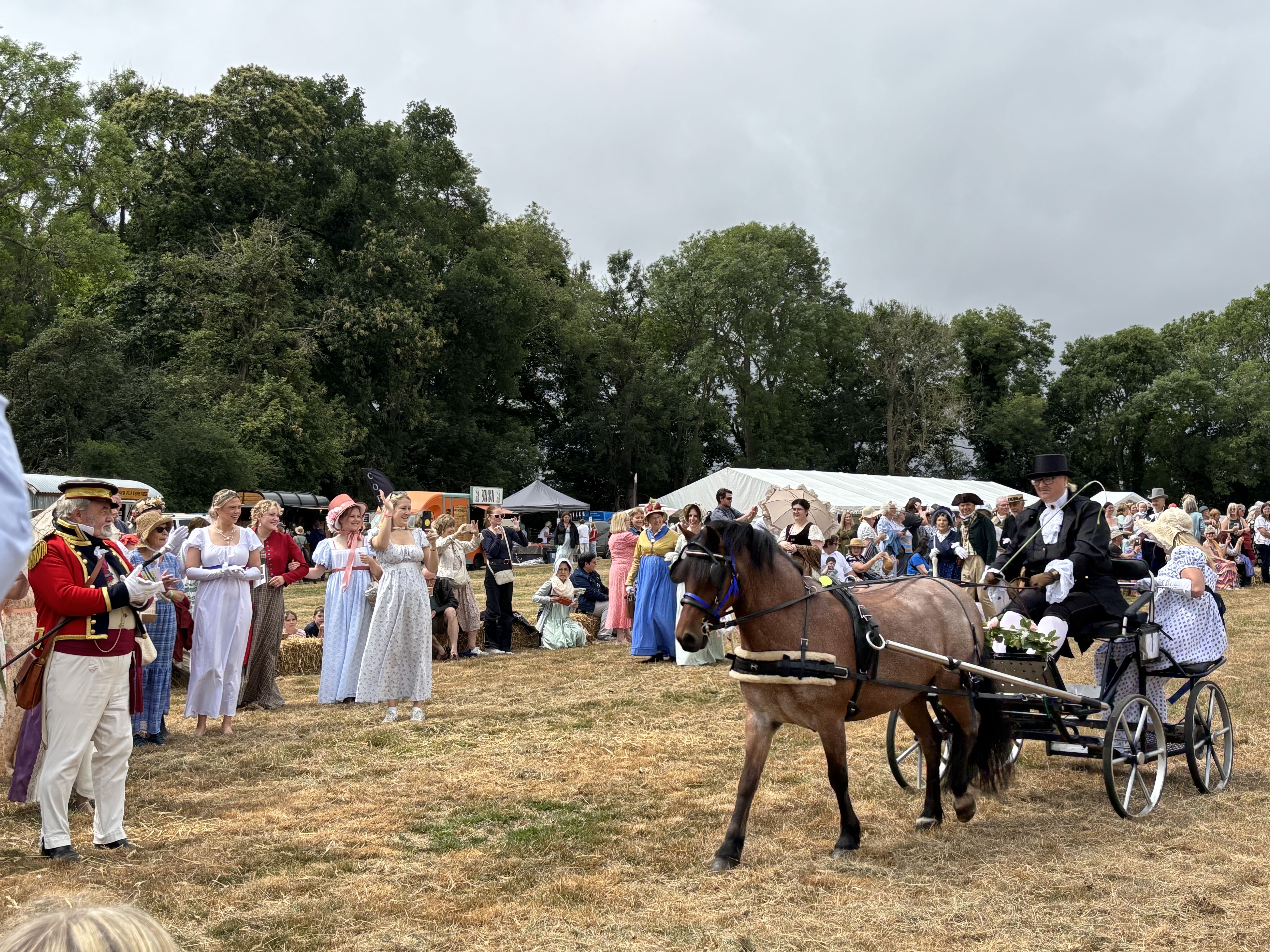
The hay on the field had been cut and the overgrown hedges cut neatly for the occasion. A horse and cart had been brought to the field for "the Arrival of Jane Austen" - one of the highlights of the event where everyone gathered on the field to watch "Jane" arrive.


After that, visitors paraded around the arena in their Regency finest.


There was elegant Regency dancing from the Hampshire Regency Dancers. 


Morris dancing with three different groups performing to traditional folk music helped bring the country fair atmosphere to life. 

Garston Gallopers 


Mayfly Morris 

The highlight of the event for many were the special guests: Historian Dr Lucy Worsley and Adrian Lukis - Mr Wickham from Pride and Prejudice 1995! 

Dr Lucy Worsley

I enjoyed listening to Lucy Worsley's amusing and entertaining stories about the various homes of Jane Austen that she narrated in her usual expressive, cheeky style! 

She also showed us a map of the site during Jane Austen's time and a floor plan of Steventon Rectory, both which were very interesting to see. 

Adrian Lukis (Mr Wickham)
And of course it was wonderful to see Mr Wickham in real life and hear his inside stories in a Q & A about filming Pride and Prejudice. For example, he was asked which character he would choose to play (if he was younger!), and he replied "Mr Collins"! 

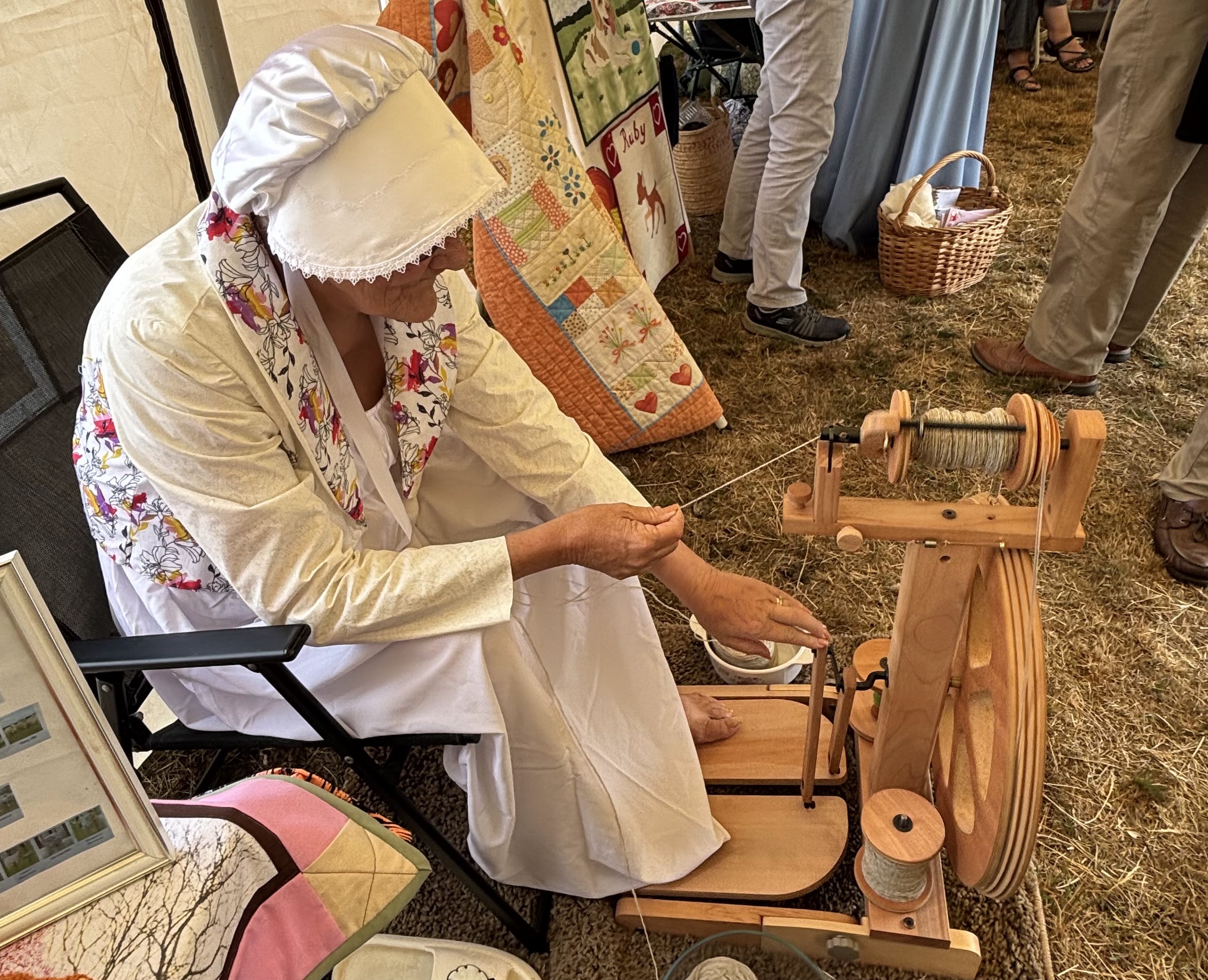
Spinning wool

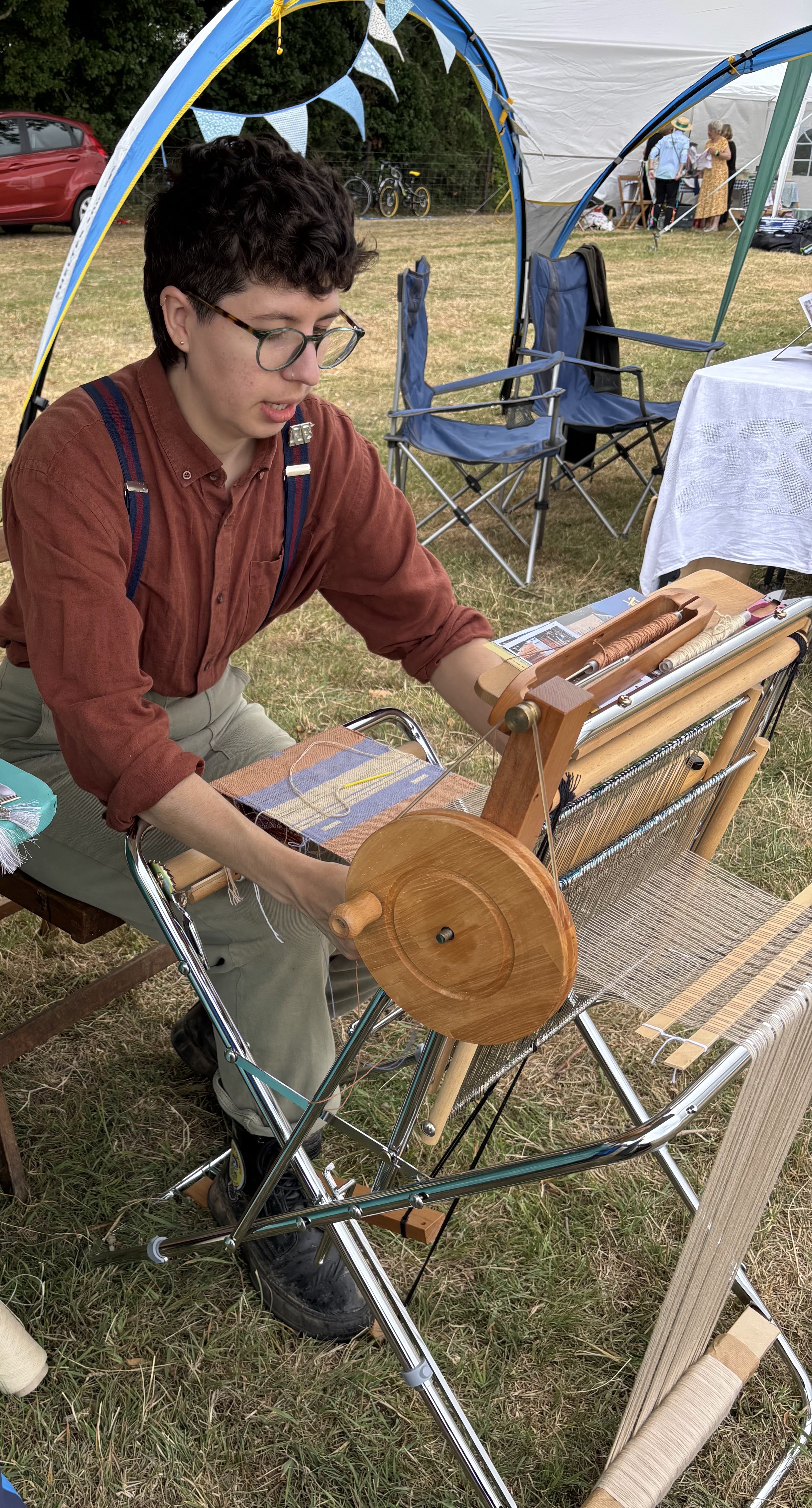
Traditional games, such as axe-throwing, were set up, and traditional craft demonstrations, such as weaving and lace-making gave visitors an idea of village life at the time of Jane Austen. 

Whitchurch Silk Mill team demonstrating weaving on a loom. 

Moreover, there was a number of stalls serving delicious food, some of it made by the villagers. There were also various stalls selling items, such as Regency accessories and books. 


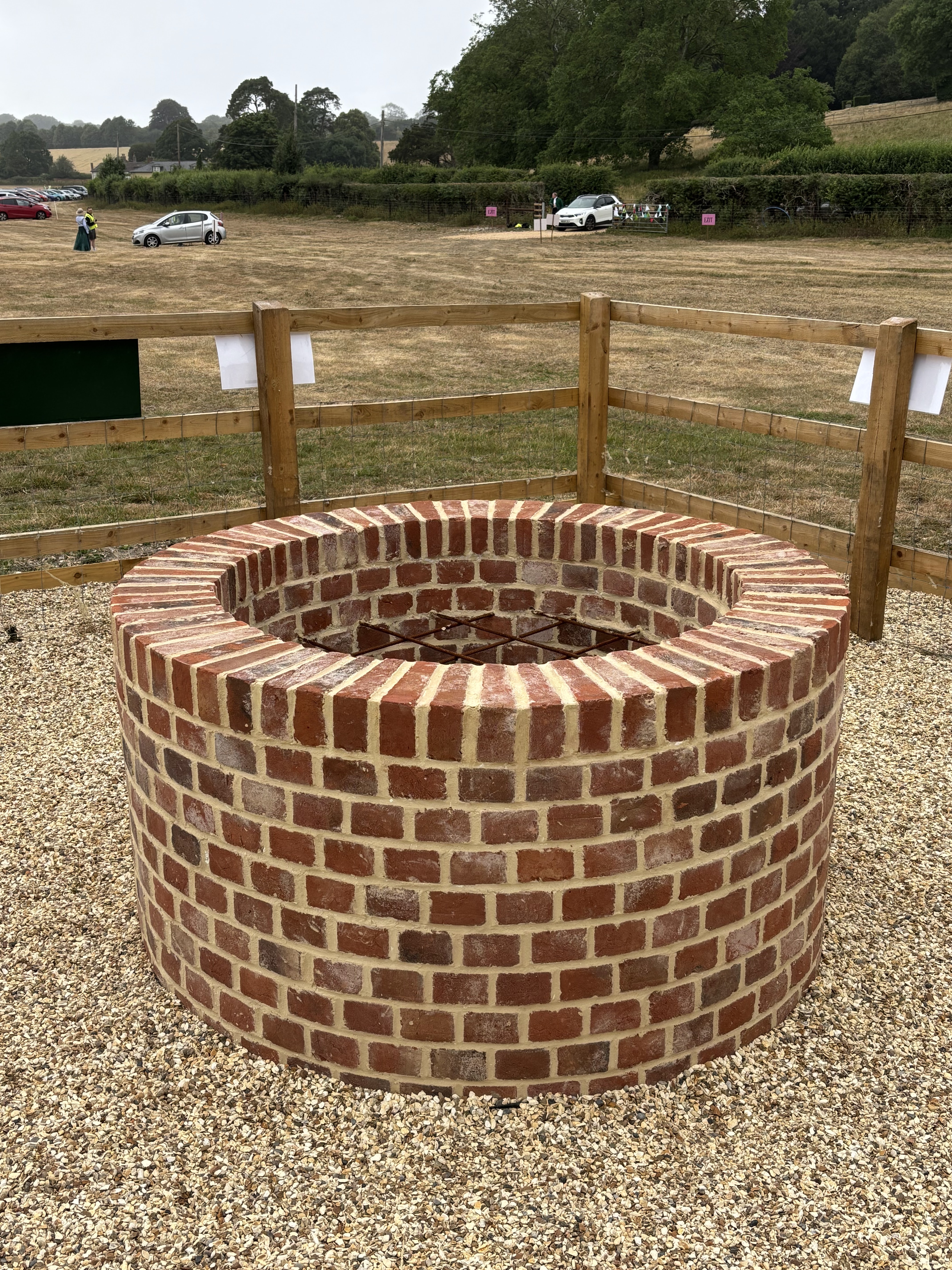
Guests could roam the field freely and peruse the two things left of Steventon Rectory: the now fenced well (hence, the name "Pump Field"), which was situated behind the Rectory, and the impressive lime tree planted in front of the Rectory by Jane's oldest brother, Rev. James Austen, when he was Rector of Steventon. 

Visitors exploring the Pump Field. 

The Old Rectory well. 


James Austen's lime tree. 

From the field, we got a good view of the New Rectory on the opposite field, which was built for Jane's nephew, Rev William Knight, by Edward Austen Knight after the Old Rectory was pulled down in the 1820s. 

The New Rectory 

It felt so incredibly special to be part of this unique event, and I hope you enjoyed reading about it and getting a good view of Jane Austen's birthplace. 

Kudos to the village community who put together this beautiful event, showing excellent community effort!