Search this Blog

Showing posts with label TV Series. Show all posts

Thursday, June 5, 2025

My thoughts on "Jane Austen - The Rise of a Genius"

Have you seen the new BBC documentary, "Jane Austen - The Rise of a Genius" yet? 

The two-part documentary, commemorating Jane Austen 250, is an accolade to Jane Austen and discusses her significant influence on modern literature and growth as a writer. The production explores the events in Jane Austen´s life that had a profound effect on her and the people that she knew who influenced her writing.  


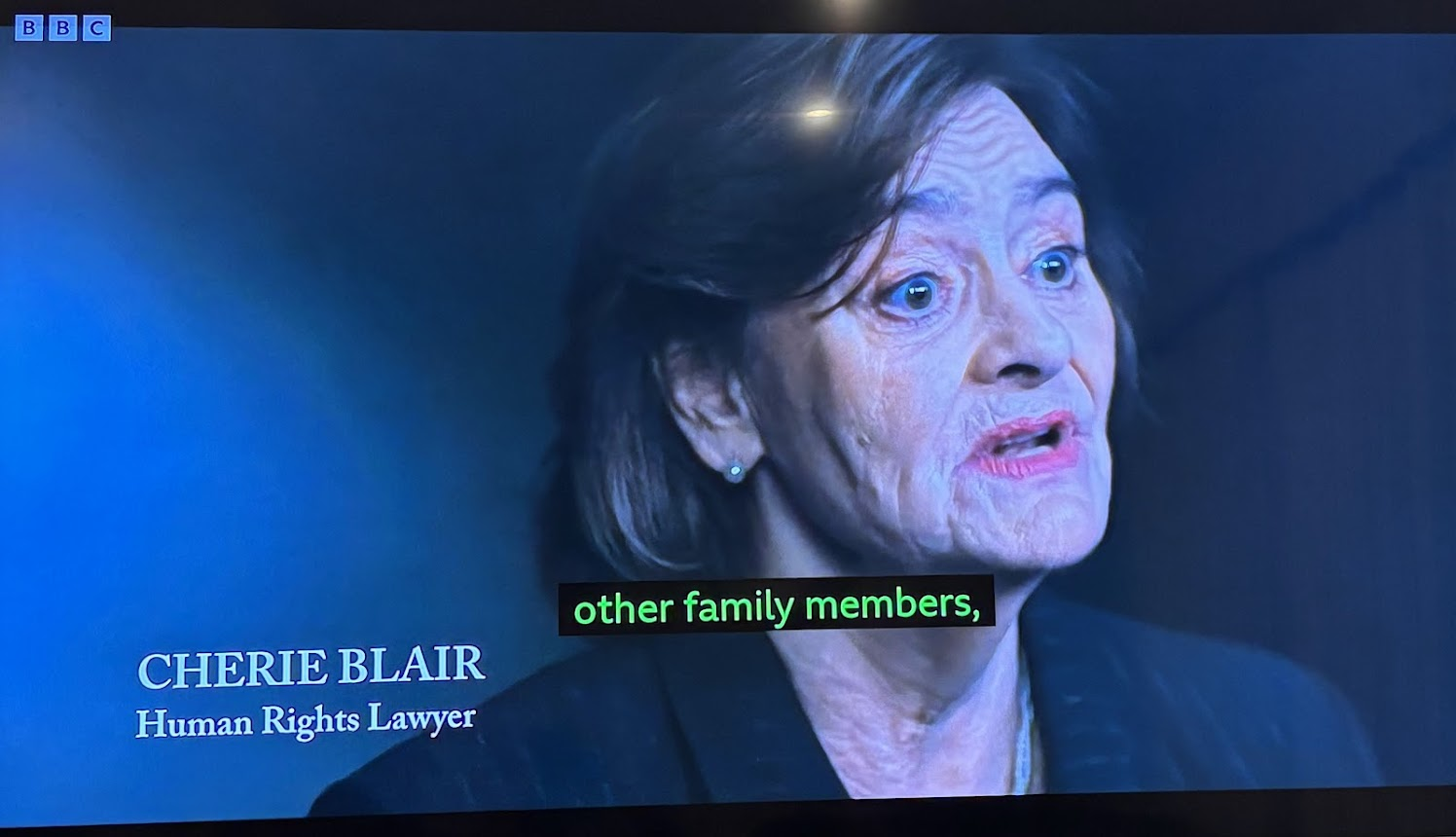
For the documentary, the BBC have chosen a range of "experts" to discuss Jane Austen, some of whom are more questionable than others! I thought it was interesting to hear what the biographer, Paula Byrne, had to say about Jane Austen, but Cherie Blair may have been a less relevant expert on the topic. 

Dr Paula Byrne

Cherie Blair

There were several familiar faces from Jane Austen adaptations, such as:
Greg Wise (Willoughby in S & S 1995)

Charity Wakefield (Marianne in S & S 2008)

Sam West (Mr Elliott in Persuasion 1995) 

Tamsin Greig (Miss Bates in Emma 2009)

The dramatisation was well carried out, however the casting was not to my liking - I much preferred the Jane Austen of the recent "Miss Austen" series. 

It was interesting to hear first-hand about the euphoria that authors feel when their book first gets published. The authors interviewed shared how Jane Austen would have felt when she first got her books published and the empowerment that she felt when she earned her own money through writing. 
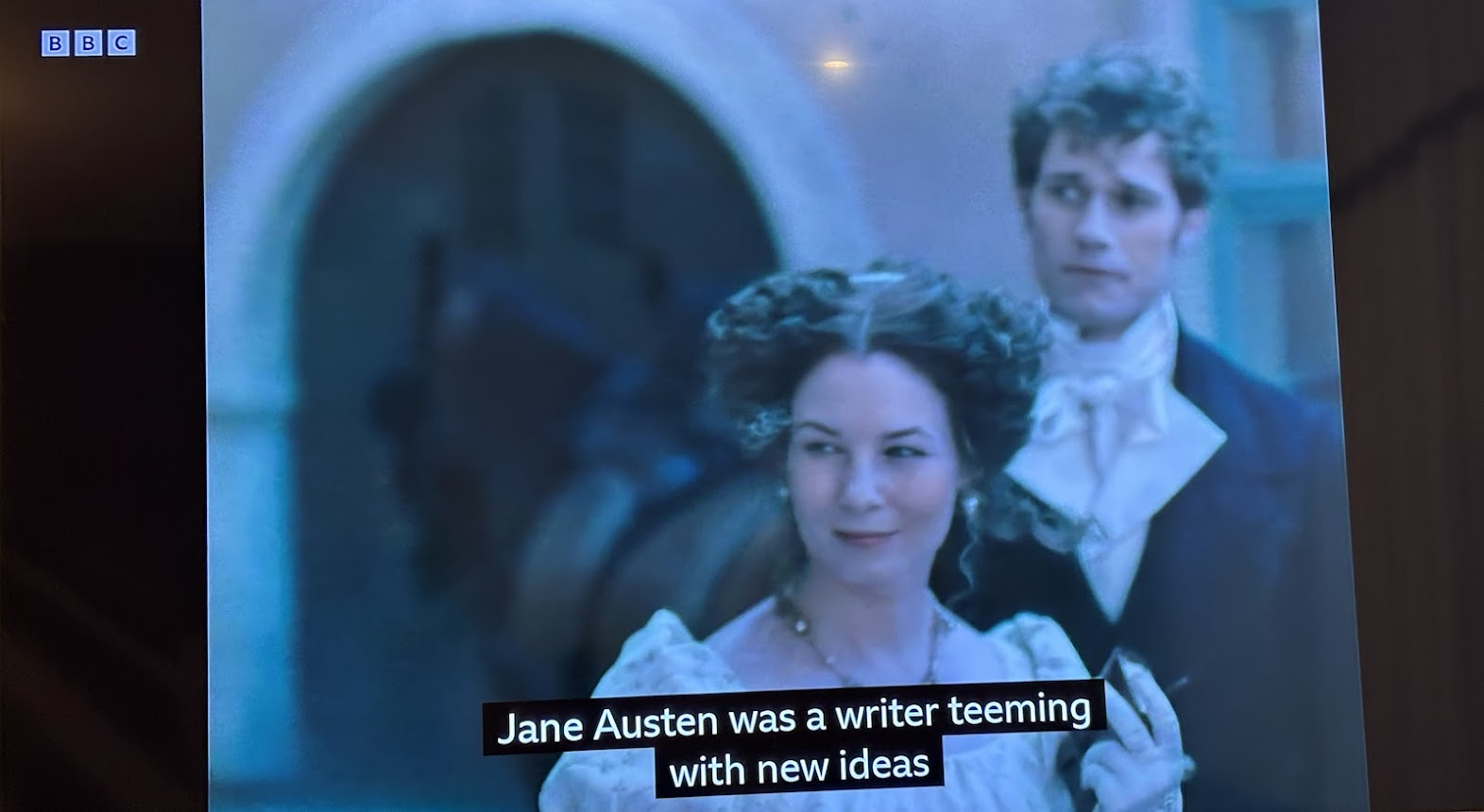

I thought it was interesting how the documentary described how Jane Austen fitted in her time period and the radical ideas that she had under cover. The documentary claims that Jane Austen was essentially a political novelist who wrote about money, class and movement and was against treating people as commodities, whether they were slaves or unmarried spinster women. Jane Austen used the novel to bring about inequalities in her society, highlighting the disparity in wealth and the responsibility that people with money had over others. The documentary shows how these issues were close to Jane´s own heart, having been somewhat of a commodity in the marriage market herself and been at the mercy of her father and brothers throughout her life. In her novels, Jane Austen makes references to things that her contemporaries would have found radical but modern readers can often be oblivious to, such as her choice to name her book "Mansfield Park" (after the abolitionist judge, Lord Mansfield). Some of these themes were also discussed by Helena Kelly in her novel, "Jane Austen the Secret Radical", which I read recently. 


Although the two-part documentary didn´t teach me anything new as such, I thought it was a well-researched introduction into the world of Jane Austen and her journey to develop her unique style. I feel that the documentary could be helpful for students who are learning about 19th century literature and Jane Austen in particular. I also feel that critics of Jane Austen could benefit from seeing the documentary, as it brings out the best in Jane Austen and really highlights her significance and influence in so many areas. 

Tuesday, February 4, 2025

My Thoughts on the Long-awaited "Miss Austen"

Finally the long-awaited adaptation of Gill Hornby's "Miss Austen" is out! The new mini-series aired on BBC this week, and many Janeites have been glued to the screens, excited to see Jane and her sister Cassandra come to life in this biopic. I have thoroughly enjoyed watching this adaptation and thought I would share my thoughts on the series, whilst it is still fresh in my mind. 

 Young Cassandra Austen played by Synnove Carlsen. 

You might remember my earlier post where I shared my trip to Kintbury after reading "Miss Austen" by Hornby.  It was lovely to walk around the quaint village where Cassandra Austen stayed with the Fowle family at their home, Kintbury Rectory, where Hornby now lives and where she was inspired to write the novel. 


As I mentioned, the novel explores Cassandra's connection to Kintbury but also her possible motives for destroying a bulk of Jane's letters - a huge loss to us Austen historians. 

Mature Cassandra in front of Chawton Cottage played by Keeley Hawes.

I've recently been quite disappointed by the quality of many of the Austen adaptations, which haven't followed the period style either in manners, fashions or historical detail. The recent Netflix version of Persuasion certainly divided opinions, and I  haven't able to watch it again after the first time, as I found it too cringey. Becoming Jane, the Austen biopic with Anne Hathaway, was another one that took too many liberties to my liking. Therefore I was delighted to see this story being produced in a more realistic style more true to historical detail (albeit a work of fiction!). 

Jane and Cassandra 

It's wonderful to see Cassandra come into life in this biopic and to see the depth of her character and the closeness of the sisters' relationship more than in previous films. 

Mature Cassandra (Keeley Hawes)

Keeley Hawes, who I am partial to, portrays the mature Cassandra Austen beautifully with so much emotion. 

Jane (Patsy Ferran)

Similarly, the casting of Jane Austen as Patsy Ferran (above) is spot on - this is how I imagine Jane - petite and brown-eyed, feisty, playful and witty. 


Patsy captures Jane's lively personality beautifully and the gradual decline in her mood and health as the story progresses (yet again, the historical detail!). 

Moving depiction of Jane's depression in Bath. 

The casting of most of the other characters is excellent. Mary Austen comes to life brilliantly as the irritable, undiplomatic Mary Austen (Liv Hill/Jessica Hynes), and the Austen brothers are excellent choices as well. 

Hubert Burton as Henry Austen 

I enjoyed watching the part where Jane is proposed by the socially awkward Harris Bigg-Wither, whose offer of marriage Jane accepted but turned down overnight - his personality is wonderfully portrayed here. 

Tom Glenister as the painfully shy Harris Bigg-Wither. 

I was somewhat disappointed by Phyllis Logan's rendition of Mrs Austen, however, who seems more like Mrs Hughes than Mrs Austen - the historical Mrs Austen comes across as rather a big personality (as matriarch of the family) and as someone with dramatic, hypochondriac tendencies. 

Mrs Austen (Phyllis Logan) and Mr Austen (Kevin McNally). 

Tom Fowle (Calam Lynch), Cassandra's fiancee, reminds me of Willoughby (played by Greg Wise)!

Tom Fowle (Calam Lynch)

What disturbed me slightly about this story is the choice to portray Henry Hobday (Max Irons) as Cassandra's love interest in Sidmouth. 

Max Irons as Henry Hobday

I have always imagined Sidmouth to have been the place where Jane allegedly met the love of her life, and this storyline is entirely fictional and results in further grief for Cassandra Austen. 

Miss Austen is essentially a story about grief, which really comes through in this adaptation. 

Cassandra by Jane's deathbed. 

The series is beautifully shot and there are many cinematographically stunning shots in carefully designed sets and locations. The candlelight hue in most of the indoor scenes seems realistic, as rooms would have been darker in Jane Austen's times. 

The story highlights the lack of choices that unmarried women faced in the early 19th Century and how they were at the mercy of their husbands and brothers - and this is the story of Jane Austen, too. As an Austenite, I loved seeing this story come to life, but I am unsure of how a non-connoisseur would receive this series - would it captivate them or would they get bored? Knowing the background and recognising all the characters certainly helps. Do let me know what you think in the comments. 

I had the pleasure of watching a speech by Gill Hornby at the Regency Picnic in Chawton in 2023, where Gill talked about her upcoming novel about Jane's Niece, Fanny Knatchbull. I look forward to reading her next novel. 

Gill Hornby in at the Regency Picnic in Chawton (2023). 

Do have a look at my photos from Kintbury here: 

Austenised: Following "Miss Austen's" Footsteps Through Historic Kintbury

Sunday, June 20, 2021

Visiting Lady Denham at Sanditon House

Last weekend, I visited Dyrham Park, a beautiful National Trust estate near Bath. You might have seen Dyrham Park in the 2019 Andrew Davies adaptation of Jane Austen's Sanditon - or if you don't prefer the word 'adaptation' (which I don't in this case), the series 'inspired' by the fragment. Whilst I'm not a fan of Sanditon the ITV series, I was eager to visit the beautiful estate, having seen the gorgeous backdrop on screen. 

In the series, Dyrham Park features as the location for Sanditon House - the formidable Lady Denham's estate. In the book and series, Sanditon is a coastal town, on the way to becoming a fashionable seaside resort. In reality, Dyrham Park isn't close to the sea, but it is situated in the beautiful rolling hills around Bath (also - rather appropriately - in Jane Austen country). 


The back entrance into the house. 

The rolling hills and sloped grounds of Dyrham Park are truly spectacular at this time of year, with fluorescent green dominating the verdure, and so many lovely hikes around the estate. It comes as no surprise that the lanscape design has been created by none other than Capability Brown, also known as "England's Greatest Gardener". 


                                                                    St Peter's Church next to the house.

The gardens are also lovely, with two ponds, a waterfall, and an elegant range of perennials. 


According to the guide, the grounds were truly majestic in Georgian times, with several fountains placed around the grand entrance into the building. 

                                    The landscape design of Dyrham Park in the 18th Century.

This would have been the approach and the front entrance to the house. 

Thanks to the recently relaxed restrictions, I was able to view the ground floor interiors of Dyrham Park as well. Some of these rooms featured in Sanditon, and were glamorously decorated (dividing the opinion of viewers), demonstrating the wealth of Lady Denham - the reluctant benefactor of the development of the seaside town. I thought that the rooms looked quite different in reality, but it has been a while since I watched the series. 

The walls are adorned with interesting works of art, patterned wallpaper and tapestries. 

Interestingly, the exotic walnut material of the staircases (above) reveals the colonial history of the building. In fact, there was an exhibition about the colonial connections to Dyrham Park, and how the estate benefited from its colonial income and its links to the slave trade. Thought-provoking, yet sad at the same time - but it is an excellent development that the National Trust have become very open about the dark history of many of their great estates these days. 

Filming also took place in the courtyard, which provided a location for Sanditon street scenes. The courtyard does look very familiar, and one can easily imagine a Sanditon street with horses and carriages and ladies in their bonnets walking along the street. 

Have a look at this "Behind the Scenes" film: 


Further reading: 

The filming of Sanditon at Dyrham Park - National Trust: 

https://www.nationaltrust.org.uk/dyrham-park/features/dyrham-park-features-in-sanditon

The locations for filming Sanditon - PBS:

https://www.pbs.org/wgbh/masterpiece/specialfeatures/sanditon-filming-locations-guide/

Saturday, September 19, 2020

Following Colin Firth's footsteps at Lacock Abbey!

I absolutely love Lacock, as visiting the village feels like visiting a film set and it really takes you back to Pride and Prejudice (1995). On our last visit, the Lacock Abbey cloisters were closed for filming a Netflix series, so we missed seeing those, and this time we were lucky enough to have a peek. 


Lacock Abbey (now a National Trust property) was founded in 1229, and its vaulted rooms were used as a nunnery of the Augustinian order.

The gardens are lovely to walk around and picnic in. 


We have previously visited the manor house, which was built over the old cloisters in the 16th century. The house later became the home of William Henry Fox Talbot, who created the earliest camera negative. 


The house is currently closed, but the gardens and cloister are really worth a visit... and I shall tell you why!


Of course, the medieval cloister (above) downstairs is more famously known as Hogwarts school in Harry Potter, but as that is not exactly my genre, the cloister is far more familiar to me from Pride and Prejudice. This is where the flashback scene of Mr Darcy at Cambridge University was filmed and where we learn more about Mr Wickham's character and Mr Darcy's relationship with Mr Wickham. 

Colin Firth is filmed walking down the corridor, until he enters a room where he finds Mr Wickham "misbehaving" with a girl!


Also, the Lacock Abbey stables (below) were used as the exterior of the coaching inn where Lydia and Kitty meet their sisters when they return from London. Lydia throws open a window and waves at her sisters, and later inside the inn (shot elsewhere) they gossip about men and hats. 

As always, I thoroughly enjoyed visiting another Jane Austen film location - do have a look at my previous blog from Lacock for a tour around Lacock village. 

Friday, July 17, 2020

Death Comes to Pemberley and A Fan Moment With Matthew Goode

I've never been much into fan fiction or sequels of Jane Austen, thinking that I didn't want to mess around with my idea of Jane Austen's writing. I was pleasantly surprised when, finding "Death Comes to Pemberley" on Amazon Prime, I actually really enjoyed this mini-series. 


Death Comes to Pemberley is based on a novel by crime novelist P. D. James. I haven't read the novel yet, so I am not in the position to assess whether it is a good adaptation of James' novel, but I enjoyed it as a sequel to Jane Austen's work. I was impressed by the acting and thought the storyline was very captivating and credible. I was intrigued until the very end to find out who the murderer was. The series had all the essential elements of Pride and Prejudice woven into the screenplay, and the characters were recognisable. It resonated Jane Austen's wit, and I think that she herself would have enjoyed the story, given the fact that her juvenilia was full of stories like this and she may well have been amused by the twists to her story. 

Image from Wikipedia: https://binged.it/38WP7bi

I also loved seeing Matthew Goode cast as Wickham in this adaptation. I was smitten by Matthew Goode in Downton Abbey, a series which I really enjoyed, and I thought he made a great dashing villain in Death Comes to Pemberley as well. 

To my great surprise, I had the good luck of bumping into the said gentleman as I was visiting Oxford a couple of years ago. I was at the Bodleian Library with my family and I was quite shocked as I walked right up to him at a doorway to the library courtyard, and there he was, right in front of me, staring at me straight in the face. I immediately recognised him and thought that he was even more dashing in real life! He was incredibly handsome, in a Bond-like manner, dressed in a slim black suit - this reminded me of him as Henry Talbot in Downton Abbey. 


I was too embarrassed to ask for a photo, and I was mortified when my husband teasingly said that I'd love a photo with him, but Matthew was a perfect gentleman and happily obliged! He told me that he was shooting a Netflix series at the Bodleian (I later found out that they were shooting "A Discovery of Witches" - not my type of genre but perhaps some of you have seen it?). What a shy fangirl moment that was!