Search this Blog

Showing posts with label Northanger Abbey. Show all posts

Tuesday, July 15, 2025

"Scrambling...into a little education without without any danger of coming back prodigies" - Exploring Jane Austen's Classroom in Reading

In a previous post, I discussed boys' boarding school life at the time of Jane Austen. Have you ever wondered what life was like for school girls in Georgian times? In this post, I will tell you more about girls' boarding school life, having re-visited Jane Austen's school in Reading. 

You may already have read my previous blog about Jane Austen's schooling here at Reading and my previous visit to the Abbey Gateway and Reading AbbeyThis year, marking 250 years since the birth of Jane Austen, many towns in the UK have been celebrating her life, and Reading is no exception. Reading Museum has hosted a series of talks about Jane Austen this spring/summer, and I recently attended a talk about her education by Jane Austen Society member, Joy Pibworth, at the Reading Abbey Gateway where Jane briefly went to school.


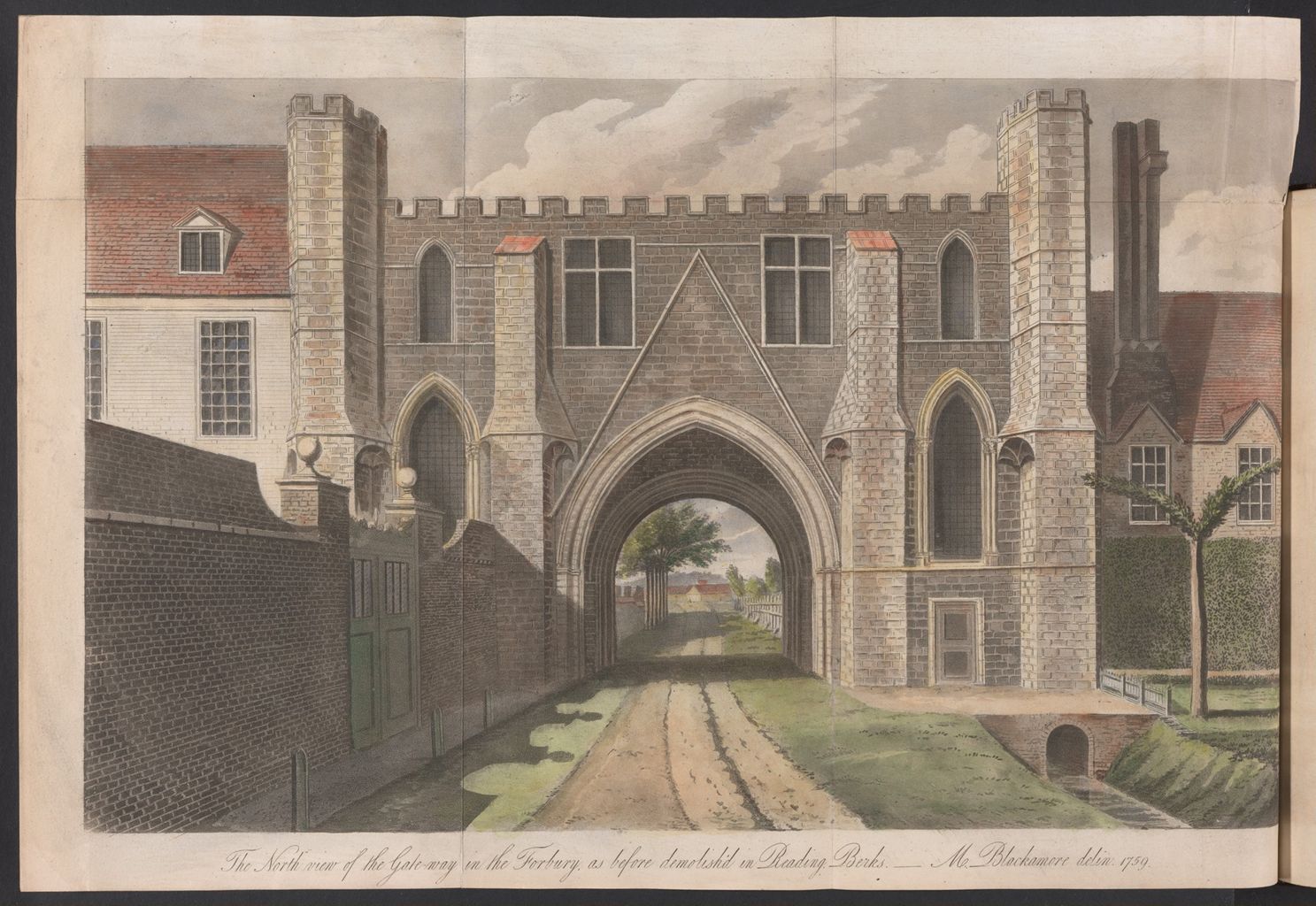
The Abbey Gateway at the time of Jane Austen taken from the North side. Image: The Yale Centre for British Art.


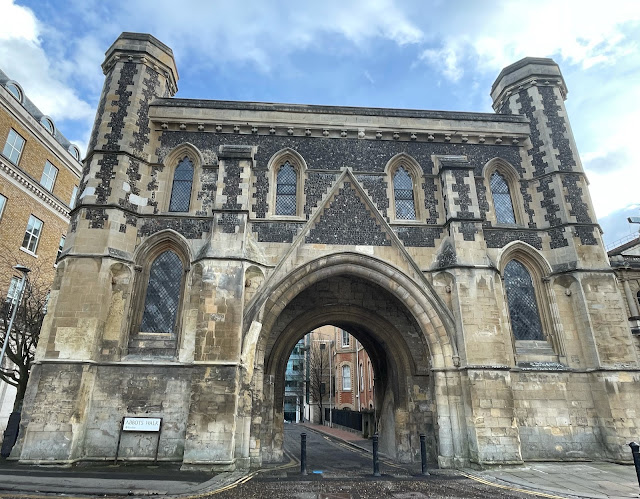
The Abbey gateway now.


It was very interesting to have a closer look at what Jane's classroom may have looked like and to hear what Joy Pibworth had to say about Jane's "Scrambling Into a Little Education". We learnt that Jane went to boarding school three times. She first went to school at the age of seven in Oxford in 1783. Jane, Cassandra and their cousin, Jane Cooper, only stayed there for six months until their school mistress, Mrs Cawley, moved her school to Southampton due to a measles outbreak in Oxford. However, this experience was short-lived, as soldiers brought with them an outbreak of typhus, and all the three girls caught the illness and were rescued and brought home by Mrs Cooper (who, sadly, later died of the illness). 

After some time, the Austens started looking for a new boarding school for the girls. Joy Pibworth explained that it was Jane Cooper's father, Rev. Cooper, who was then Vicar of Sonning, who managed to find a new school for the girls in 1785 when Jane was ten years old. Mrs Latournelle's Reading Ladies' Boarding School was advertised in the Reading Mercury newspaper, as was customary at the time. The Austens thought this a good idea, as Rev Cooper lived nearby, and Jane's aunt and uncle, the Leigh Perrots, lived in Wargrave and could help look after the girls. Jane stayed here from 1785 to 1786.


A plaque to commemorate Jane Austen was unveiled in an official ceremony here last month.

Mrs Latournelle wasn't actually French despite her fine name; her name was originally Sarah Hackit, but she used a French name to attract parlour boarders. According to Joy Pibworth, Mrs Latournelle was an eccentric personality who wore traditional clothes and had a "cork leg", i.e. a false leg acquired from Cork Street in London. Her school had a good reputation, and she didn't have to advertise her school much although she owned two (the other one being in Henley, not far from Reading). 

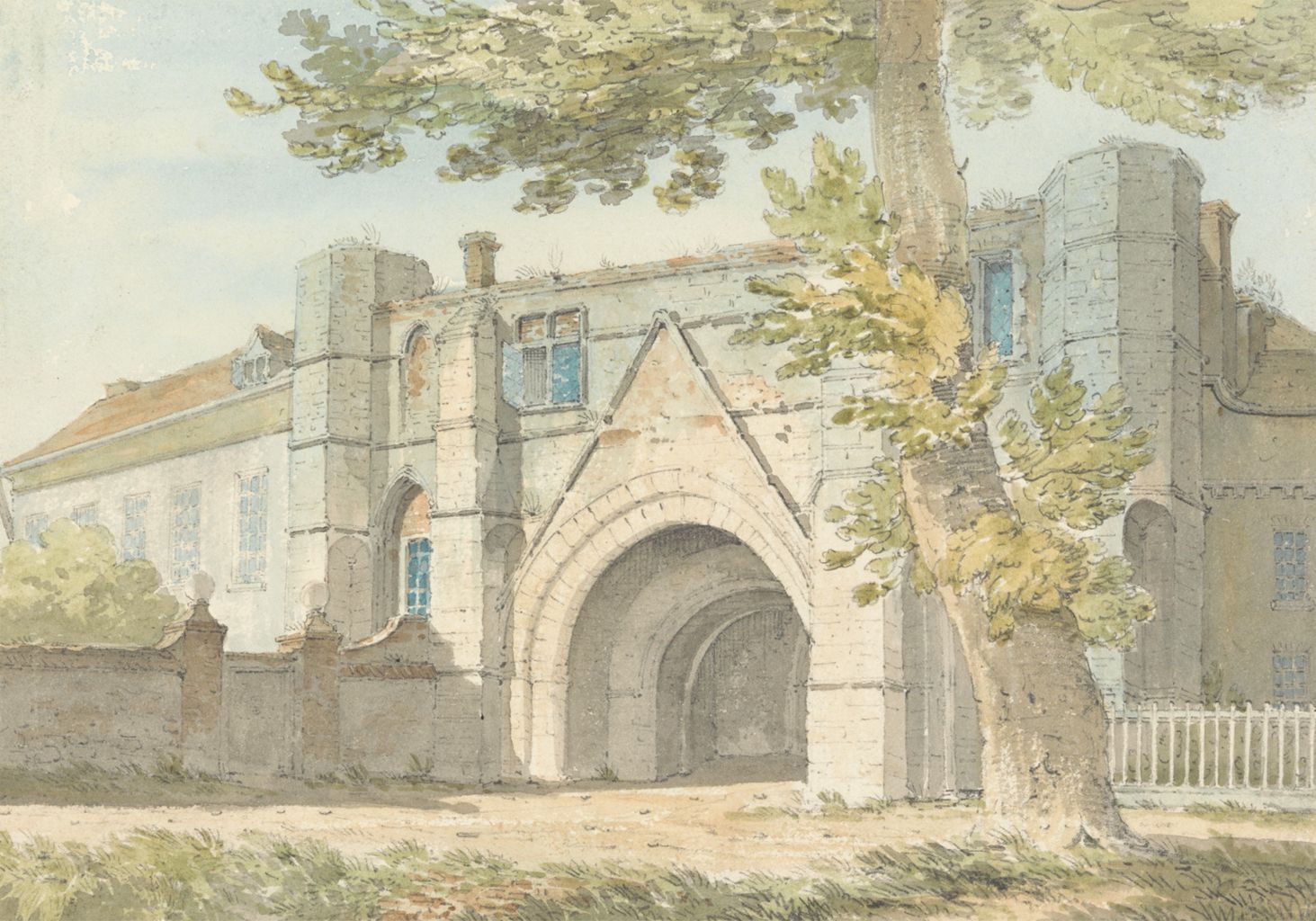
Image of the Abbey Gateway: The Yale Centre for British Art. 

The Abbey Gateway was an attractive gothic style building with gilt balustrades and many nooks and crannies. In true Georgian style, weeds were encouraged to grow through the bricks allowing for a more romantic look. 


Gothic style windows.

Jane's father paid 37 pounds 19 shillings (roughly the equivalent of 3400 pounds in today's money) per girl per half year. This amount included board, tuition, learning materials and having their clothes washed. 

The girls were grouped by knowledge rather than age, just like it was customary in the boys' school. The girls attended lessons in the Gateway, and their living quarters were in the building next door to the Gateway built in Queen Anne style (but no longer there). The girls shared bedrooms, and Joy Pibworth explained that there were 4-6 beds in each bedroom. There were 40 bedsteads in the school, giving us an idea of the number of parlour boarders at the school. 

There was a beautiful, old-fashioned garden with tall trees where the girls could spend their evenings after lessons and an artificial embankment from where you could watch the ruins of the abbey. 

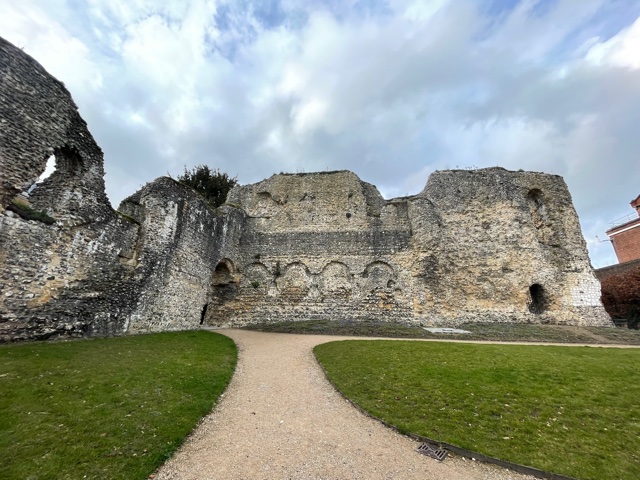
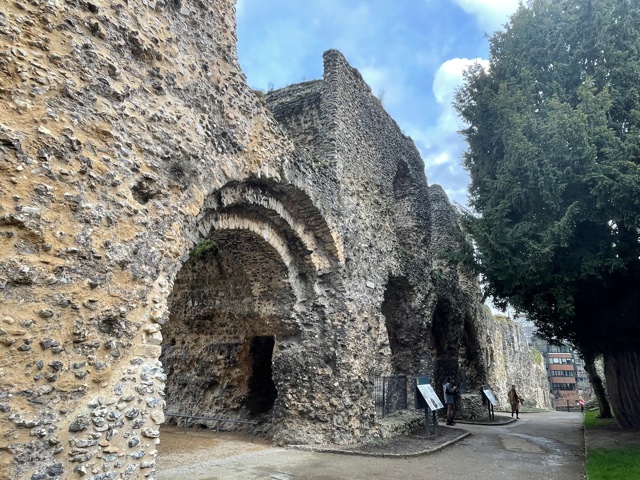
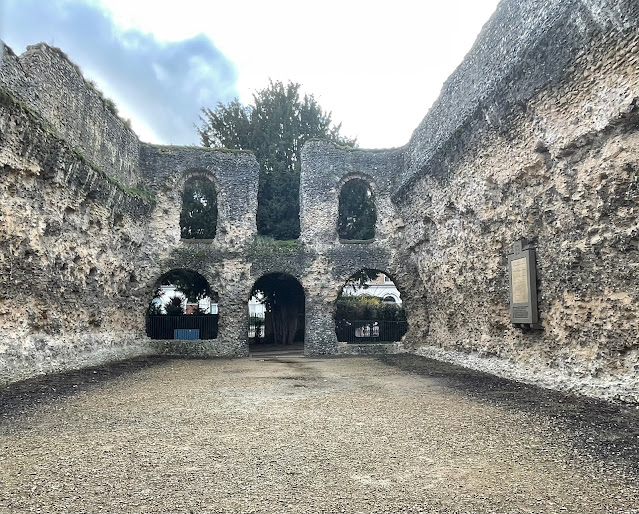
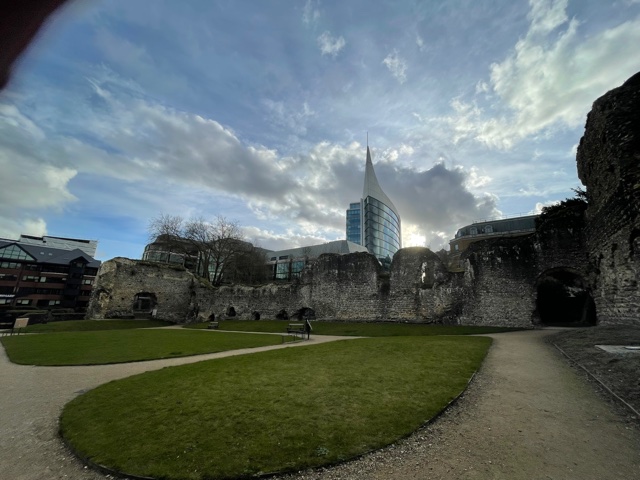
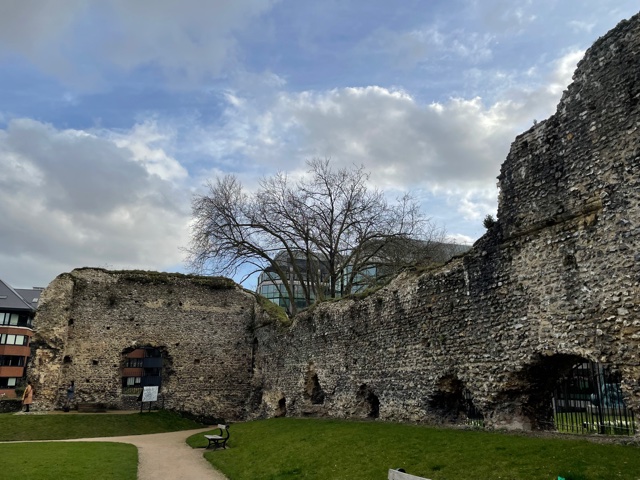
Abbey ruins now.

I believe that studying in a Gothic building and living in such close quarters to a medieval abbey had a profound influence on young Jane Austen and perhaps inspired her when writing Northanger Abbey later in life. 

As Reading Museum has started offering tours of the Reading Abbey Gateway to schoolchildren, the building has been done up to resemble a Victorian-style girls' boarding school classroom. 


In the mornings, after breakfast, the girls would have their lessons in the Gateway, learning sewing, reading and writing and perhaps some French.


The girls also learnt dancing, and Mrs Latournelle would invite guests so that the girls could practise their social skills. Dinner was between 4-5pm, and the girls would have some free time in the evenings. 

Downstairs in the Gateway. There is a small exhibition telling Jane's story here. 

Some girls would hang from windows to watch boys from the boys' school playing outside on the field where Forbury Gardens is now. There had been a boys' school next to the field since 1486. The school was situated in a former Reading Abbey Hospitium (guesthouse) where (in medieval times) visitors to the abbey could stay for two nights when visiting the abbey for services. At the time when Jane was here, the  school's headmaster was Richard Walpy who was a strict disciplinarian, and boys would often get caned. The boys at the school would learn Classics, Maths and Biblical studies, much like the boys at Winchester College. However, Jane was a little too young at this point to mess around with the boys! 

Reading School for the boys in the Hospitium of St John the Baptist. 

It is believed that Jane created Mrs Goddard's school in Emma based on her experience of Mrs Latournelle's school. Jane Austen describes Harriet Smith's school as 'A real old-fashioned Boarding School where a reasonable quantity of accomplishments were sold at a reasonable price and girls might be out of the way and scramble themselves into a little education without any danger of coming back prodigies'. This was Jane's way of saying that the girls learnt a little bit of this and that, but nothing much of value! 

After 18 months, Jane's time at Reading came to an end, and the girls were sent home to be educated there. Perhaps the schooling became too expensive and wasn't considered that important for the girls. Luckily, Jane had access to her father's excellent library and read widely, wrote stories from an early age and only had tuition for music and other special skills from home. Mrs Latournelle's school was later sold and became St Quentin's Grammar School. 

Many thanks to Jo Pibworth and Reading Museum for an informative afternoon and for the wonderful opportunity to visit Jane Austen's classroom. 

Further reading: 


My previous visits to the Reading Abbey Gateway: 


To read more about Jane Austen's Reading, click here: 

To read about Reading Abbey, click here: 


Monday, March 24, 2025

Reading (town) at the time of Jane Austen

Did you know that Reading had a connection to Jane Austen? I had to change the title in case readers mistook "Reading" for the verb rather than the name of the town! In case you didn't know, the town of Reading is pronounced as "re-ding" rather than "reading". 


You may have read my blog about Abbey School from my first visit to Reading where I wrote about Jane's school experience here. From 1785-1786, for a short duration of 18 months, Jane Austen went to school in Reading, and her brief stint at school took place in the Abbey Gateway. 

The Abbey Gateway 

The Abbey Gateway is the former entrance into Reading Abbey, which was one of the largest, most significant monasteries in Europe in medieval times but now stands in ruins. 

Georgian buildings near the Abbey ruins. 


The Abbey ruins. 

The gateway was actually built in the medieval times to divide the monk's living quarters from the more public areas of the abbey, but the current building dates back to Tudor times. Jane is the most famous alumnus from this school, and I believe that Jane's experience of living so close to a gothic abbey sparked her imagination in her future writing, Northanger Abbey in particular. 


Gothic detail from the Gateway.

visited the Abbey Gateway for a children's event with my children back in 2018, and it was so interesting to see the interiors of the Gateway where Jane's classroom was located. This year, marking Jane Austen 250, you can visit the classroom on certain days and see for yourself where Jane Austen went to school. 

Forbury Gardens with the Victorian Schoolhouse in the middle next to the Abbey ruins. Reading Gaol was behind the schoolhouse. 

The gateway is located opposite Forbury Gardens, which had been used as a "forbury" (i.e. borough in front) or an open land between the abbey and the town, and this open land was used for fairs for centuries, including when Jane Austen was here. The gardens now offer a gorgeous respite from the urban areas and a lovely place to stroll around. 

Between the abbey and the gardens, there is a Victorian building, Reading Gaol. This is where Oscar Wilde was famously imprisoned 1895-1897 for homosexual offences and where he wrote the poem, "Reading Gaol". 

St Laurence's Church. 

Jane would also have been familiar with St Laurence's Church, which was situated on the same road, past Forbury Gardens. This church was also built in the Norman times but has been rebuilt in the 15th and 19th Centuries. St Laurence's Church was one of the original three churches serving the Reading borough from the medieval times, but had a larger significance due to its close location to the abbey, which stimulated trade in the area. 

Reading marketplace. 

Reading marketplace in front of the church was established by the abbey monks and was used for markets for hundreds of years and, as you can see, is still used today. 

The Simeon monument. 

Jane Austen would have been familiar with this marketplace, but she wouldn't have seen the Simeon monument in the middle of the marketplace, which was built a couple of decades later, in 1804. This monument was funded by Edward Simeon, director of the Bank of England, and created by none other than Sir John Soane, who designed the stunning Bank of England building in London. 

George Hotel on the left. 

The stunning George Hotel on King's Street always catches my eye when I visit Reading. George Hotel was one of the busiest coaching inns between London and the West Country during Georgian times, and a few decades later Charles Dickens stayed here during his public reading tours. Reading in Reading, what a delightful thought indeed!

Are you aware of any other buildings in Reading that might have been there during Jane Austen's times? Do share in the comments if you know more!


Further reading in my blog: 

My first peek of the Abbey Gateway: https://austenised.blogspot.com/2010/08/peek-of-abbey-school.html

My visit to the Gateway and Jane Austen's classroom: https://austenised.blogspot.com/2018/06/inside-jane-austens-school.html

My visit to Reading Abbey: https://austenised.blogspot.com/2022/03/the-abbey-that-sparked-young-jane.html

To visit the Abbey Gateway, click herehttps://www.visit-reading.com/whats-on/jane-austen-in-reading/visit-jane-austens-schoolroom

Monday, March 14, 2022

The Abbey That Sparked Young Jane Austen's Imagination

Having read Jane Austen's Northanger Abbey, we learn about young girls' fascination with the gothic and "horrid" novels in particular. Northanger Abbey parodies the gothic romances that were popular in the 1790s, such as The Mysteries of Udolpho by Ann Radcliffe. These novels are often set in remote, crumbling castles or abbeys, and in Northanger Jane Austen certainly plays around with the idea of a gloomy, romantic medieval abbey as a setting. 

But were you aware that Jane herself lived next to the ruin of a notable medieval abbey? In my previous post, I discussed Jane Austen's experience of boarding school in Reading. When Jane Austen was 10 years old, she followed her older sister Cassandra to boarding school in Reading, "The Abbey School", which was attached to the Reading Abbey ruins. 

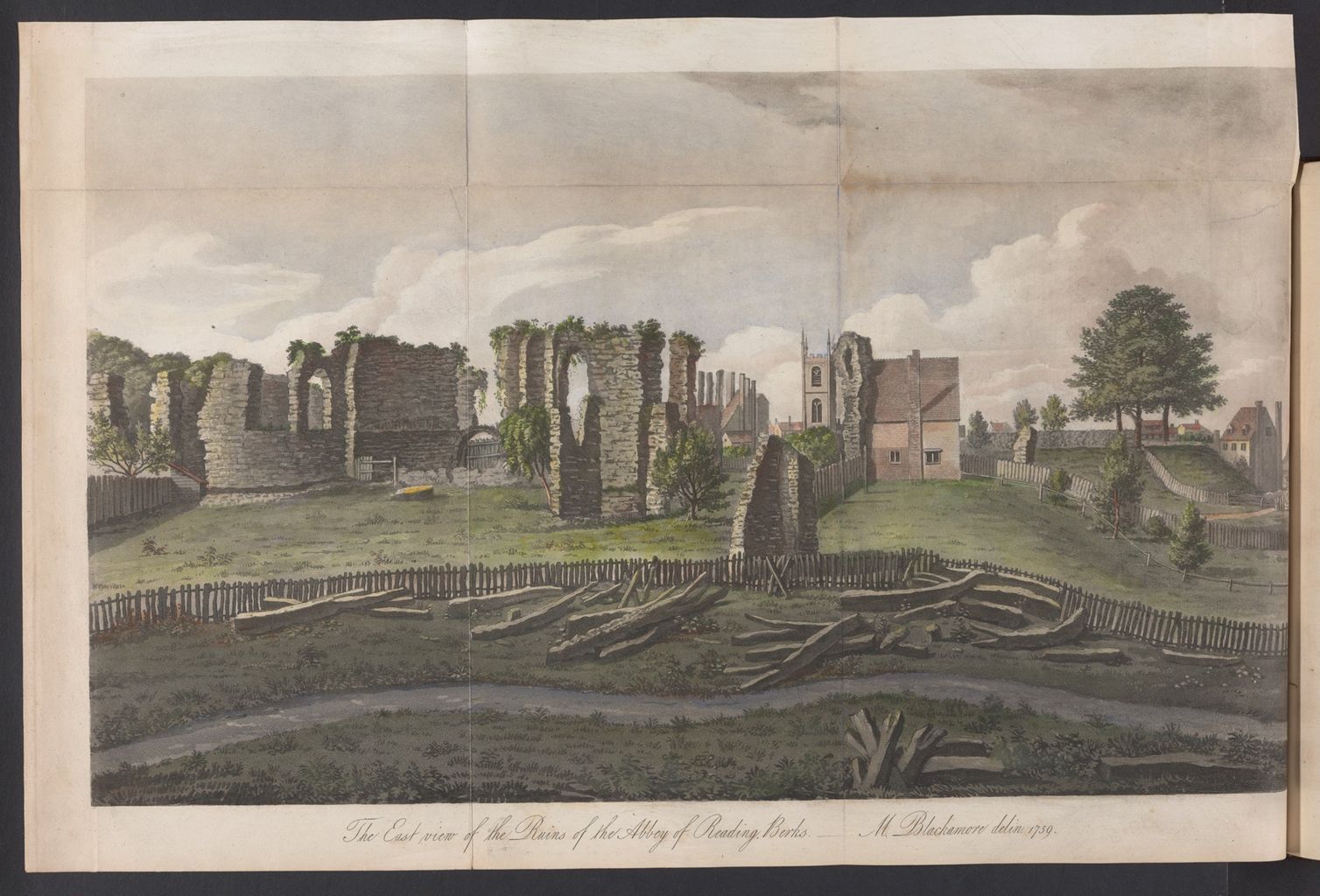
Reading Abbey ruins. 

The girls stayed at the school for just 18 months, and the school was known to focus more on the learning of feminine accomplishments rather than classical learning. The girls lived and studied in what is now the Abbey Gateway and a more modern building attached to it (no longer there), but they certainly had plenty of free time to play in the afternoons, and the sizeable abbey ruins will have been their playground. 

The Abbey Gateway

A few years ago, I had the chance to visit the Abbey Gateway for a special event and see the building where Jane lived and studied. But it wasn't until today that I actually visited the Reading Abbey ruins, as the site has not been open to visitors for a very long time. It was fascinating to see the place that must have inspired young Jane's vivid imagination!   

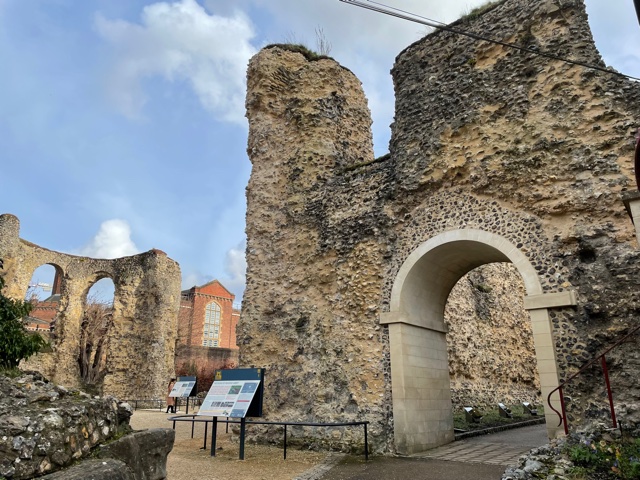
The entrance into the abbey. 


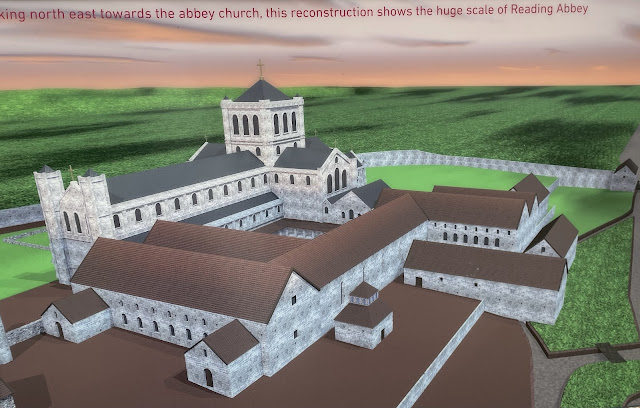
Reading Abbey was built in the 1100s by King Henry 1st and took several centuries to build. It was a religious community centred around a magnificent church - the fourth largest in Britain! - and one of the largest monasteries in Europe. Monks lived and practised a religious life in the Abbey for 400 years, but the buildings were later destroyed in wars and to make way for private buildings. Jane Austen is the most famous alumnus of the Abbey Girls School. 


Reading Abbey ruins nestled amongst the modern buildings.

The area is large and this image shows just how majestic the monastery had originally been. 


What a perfect setting to inspire a young writer's imagination!

Saturday, October 30, 2021

What did Jane Austen and Fanny Burney have in common?

What inspired Jane Austen to write those famous first lines of Pride and Prejudice?

"It is a truth universally acknowledged, that a single man in possession of a good fortune, must be in want of a wife."

Perhaps this sentence echoes Jane Austen's contemporary, Fanny Burney's (1752-1840) Camilla, where she writes: "It is received wisdom among match-makers, that a young lady without fortune has a less and less chance of getting off upon every public appearance". 

Jane Austen took several influences from authors that she admired, such as Maria Edgeworth, Samuel Johnson and Jane West. Did you know that, during Jane Austen's lifetime, there were plenty of proliferous female authors around? While Jane Austen herself wasn't famous for her works and only became slightly better known as an authoress towards the end of her life, Fanny Burney (also known as Frances D'Arblay) was a well-known and celebrated Georgian author and much admired by young Jane Austen herself. Fanny Burney only became overshadowed by Jane Austen much, much later during the Victorian era. 

In fact, in Fanny Burney's novel Cecilia (1782), the term, Pride and Prejudice, is mentioned three times, in block capitals. One example reads:  The whole of this unfortunate business,” said Dr Lyster, “has been the result of PRIDE and PREJUDICE.” The powerful alliteration must have stuck firmly to young Jane's mind. 

I have written a more detailed analysis of Fanny Burney's most famous book, Evelina. I believe that Jane Austen's creation of Mr Darcy is influenced by Burney's male hero, Lord Osbourne, Evelina's broody and moody love interest in the novel. They meet at an assembly and get on very badly to begin with but are eventually united. There are many more similaries in Camilla as well. 


I recently read Claire Harman's biography of Fanny Burney, and it was fascinating to learn more about the author who was one of the most popular authors of her generation and who had a very eventful life. Based on my reading, I thought I might compare the two authors and their similarities and differences. 

Similarities between Jane Austen and Fanny Burney: 

-Both authors grew up in the Georgian era, although Fanny Burney was 23 years older than Jane Austen, having been born in 1752.

-Both wrote about young female protagonists. Burney's titles include 'Evelina', 'Cecilia' and 'Camilla', while Austen had 'Elinor and Marianne' (early title of Sense and Sensibility), 'Susan' (early title of Northanger Abbey), 'Catharine' (an early fragment) and 'Emma'.

-Austen's Northanger Abbey follows a similar pattern of a coming-of-age novel to Burney's Evelina. Like Evelina, Catherine Morland is a simple, naive character entering the world and "society", makes mistakes and learns as she matures in the novel.  

-Both authors have adopted a highly stylised, complex style of writing and write about manners and morals. Both use clever, often comical dialogue to portray characters and their voices.

-Both authors lived in Bath at around the same time, but it is not known if they met. 

Differences between Jane Austen and Fanny Burney: 

-Unlike Jane Austen, who lived a relatively quiet life as the daughter of a country clergyman, unknown to the public, Fanny Burney was born into a cultured family of authors. Her father, Charles Burney, was a music historian, composer and musician. Burney grew up in London, in the middle of fine society, mingling in theatrical and literary circles, and was always well known and recognised throughout her lifetime. 

-Although Jane Austen was invited to Carlton House to meet the Prince Regent's librarian, she never met members of the royal family. Austen was famously sceptical of the Prince Regent, sympathising with his long-suffering wife, Princess Caroline. She wrote, "Poor woman, I shall support her as long as I can, because she is a Woman and because I hate her Husband." Fanny Burney, on the other hand, was a firm monarchist and had, a few decades earlier, been appointed Mistress of the Robes to Queen Charlotte (The Prince Regent's mother). Burney suffered greatly during her five year stint in the palace, but continued to support the queen after leaving her royal duties. Burney also mingled with the French royal family while she lived in Paris. 

-Although Jane Austen was well travelled in the south of England, she never ventured abroad. Burney, on the other hand, married a French exile, General D'Arblay, and they lived across both countries and had a bilingual family. The couple were stranded in France for over a decade due to the war between England and France in the early 1800s. 

-While Jane Austen sets most of her scenes inside people's houses, Fanny Burney's books are mostly set in London and often outdoors - at the theatre or in a pleasure garden and so on - reflecting the sociable life that Burney led. 

Saturday, February 6, 2016

Tintern Abbey - An Inspiration for Northanger Abbey?

I recently visited Tintern in South Wales. Set amidst the hills of the Wye river valley, this beautiful little village is famous for its gothic Cistercian abbey, creating a dramatic, spectacular backdrop to the landscape.  


In Mansfield Park, there is an engraving of Tintern Abbey on Fanny Price's bedroom wall. Jane Austen describes Fanny Price's bedroom like this:

"The room was most dear to her, and she would not have changed its furniture for the handsomest in the house, though what had been originally plain had suffered all the ill-usage of children; and its greatest elegancies and ornaments were a faded footstool of Julia's work, too ill done for the drawing-room, three transparencies, made in a rage for transparencies, for the three lower panes of one window, where Tintern Abbey held its station between a cave in Italy and a moonlight lake in Cumberland, a collection of family profiles, thought unworthy of being anywhere else, over the mantelpiece, and by their side, and pinned against the wall, a small sketch of a ship sent four years ago from the Mediterranean by William, with H.M.S. Antwerp at the bottom, in letters as tall as the mainmast."


In 1798, William Wordsworth published a poem called "Lines written a few miles above Tintern Abbey". Clearly, Jane Austen was familiar with Tintern Abbey, having read about it and seen popular images of the Abbey, although she is not known to have visited Wales herself. Could it be possible that images of the beautiful, haunting ruins of Tintern Abbey could have provided an inspiration for Northanger Abbey? 


It certainly inspired some of her contemporary writers, such as Sophia F. Ziegenhirt, who wrote a gothic horror novel in three volumes, named "The Orphan of Tintern Abbey", in 1816. Of course, Jane Austen would have been amused by this gothic novel, having parodied and mocked one so wholeheartedly in Northanger Abbey...

Monday, May 16, 2011

The King’s and Queen’s Baths

DSCN3533KingsAndQueensBaths

During the Georgian and Regency times, people believed in the curative effect of hot springs. In Bath, water had been pumped from the city’s hot springs since the Roman times, and visiting Bath became especially popular during the Georgian era.

In addition to drinking the healing Bath water at the Pump Room, many people liked to bathe in the hot springs. Around the corner from the Pump Room, as part of the same building, stand the King’s and Queen’s Baths, which were amongst the most popular bathing places in Bath. The Austen family were known to frequent these Baths during their stay in Bath. 

The King’s Baths were built on the foundations of the Roman Baths as early as in the 12th Century. In the 16th Century, the Queen’s Baths were built on the south side of the building. The Baths were mixed with the exception of the Queen’s Baths, which admitted women only.

The interiors of the King’s and Queen’s Baths resemble the baths at the Roman Baths Museum (as below).

DSCN3446RomanBaths

The style of bathing has changed somewhat throughout the centuries… during the Georgian times, men were dressed in shirts and drawers while the ladies were clad in a linen shift. The ladies and gentlemen, with water up to their necks, would wade through the warm water and mingle.

You might remember the haunting scene from (the equally haunting film) Northanger Abbey (1986) where Catherine visits the Baths and meets Ms Tilney for the first time.

Catherine meets Ms Tilney while bathing.


The King’s and Queen’s Baths were used for bathing until 1939, after which the Baths have been closed, as it is now considered unhealthy to bathe in the waters, for fear of infection. 

You can read more about the history of the King’s and Queen’s Baths at the following sites:

King’s Baths

City of Bath

Sunday, February 13, 2011

Jane Austen a-Shopping with Burney’s Evelina

It is interesting to know that the 18th Century author, Fanny Burney, introduced several new words into the English language through the literary form. Through Evelina, she is the first known person to use words which are still so commonplace now, such as a-shopping, seeing sights, break down and grumpy.

Have you ever wondered what inspired Jane Austen to use dialogue as a clever way to personify her characters? Was the romantic charlatan, Mr Willoughby, a product of Jane’s imagination or an imprint of her early reading? Read on!

In her novels and letters, Jane Austen made several references to her favourite authors, and amongst her favourites were always Frances (Fanny) Burney and Maria Edgeworth. Fanny Burney wrote Evelina in the 1770’s, when Jane Austen was still an infant, and Cecilia soon after, and Jane grew up reading these stories. As you read through her novels, it becomes evident that Jane Austen drew inspiration from them.

Evelina_vol_II_1779

                                                         Image from: http://bit.ly/ephcyO

Evelina is a lengthy novel, which was originally written in 3 volumes, according to the custom of the time. Like Northanger Abbey, Evelina is a coming-of-age novel, with the apt subtitle  “The History of the Young Lady’s Entrance Into the World”. The heroine is a girl of obscure birth who has been raised by her loving foster father, Mr Villars, in a comfortable home. Like Catherine, Evelina is set to ‘come out’ and enter the society to lure the attentions of eligible young men.

Evelina is chaperoned to London, where she visits the numerous theatres, operas and pleasure gardens frequented by fashionable society.  As Evelina enters into society, she comes across one odious character after another and must defend her virtue against characters of low morals. Not unlike Catherine, Evelina is all innocence and youthfulness and is shocked to experience the realities of London society. She is repulsed by the lewd behaviour of men that she meets and soon wishes that she had never left Berry Hill, her home. In short, her trips are a journey from innocence to experience (to quote Blake).

FannyBurney

  Fanny Burney. Image from http://bit.ly/eiFQ4S.

Evelina is a satire of fashionable life. Like Jane Austen, Frances Burney  is an excellent satirist and parodies characters through her excellent mimicry. It is in the dialogue that she really shows her ingenuity. In the preface of Evelina, Burney describes her style as follows:

“To draw characters from nature, though not from life, and to mark the manners of the times, is the attempted plan…”

As a key component of her style, Burney reveals personality through her use of language. Her highest-ranking characters (e.g. Lord Orville, Lady Louisa) use extremely formal register, as opposed to the lower-ranking, more vulgar characters (e.g. Captain Mirvan, Madame Duval), who Burney mimics endlessly.

The grotesque Captain Mirvan who enjoys abusing the would-be French woman, Madame Duval,  uses crass language with plenty of nautical references.

“The old buck is safe – but we must sheer off directly, or we shall be all aground.”

On the other hand, Madame Duval’s bad grammar reveals her lack of breed and education.

“This is prettier than all the rest! I declare, in all my travels, I never see nothing eleganter.”

As Evelina meets her ‘vulgar’ cousins in London, the scene reminds me of Mansfield Park where Fanny meets her real family in Portsmouth after several years and feels out of place, having got used to the genteel, polished manners of a country house (Burney uses the word “low-bred” to describe Evelina’s relatives).

Like Austen’s novels, Evelina too is written in somewhat archaic 18th Century language with a preference for long, complex sentences – a style that Jane Austen certainly assumed. Thankfully, this Oxford edition has been carefully edited by Edward Bloom, with detailed notes on 18th Century vocabulary and manners.

As it was popular at the time, the novel is written in epistolary form – in letters. The epistolary form, which may not always seem realistic, does give the novel a lovely personal touch with its 1st person narration.  Perhaps Jane Austen’s early style was much closer to Burney’s, as her early novels were also written in epistolary form, such as the first version of Sense and Sensibility  (“Elinor and Marianne”) and Lady Susan. Only Lady Susan survives to this day, and it is a novel cleverly written. Lady Susan retains much of the certain mischievous flavour present in Austen’s early novels, which is lacking in her later work.  Evelina reminds me not only of Lady Susan, but of Jane Austen’s juvenilia with the likes of “Love and Freindship” and “The Three Sisters”, with their profligate, even evil characters, speedy plot turnings and plenty of slapstick.

The scenes in Evelina do reveal much more of the period than Jane Austen does. While Jane Austen chooses to leave out details, which she felt were unnecessary or perhaps unpleasant to narrate, Evelina contains plenty of references to prostitution, rape, racism, and other things, which were certainly prevalent in the society of her time.

Did the frivolous seducer, Sir Clement Willoughby, inspire Jane Austen as she created the character of Mr Willoughby to seduce Marianne in Sense and Sensibility? Like Mr Willoughby, Sir Clement is a romantic character with no intention of marrying Evelina. Luckily, as a smart enough girl, Evelina is not lured by his charms, seeing through his false pretentions, and turns down his attentions (which were becoming a bit too much anyway!).

The initial scene with Evelina’s future husband, Lord Orville, reminds me of the first meeting between Elizabeth and Darcy at the ball in Meryton. In this scene, Elizabeth overhears Darcy describe her as ‘tolerable but not handsome enough to tempt me’.  Similarly, at a ball, Evelina’s friend overhears Lord Orville put Evelina down as a “pretty modest looking girl…a silent one…a poor weak girl” and she recounts this to Evelina. As a result, Evelina is in awe of him and like Elizabeth, feels embarrassed of her obscure status and her “low-bred”, vulgar relations. Interestingly enough, the title for Pride and Prejudice was famously taken from the last chapter of Burney’s Cecilia, which I shall attempt to read next. It will be interesting to see if there is any further similarity between the two novels. 

Frances Burney has certainly influenced Jane Austen in her creation of storylines and her literary style.  The clever use of dialogue to personify the characters is something that Jane, like Burney, adopted from early on. During Jane’s lifetime, Burney was a far more popular writer - perhaps because Austen wrote more about everyday life and Burney was better versed with the fashions and amusements of the day – her novels would probably have made better popular literature.

However, it was Jane Austen who is considered the first great female writer and one of the pioneers of the novel. Her wit and depth in depicting the human character are beyond comparison. It is writers such as Fanny Burney who paved the way for Jane Austen and certainly contributed to her later success.