Search this Blog

Showing posts with label Mansfield Park. Show all posts

Wednesday, September 28, 2022

The Fascinating Story of Hester Wheeler - an Inspiration for Colonel Brandon's foster child?

Whenever I study the life and times of Jane Austen, I come across interesting stories of her contemporaries. One such story is that of Hester Wheeler - foster child of the Chute family, who lived at the Vyne, an estate close to my home. Did the story of Hester Wheeler inspire Jane Austen in her writing? 

                                                                   The Vyne from across the river. 

You may remember reading about my
earlier visits to the Vyne. The Vyne is a tudor mansion located in Sherborne St John, close to Basingstoke, and was the home of John and Eliza Chute, friends of the Austen family. James Austen was vicar of Sherborne St John and the Austen brothers were close to the Chutes. The brothers often went hunting with John Chute, and the Austen family sometimes visited the Vyne. Jane, however, didn't seem to warm to Eliza Chute, as discussed in my blog. 


                                                            The Georgian style staircase inside the house.


The Chutes got married in 1793 and had a long marriage, but it is unlikely to have been a happy one. Eliza Chute was a well-read and intelligent woman, who like other women of her times, lacked the freedom of independence and was lonely in the big house, and never managed to have a child of her own. 


                                                        A botanical painting by the talented Eliza Chute. 

After 10 years of marriage, the Chutes adopted Caroline Wiggett, a distant cousin of Mr Chute, in 1803 when she was 3 years old.


                                                                                Caroline Wiggett

Caroline considered Eliza and John as her aunt and uncle, and some say that the story of Caroline's adoption inspired the story of Fanny Price. She is said to have had a lonely childhood at the Vyne (like Fanny Price), but Jane Austen seems to have considered Eliza Chute a loving foster mother, as in 1817 when Caroline Wiggett was severely ill, she writes, "I am sorry to hear of Caroline Wiggetts being so ill. Mrs Chute would feel almost like a mother in losing her". Adoption by wealthy relatives was relatively common at the time and, despite the similarities, I feel that Fanny's story may equally well have been inspired by Jane's own brother, Edward's story, don't you think?


                                                                                 Playroom in the orangery. 

The Chutes then took in another child, Hester Wheeler, to live with them in 1814. Caroline Austen, Jane Austen's niece, was very fond of Hester and fascinated by her dramatic life story, and recalls in 1814: "In the summer of this year, I had the great pleasure of a friend and companion in Hester Wheeler, a girl about thirteen, whom Mrs Chute had brought to The Vyne about twelvemonth before. I had heard a great deal of her from my brother and brother's being so often there...To me she was a very delightful companion, the first I had ever felt really fond of, and it seemed afterwards that our intimacy must have lasted much longer than the twelve days, which I see  was the term of her visit, so deep was the impression she made on me. Long before, I had eagerly listened to her history, all that I could hear of it, and how it was that she came to be at The Vine." 
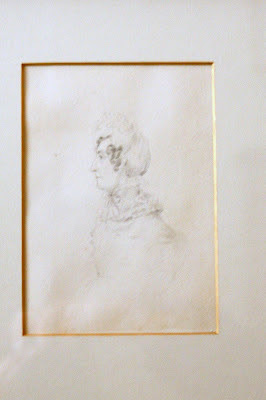
                                                                                      Eliza Chute 
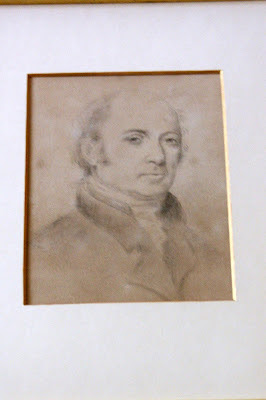


                                                                                  John Chute 

Caroline explains how Hester's great-aunt had been governess to the Chute family and Mrs Chute had acknowledged "a strong claim of charity towards the family". "They were in very humble life, as Hester never sought to conceal. They must have at one time kept a shop, for she told me of a recollection of standing on her grandmother's counter." 

And now to the scandalous part, as Caroline recollects: "Hester's mother was singularly beautiful; and unhappily a Captain Wheeler, stationed in the town, fell in some sort of love with her, and married her. He also deserted her, a few months afterwards, before Hester's birth, and never reappeared. In time it came to be rumoured that he was a married man when he first made her acquintance, and even that Wheeler was not his real name - but nobody ever knew. How much his young wife had loved him, and how much she grieved for him, as I never heard I will not pretend to say; but she was left in sad straits and difficulties, and had to seek maintenance for herself and her child, and leaving the little girl with her relations, she entered the family of Mr Beach as governess to his daughter. The position was different then from what it is now; for she acted as lady's maid to my Aunt Mrs Fowle... her health soon failed, and she fell into a decline." 

Caroline then recounts how Hester's mother (and Hester) had been looked after by the Chutes at The Vyne until she died, and had then taken Hester in to live with them. Hester had been home educated and grew up to become quite a rebellious teenager, and eventually became a governess like her mother and died young of the same disease as her mother had.  

The story of Hester echoes that of Colonel Brandon and his foster child by Eliza. Hester's story may well have inspired Jane Austen when writing about Eliza, but Captain Wheeler's promiscuous character also reminds me of Willoughby and Wickham. Jane Austen certainly drew inspiration from the local gossip and stories whispered by her friends and neighbours, and wrote about things actually happening around her. 

References and further reading: 

Reminiscences of Caroline Austen. (1986) The Jane Austen Society. 

Jane Austen’s Letters Collected and edited by Deirdre Le Faye (Third Edition). Oxford University Press (1997).

Tomalin, C. Jane Austen - A Life. Viking (1997). 

My visit to the Vyne: https://austenised.blogspot.com/2016/08/visiting-chutes-at-vyne.html

Tony Grant's visit to the Vyne (Jane Austen's World): https://janeaustensworld.com/tag/chute-family/


Thursday, June 10, 2021

On Holiday with Jane Austen : "She thinks of nothing but the Isle of Wight, and she calls it the Island."

As I was visiting the Isle of Wight for the first time with my family last week, I was surprised to discover a Jane Austen connection to the island. In fact, it turned out that the islanders were very proud of the fact that Jane Austen had mentioned the Isle of Wight in her letters and in her work and believed that Jane Austen had visited the island too. 


As opposed to the common perception of the spinster living a quiet, uneventful life in a country village, few people are aware that Jane Austen was actually very well travelled around the South of England and and spent plenty of time with her brothers in London, Southampton and Kent, and she frequently visited the coastal towns (inspiring Sanditon). Her knowledge of different areas of Southern England is evidenced in her writing, which is full of references to real places around Southern England all the way up to Derbyshire. 

During my trip, I came across frequent references to Jane Austen and other literary figures, such as Keats, Tennyson, Dickens and George Eliot, and I discovered that Jane Austen's brother, Edward Austen Knight had visited "The Island" (as Jane preferred to call the Isle of Wight) in 1813 with his daughter Fanny and sister-in-law Louisa, but we are not aware if Jane herself visited there personally. Her heroine of Mansfield Park (published in the next year 1814), Fanny Price, uses the same word to refer to the Isle of Wight, as we can see in this excerpt where Maria and Julia Bertram mock Fanny's lack of geographical knowledge in Mansfield Park: 

      "Dear mama, only think, my cousin cannot put the map of Europe together-- or my cousin     cannot tell the principal rivers in Russia-- or, she never heard of Asia Minor--or she does not     know the difference between water-colours and crayons!-- How strange!--Did you ever hear     anything so stupid?"

    "My dear," their considerate aunt would reply, "it is very bad, but you must not expect                 everybody to be as forward and quick at learning as yourself."

"But, aunt, she is really so very ignorant!--Do you know, we asked her last night which way she would go to get to Ireland; and she said, she should cross to the Isle of Wight. She thinks of nothing but the Isle of Wight, and she calls it the Island, as if there were no other island in the world. I am sure I should have been ashamed of myself, if I had not known better long before I was so old as she is." (MP, Chapter 2) 

Fanny Knight kept a pocket book and on 7th June, 1813, she wrote: 

"Uncle H.A. and I in the curricle, Papa and At L. in the gig, set off at 8, Breakfasted at Petersfield, Dined and Saw the Dock Yard at Portsmouth, & took a wherry over to the Isle of Wight in the evening. We slept at Ride."


Fanny mentions visiting the famous landmark of the Needles, which I visited with my family. On 9th June, she wrote:  

"We went on in the sociable to Newport, where we dined, & then went to Freshwater towards the Western Coast, & took a boat round the Needles point to Yarmouth where we slept". 

"The Needles" 
 

Unfortunately, my photos from The Needles are hardly spectacular, as it happened to be a miserable, wet day during my visit and I didn't particularly enjoy the crowds. 

I did enjoy our stay at Shanklin.


Shanklin Village as Austen Knights would have known it. 

The highlight of my trip was visiting the magical Shanklin Chine, which equally impressed Fanny. On the 8th June, she wrote: 

"We hired a sociable & drove around the Eastern and Southern coasts of the Island - saw the Priory a sweet place - Shanklin Chine, lovely!"


Chine is a local word originating in the Saxon language, meaning a narrow ravine, and this ancient ravine is such a peaceful haven of waterfalls, plants and wildlife. I could imagine sitting there for ages just listening to the water dripping down and admiring the lush greenery in the ravine. 


In Jane Austen's days, Shanklin Chine was a rough walk and very few people managed to make it to the waterfalls, and it wasn't until 1817 that the place really became an attraction - Victorians were full of praise of the place. I do wonder how the Austen Knights managed to "drive around" in their "sociable" on these terrains! 

A barouche-sociable, as mentioned by Jane Austen, carrying King George V. and Queen Mary. 
Image from Wikipedia: https://bit.ly/2SqNFdk

As Queen Victoria made Osborne House her summer retreat, the Isle of Wight became a very popular watering place and it was fashionable to visit natural beauty spots, such as the Needles and Shanklin Chine. 

It sounds like the young Fanny Knight really enjoyed her trip to "the Island" and had many stories to share with her Aunt Jane, which must have given her some inspiration for Mansfield Park, if indeed she never herself visited the Isle of Wight. 

It 

The Heritage Centre at Shanklin Chine, which tells you the story of Shanklin Chine and has a fascinating collection of art and caricatures from the likes of Rowlandson. 


References and further reading: 

  • Le Faye, D. (2006) A Chronology of Jane Austen and Her Family. Cambridge University Press. 
  • On the history of Shanklin Chine: https://www.shanklinchine.co.uk/history/
  • On writers visiting the Isle of Wight: https://farringford.co.uk/news-events/tennyson-poems-blog/writers-on-the-isle-of-wight


Thursday, July 21, 2016

A Walk Through the Neighbourhood of Fanny Price in Portsmouth

It was a beautiful, sunny summer's day and we decided to venture back to Portsmouth as we had purchased a season ticket for the Old Naval Dockyard on our previous visit to see HMS Victory. Sadly, the fascinating Mary Rose exhibition wasn't open yet, but we enjoyed a lovely stroll along the sea promenade and a walk through the old town. 

The Portsmouth of today is really a mismatch of the old and new, but fortunately the old town has retained many of the Georgian and Victorian facades and some of the streets must still look the same as they did in Jane Austen's times. 


At the time, Portsmouth was a military and naval town of some 7000 people. The High Street had several handsome Georgian houses, which would have been homes to the wealthy, while the poorer, dirtier areas were outside of the main thoroughfare. Georgian Portsmouth was a noisy, filthy place and its inhabitants less sophisticated than what Jane Austen was used to. Quoting Fanny Price “The men appeared to her all coarse, the women all pert, every body under-bred” (MP, p. 395). Portsmouth was a haven for drunkenness and riotous and immoral behaviour. 


Walking along the streets of the old town, I started browsing the houses, imagining with my mind's eye which one would belong to Fanny Price's family...


We passed the beautiful, old Portsmouth Cathedral with a golden ship for a windwane. 


Nelson's presence is still felt in Portsmouth. The George Inn, which was destroyed in the Second World War, was a popular resting- inn for the leading naval officers and Nelson often stayed there. He had his last breakfast here before embarking on HMS Victory. 


The man himself. 


The roofless ruin of the medieval church, Domus Dei, or Royal Garrison Church, is at the seafront. This church was also destroyed in the Second World War. This is where Fanny Price worships. 


“The Prices were just setting off for church … when Mr. Crawford appeared again …. he was asked to go with them to the Garrison chapel, which was exactly what he had intended” (MP, p. 408).

“In chapel they were obliged to divide, but Mr. Crawford took care not to be divided from the female branch; and after chapel he still continued with them, and made one in the family party on the ramparts” (ibid.)


The ramparts completely surrounded the land, and it is on these stretches that Mr Crawford and the Price family would walk. “It was [Mrs. Price’s] public place; there she met her acquaintance, heard a little news, talked over the badness of the Portsmouth servants, and wound up her spirits for the six days ensuing” (ibid.).


One of the several memorials to sailors to be found in the port. 

What did Jane Austen think about Portsmouth? To be sure, it was a rough place, a place not fit for fine ladies. As the female villain of Mansfield Park, Mary Crawford, says,  “My dear little creature, do not stay at Portsmouth to lose your pretty looks.  Those vile sea-breezes are the ruin of beauty and health” (MP, p. 416). But as we know, Jane Austen loved the sea and the sea-breeze - however, she would certainly have preferred a seaside resort like Lyme Regis to the vices of Portsmouth. 


References and further reading: 
Honan, P. (1987). Jane Austen – Her Life. Bath: Phoenix Giant.
Thomas, B. C. Portsmouth in Jane Austen's time. Persuasions #12, 1990. 
Honan, P. 


Saturday, June 18, 2016

Following the footsteps of the Austen brothers in Portsmouth

Over the Easter holidays I travelled to Portsmouth with my family to visit the naval dockyard and in particular, the old battleships, HMS Victory and HMS Warrior. Jane Austen's brothers, Frank and Charles, were sailors, working on similar ships, as were several of Jane Austen's characters, most notably Captain Wentworth (Persuasion) and Fanny Price's brother William (Mansfield Park). 


Through her brothers, Jane Austen herself was very familiar with naval life and took a keen interest in her brothers' work, and it therefore comes as no surprise that she has used the setting so extensively in her novels. She held an admiration for the navy, and Frederick Wentworth is inarguably one of her most attractive, masculine characters. It was fascinating to get a glimpse into the world of the navy of her time and get a close viewpoint of how life was onboard and on the docks.

HMS Victory.


HMS Victory is, of course, one of the most famous battleships of Jane Austen's time, used by Nelson in the Battle of Trafalgar, the decisive sea battle against the French in which the famous admiral was shot and killed in 1805. Nelson was hugely admired and praised at the time, and Frank Austen was excited to serve under his command. Frank was upset to have missed the Trafalgar action, as he had only just been commanded elsewhere, and he never quite ceased to be disappointed. No doubt, HMS Victory must have been very similar to the boats on which Frank served.


HMS Victory is beautifully built and well maintained. The low ceiling and slanted floors of the captain's quarters, or "The Great Cabin", give an antique feel to it, in comparison to the newer Warrior. 


The living conditions were certainly better for the captain and his commanders than the sailors down below. 


The conditions on the Lower Gun Deck below were very cramped. It is dark, the ceilings are lower, and as you can see, it is difficult to get a good photo in the dim conditions. There was just a tiny hammock space allotted to each sailor, with cannons between the cots.There were 450-600 sailors dining and sleeping on the deck at the same time, and the arrangement hardly allowed any privacy. 


The food prepared in the Galley was basic but high in calories, mainly consisting of boiled beef or pork with vegetables or dried fish. Animals were kept on board for meat. The meat was salted down in casks to preserve it.


While HMS Warrior is a newer ship, built in the 1860's, seeing the interiors of the ship would give you quite a good idea of life on board. The captain and the commander's quarters were quite livable, although they were not very large. Naval life must have been very ascetic indeed back at the turn of the century, when the facilities on board were so much more basic.

Life on board was no plain sailing (excuse the pun!). Sailors often suffered from seasickness, Nelson himself included. "Decks could be like wet porous stone with dampness below in every hammock. The hacking cough of men echoed in every hour of the watch. More men died of tuberculosis than were killed by shot, and other diseases...were common" (Honan, p, 160-1.)

However, you couldn't afford to be lazy; there were brutal punishments for inefficient sailors and even the young officers in training. Flogging was commonplace. "You faced the grating with tied wrists as bosun's mates flogged your back into livery pulp. Twenty lashes for minor naval infringements were common: fifty exposed your bones. When three sailors were sentenced to 400, 500 and 600 lashes in this harbour, mates flogged at upright corpses" (Honan: p. 2).

Bloodshed was obviously part of the business, and on the Orlop Deck where wounded sailors were taken for medical assistance, there were some gruesome details on display, such as an amputated leg and some bloody instruments.


Having seen the ships, you realise that running a large ship like this must have been a mammoth task. It took hundreds of men just to lift the anchor, let alone run the machinery. It would also take a very efficient and powerful captain to run a ship and make it successful. As I was listening to the guides' stories about the ships, it made me realise just how powerful a person a naval captain would be. He would be in charge of literally hundreds of sailors and could basically do just as he pleased. He was an authoritarian head who would decide the fates of all these men and their families.


Walking down the decks, I imagined myself an Anne Elliot on board with her Captain Wentworth. Seeing the ships helped me understand the story behind Persuasion better. Being a captain was certainly a glamorous job at the time, and one could understand why Anne "gloried in being a sailor's wife". With his newly acquired prize money and fancy title, Captain Wentworth would be a thousand times more presentable in society, a powerful figure and a military hero that people would look up to - Anne Elliot not the least.

However, as I recall Mrs Croft's stories in Persuasion about life on board, describing how wonderful it was to accompany her husband, Admiral Croft, on board, it is hard to imagine anything glamorous about naval life. There was a lot of hardship in terms of food, health and general comfort, and to be one of the only ladies surrounded by hundreds of men through episodes of bloodshed, drunkenness and foul language, it baffles me how the accompanying wives coped from day to day. It reminds me of the scene in Persuasion where Captain Wentworth argues with his sister, Mrs Croft, claiming that a battleship is no place for a woman: "I hate to hear of women on board, or to see them on board; and no ship, under my command, shall ever convey a family of ladies any where, if I can help it." (Ch. 8)

Yet, this was the life that Jane Austen knew inside out and romanticised about; as described by her nephew, James-Edward Austen Leigh, "with ships and sailors she felt herself at home" (p. 18).


References: 

'Austen-Leigh, J. E. (2002) A Memoir of Jane Austen and Other Family Recollections. Oxford World Classics.

Honan, P. (1987) Jane Austen - Her Life. Phoenix Giant.