Search this Blog

Monday, June 20, 2022

Regency Week Has Kicked Off in Alton

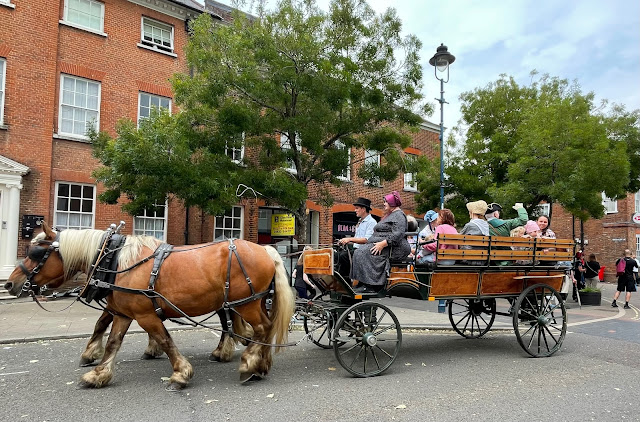
This week, the Regency Week in Alton is in full swing after a long break of three years. It's been delightful to be able to attend events like this and meet likeminded people here in Hampshire, not far from my home. 

On Saturday, I attended the Regency market in Alton, browsed the various stalls and enjoyed the lively atmosphere and catching up with other Austenites there. 


                                    The best way to get into Regency mood! 


Local militia - I think Lydia Bennet would approve.


Freddie aka Captain Wentworth looking dashing in his uniform. Freddie (who belongs to Jenny Colquhoun) is a familiar furry face from the Bath festival parade. 


                                Sophie (Laughing with Lizzie) and Abigail Rose

Velocipedes were fun to see, although strictly speaking, they aren't Regency, as they hadn't been invented until the 1860s. 


I always feel proud walking past Miss Jane Austen (disputably) near Henry Austen's bank building in Alton.  

On Sunday, I visited Jane Austen's House, had a look at the new exhibition and attended a fascinating talk on Martha Lloyd's Household Book by director Lizzie Dunford (in lieu of food historian Julienne Gehrer). I then joined the Jane Austen Literacy Foundation Parade for Literacy to Chawton House, lead by Caroline Knight, a great-niece of Jane Austen's, who grew up in Chawton House and now runs the foundation. It was lovely to see so many familiar faces back in Chawton and some new as well. 


Caroline lead us to the barn at Chawton House for a picnic in aid of the foundation, in support of literacy projects for the children of Ukraine. 


Despite predicted rain, we had fine weather and enjoyed the picnic outside, catching up on the last three years and hearing readings. The finalists of the foundation's writing competition were also announced, and the winning story was read by Susannah Harker (Jane Bennet - Pride and Prejudice 1995) who performed at the previous picnic as well. 


                                                        Susannah Harker 


                                The lovely Kirsten from "Kirsten and Joerg"


Geoffrey Hall and Julia Grantham (author of Mr Darcy's Guide to Pemberley) with attendees from Tennessee, USA. 

What a memorable weekend!


Monday, March 14, 2022

The Abbey That Sparked Young Jane Austen's Imagination

Having read Jane Austen's Northanger Abbey, we learn about young girls' fascination with the gothic and "horrid" novels in particular. Northanger Abbey parodies the gothic romances that were popular in the 1790s, such as The Mysteries of Udolpho by Ann Radcliffe. These novels are often set in remote, crumbling castles or abbeys, and in Northanger Jane Austen certainly plays around with the idea of a gloomy, romantic medieval abbey as a setting. 

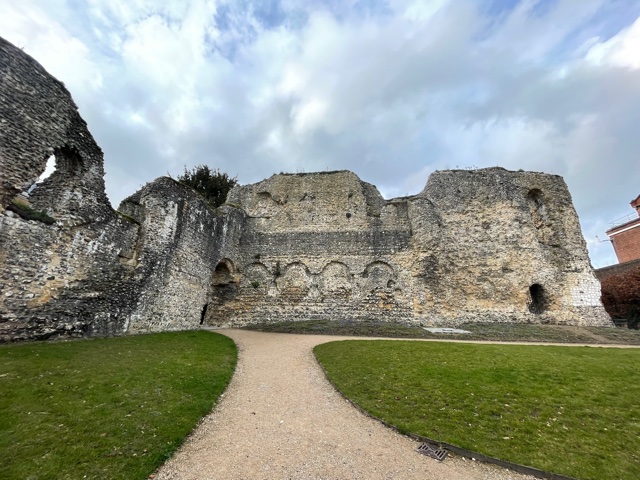
But were you aware that Jane herself lived next to the ruin of a notable medieval abbey? In my previous post, I discussed Jane Austen's experience of boarding school in Reading. When Jane Austen was 10 years old, she followed her older sister Cassandra to boarding school in Reading, "The Abbey School", which was attached to the Reading Abbey ruins. 

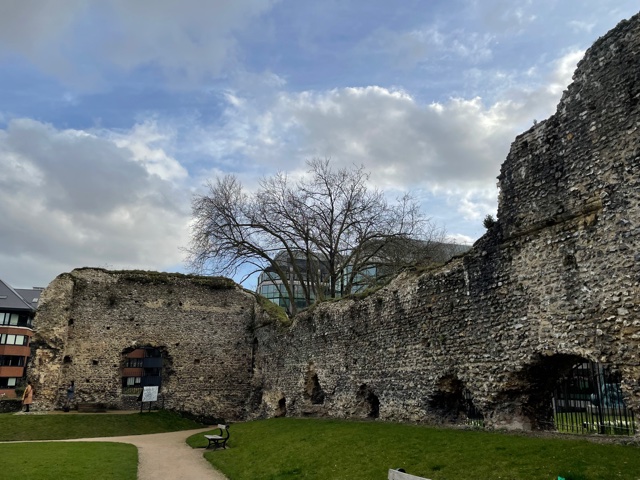
Reading Abbey ruins. 

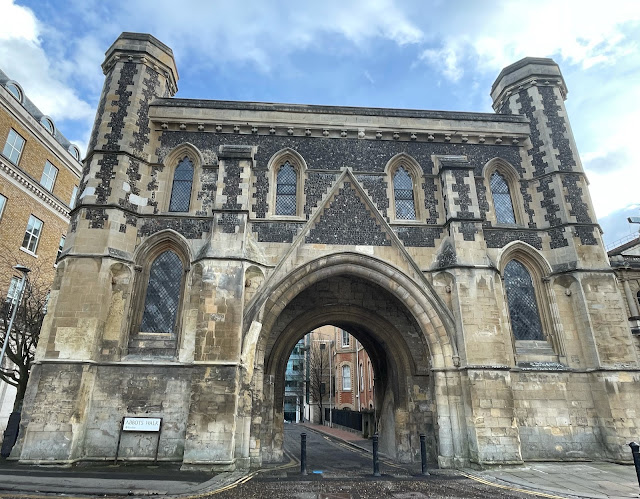
The girls stayed at the school for just 18 months, and the school was known to focus more on the learning of feminine accomplishments rather than classical learning. The girls lived and studied in what is now the Abbey Gateway and a more modern building attached to it (no longer there), but they certainly had plenty of free time to play in the afternoons, and the sizeable abbey ruins will have been their playground. 

The Abbey Gateway

A few years ago, I had the chance to visit the Abbey Gateway for a special event and see the building where Jane lived and studied. But it wasn't until today that I actually visited the Reading Abbey ruins, as the site has not been open to visitors for a very long time. It was fascinating to see the place that must have inspired young Jane's vivid imagination!   

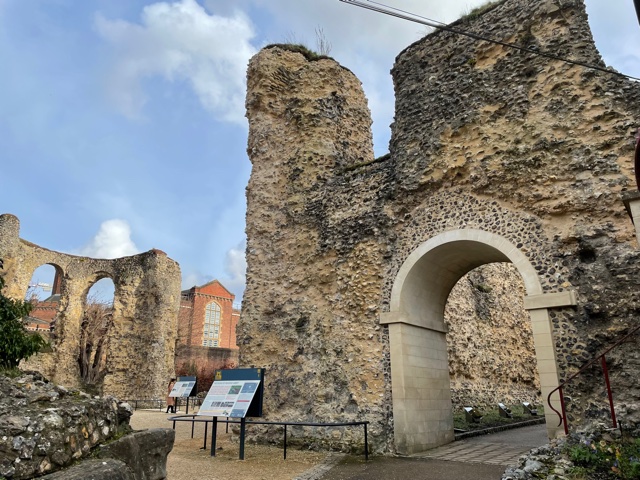
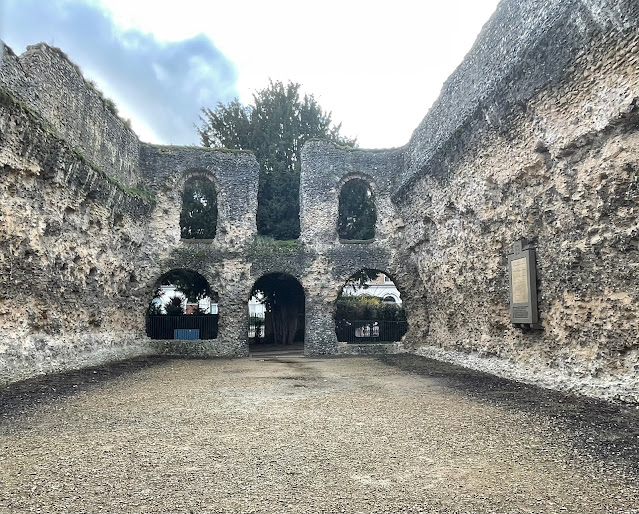
The entrance into the abbey. 


Reading Abbey was built in the 1100s by King Henry 1st and took several centuries to build. It was a religious community centred around a magnificent church - the fourth largest in Britain! - and one of the largest monasteries in Europe. Monks lived and practised a religious life in the Abbey for 400 years, but the buildings were later destroyed in wars and to make way for private buildings. Jane Austen is the most famous alumnus of the Abbey Girls School. 


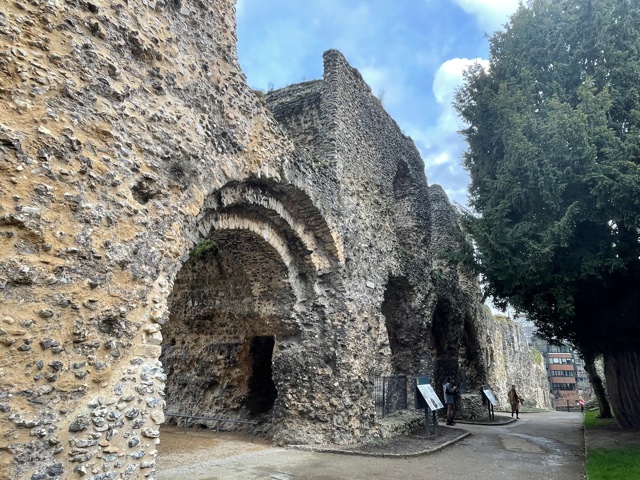
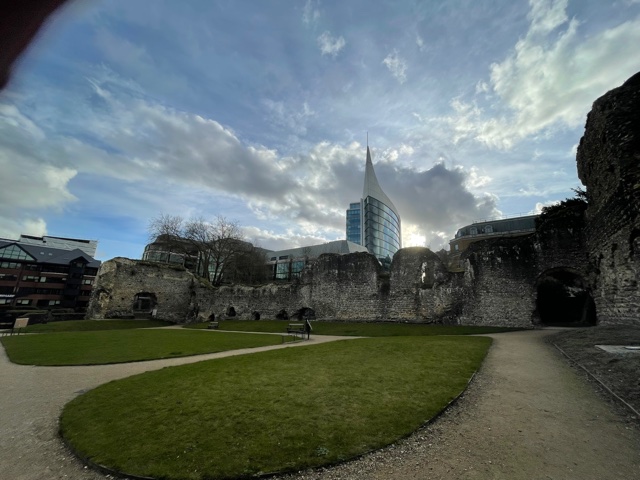
Reading Abbey ruins nestled amongst the modern buildings.

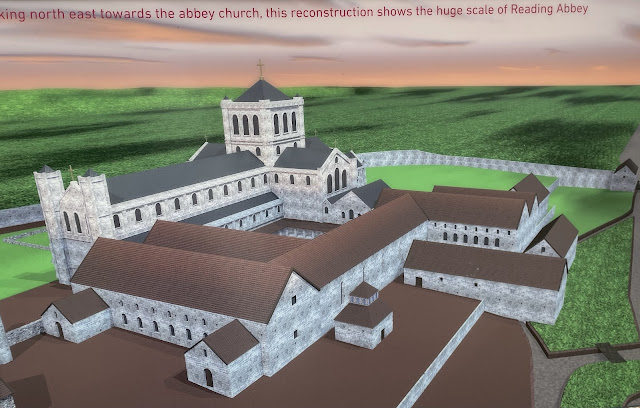
The area is large and this image shows just how majestic the monastery had originally been. 


What a perfect setting to inspire a young writer's imagination!

Saturday, October 30, 2021

What did Jane Austen and Fanny Burney have in common?

What inspired Jane Austen to write those famous first lines of Pride and Prejudice?

"It is a truth universally acknowledged, that a single man in possession of a good fortune, must be in want of a wife."

Perhaps this sentence echoes Jane Austen's contemporary, Fanny Burney's (1752-1840) Camilla, where she writes: "It is received wisdom among match-makers, that a young lady without fortune has a less and less chance of getting off upon every public appearance". 

Jane Austen took several influences from authors that she admired, such as Maria Edgeworth, Samuel Johnson and Jane West. Did you know that, during Jane Austen's lifetime, there were plenty of proliferous female authors around? While Jane Austen herself wasn't famous for her works and only became slightly better known as an authoress towards the end of her life, Fanny Burney (also known as Frances D'Arblay) was a well-known and celebrated Georgian author and much admired by young Jane Austen herself. Fanny Burney only became overshadowed by Jane Austen much, much later during the Victorian era. 

In fact, in Fanny Burney's novel Cecilia (1782), the term, Pride and Prejudice, is mentioned three times, in block capitals. One example reads:  The whole of this unfortunate business,” said Dr Lyster, “has been the result of PRIDE and PREJUDICE.” The powerful alliteration must have stuck firmly to young Jane's mind. 

I have written a more detailed analysis of Fanny Burney's most famous book, Evelina. I believe that Jane Austen's creation of Mr Darcy is influenced by Burney's male hero, Lord Osbourne, Evelina's broody and moody love interest in the novel. They meet at an assembly and get on very badly to begin with but are eventually united. There are many more similaries in Camilla as well. 


I recently read Claire Harman's biography of Fanny Burney, and it was fascinating to learn more about the author who was one of the most popular authors of her generation and who had a very eventful life. Based on my reading, I thought I might compare the two authors and their similarities and differences. 

Similarities between Jane Austen and Fanny Burney: 

-Both authors grew up in the Georgian era, although Fanny Burney was 23 years older than Jane Austen, having been born in 1752.

-Both wrote about young female protagonists. Burney's titles include 'Evelina', 'Cecilia' and 'Camilla', while Austen had 'Elinor and Marianne' (early title of Sense and Sensibility), 'Susan' (early title of Northanger Abbey), 'Catharine' (an early fragment) and 'Emma'.

-Austen's Northanger Abbey follows a similar pattern of a coming-of-age novel to Burney's Evelina. Like Evelina, Catherine Morland is a simple, naive character entering the world and "society", makes mistakes and learns as she matures in the novel.  

-Both authors have adopted a highly stylised, complex style of writing and write about manners and morals. Both use clever, often comical dialogue to portray characters and their voices.

-Both authors lived in Bath at around the same time, but it is not known if they met. 

Differences between Jane Austen and Fanny Burney: 

-Unlike Jane Austen, who lived a relatively quiet life as the daughter of a country clergyman, unknown to the public, Fanny Burney was born into a cultured family of authors. Her father, Charles Burney, was a music historian, composer and musician. Burney grew up in London, in the middle of fine society, mingling in theatrical and literary circles, and was always well known and recognised throughout her lifetime. 

-Although Jane Austen was invited to Carlton House to meet the Prince Regent's librarian, she never met members of the royal family. Austen was famously sceptical of the Prince Regent, sympathising with his long-suffering wife, Princess Caroline. She wrote, "Poor woman, I shall support her as long as I can, because she is a Woman and because I hate her Husband." Fanny Burney, on the other hand, was a firm monarchist and had, a few decades earlier, been appointed Mistress of the Robes to Queen Charlotte (The Prince Regent's mother). Burney suffered greatly during her five year stint in the palace, but continued to support the queen after leaving her royal duties. Burney also mingled with the French royal family while she lived in Paris. 

-Although Jane Austen was well travelled in the south of England, she never ventured abroad. Burney, on the other hand, married a French exile, General D'Arblay, and they lived across both countries and had a bilingual family. The couple were stranded in France for over a decade due to the war between England and France in the early 1800s. 

-While Jane Austen sets most of her scenes inside people's houses, Fanny Burney's books are mostly set in London and often outdoors - at the theatre or in a pleasure garden and so on - reflecting the sociable life that Burney led. 
Monday, September 13, 2021

Beaus and Bonnets Back in Bath

Yesterday, I was excited to attend the Jane Austen Festival in Bath after a long break of 2 years. I wasn't sure how grand the festivities would be this time around and, unsurprisingly, the number of visitors was somewhat reduced this year, but you wouldn't notice it, as it felt as festive as always (with some precautions of course). 

As usual, I attended the day of the Promenade, which is my favourite event in the festival. It's always an exciting moment to enter Bath and spot many others in beautiful Regency attire walk down the ever-so-elegant streets of Bath. 


The promenade started off with a gathering at Holburne Museum (in Sydney Gardens opposite a house where Jane Austen used to live!), with dancing from a group of young dancers and music by a military band. Then, the town crier solemnly announced the departure of the parade. 


This time, we promenaded the streets of Bath for an hour, chatting away in the glorious sunshine until we reached Parade Gardens where we dispersed to catch up with acquintances. 


After the promenade, I attended the Festival Fayre to browse some Regency clothes and accessories. I also attended a theatrical walk called "Austen Undone", a production by the Natural Theatre Company, which is a hilarious adventure into Regency Bath, including some ideas from Jane Austen's characters and her humour. 


A day well spent - I wish I could have stayed longer but look forward to next year's festival, fingers crossed!


Sunday, June 20, 2021

Visiting Lady Denham at Sanditon House

Last weekend, I visited Dyrham Park, a beautiful National Trust estate near Bath. You might have seen Dyrham Park in the 2019 Andrew Davies adaptation of Jane Austen's Sanditon - or if you don't prefer the word 'adaptation' (which I don't in this case), the series 'inspired' by the fragment. Whilst I'm not a fan of Sanditon the ITV series, I was eager to visit the beautiful estate, having seen the gorgeous backdrop on screen. 

In the series, Dyrham Park features as the location for Sanditon House - the formidable Lady Denham's estate. In the book and series, Sanditon is a coastal town, on the way to becoming a fashionable seaside resort. In reality, Dyrham Park isn't close to the sea, but it is situated in the beautiful rolling hills around Bath (also - rather appropriately - in Jane Austen country). 


The back entrance into the house. 

The rolling hills and sloped grounds of Dyrham Park are truly spectacular at this time of year, with fluorescent green dominating the verdure, and so many lovely hikes around the estate. It comes as no surprise that the lanscape design has been created by none other than Capability Brown, also known as "England's Greatest Gardener". 


                                                                    St Peter's Church next to the house.

The gardens are also lovely, with two ponds, a waterfall, and an elegant range of perennials. 


According to the guide, the grounds were truly majestic in Georgian times, with several fountains placed around the grand entrance into the building. 

                                    The landscape design of Dyrham Park in the 18th Century.

This would have been the approach and the front entrance to the house. 

Thanks to the recently relaxed restrictions, I was able to view the ground floor interiors of Dyrham Park as well. Some of these rooms featured in Sanditon, and were glamorously decorated (dividing the opinion of viewers), demonstrating the wealth of Lady Denham - the reluctant benefactor of the development of the seaside town. I thought that the rooms looked quite different in reality, but it has been a while since I watched the series. 

The walls are adorned with interesting works of art, patterned wallpaper and tapestries. 

Interestingly, the exotic walnut material of the staircases (above) reveals the colonial history of the building. In fact, there was an exhibition about the colonial connections to Dyrham Park, and how the estate benefited from its colonial income and its links to the slave trade. Thought-provoking, yet sad at the same time - but it is an excellent development that the National Trust have become very open about the dark history of many of their great estates these days. 

Filming also took place in the courtyard, which provided a location for Sanditon street scenes. The courtyard does look very familiar, and one can easily imagine a Sanditon street with horses and carriages and ladies in their bonnets walking along the street. 

Have a look at this "Behind the Scenes" film: 


Further reading: 

The filming of Sanditon at Dyrham Park - National Trust: 

https://www.nationaltrust.org.uk/dyrham-park/features/dyrham-park-features-in-sanditon

The locations for filming Sanditon - PBS:

https://www.pbs.org/wgbh/masterpiece/specialfeatures/sanditon-filming-locations-guide/

Thursday, June 10, 2021

On Holiday with Jane Austen : "She thinks of nothing but the Isle of Wight, and she calls it the Island."

As I was visiting the Isle of Wight for the first time with my family last week, I was surprised to discover a Jane Austen connection to the island. In fact, it turned out that the islanders were very proud of the fact that Jane Austen had mentioned the Isle of Wight in her letters and in her work and believed that Jane Austen had visited the island too. 


As opposed to the common perception of the spinster living a quiet, uneventful life in a country village, few people are aware that Jane Austen was actually very well travelled around the South of England and and spent plenty of time with her brothers in London, Southampton and Kent, and she frequently visited the coastal towns (inspiring Sanditon). Her knowledge of different areas of Southern England is evidenced in her writing, which is full of references to real places around Southern England all the way up to Derbyshire. 

During my trip, I came across frequent references to Jane Austen and other literary figures, such as Keats, Tennyson, Dickens and George Eliot, and I discovered that Jane Austen's brother, Edward Austen Knight had visited "The Island" (as Jane preferred to call the Isle of Wight) in 1813 with his daughter Fanny and sister-in-law Louisa, but we are not aware if Jane herself visited there personally. Her heroine of Mansfield Park (published in the next year 1814), Fanny Price, uses the same word to refer to the Isle of Wight, as we can see in this excerpt where Maria and Julia Bertram mock Fanny's lack of geographical knowledge in Mansfield Park: 

      "Dear mama, only think, my cousin cannot put the map of Europe together-- or my cousin     cannot tell the principal rivers in Russia-- or, she never heard of Asia Minor--or she does not     know the difference between water-colours and crayons!-- How strange!--Did you ever hear     anything so stupid?"

    "My dear," their considerate aunt would reply, "it is very bad, but you must not expect                 everybody to be as forward and quick at learning as yourself."

"But, aunt, she is really so very ignorant!--Do you know, we asked her last night which way she would go to get to Ireland; and she said, she should cross to the Isle of Wight. She thinks of nothing but the Isle of Wight, and she calls it the Island, as if there were no other island in the world. I am sure I should have been ashamed of myself, if I had not known better long before I was so old as she is." (MP, Chapter 2) 

Fanny Knight kept a pocket book and on 7th June, 1813, she wrote: 

"Uncle H.A. and I in the curricle, Papa and At L. in the gig, set off at 8, Breakfasted at Petersfield, Dined and Saw the Dock Yard at Portsmouth, & took a wherry over to the Isle of Wight in the evening. We slept at Ride."


Fanny mentions visiting the famous landmark of the Needles, which I visited with my family. On 9th June, she wrote:  

"We went on in the sociable to Newport, where we dined, & then went to Freshwater towards the Western Coast, & took a boat round the Needles point to Yarmouth where we slept". 

"The Needles" 
 

Unfortunately, my photos from The Needles are hardly spectacular, as it happened to be a miserable, wet day during my visit and I didn't particularly enjoy the crowds. 

I did enjoy our stay at Shanklin.


Shanklin Village as Austen Knights would have known it. 

The highlight of my trip was visiting the magical Shanklin Chine, which equally impressed Fanny. On the 8th June, she wrote: 

"We hired a sociable & drove around the Eastern and Southern coasts of the Island - saw the Priory a sweet place - Shanklin Chine, lovely!"


Chine is a local word originating in the Saxon language, meaning a narrow ravine, and this ancient ravine is such a peaceful haven of waterfalls, plants and wildlife. I could imagine sitting there for ages just listening to the water dripping down and admiring the lush greenery in the ravine. 


In Jane Austen's days, Shanklin Chine was a rough walk and very few people managed to make it to the waterfalls, and it wasn't until 1817 that the place really became an attraction - Victorians were full of praise of the place. I do wonder how the Austen Knights managed to "drive around" in their "sociable" on these terrains! 

A barouche-sociable, as mentioned by Jane Austen, carrying King George V. and Queen Mary. 
Image from Wikipedia: https://bit.ly/2SqNFdk

As Queen Victoria made Osborne House her summer retreat, the Isle of Wight became a very popular watering place and it was fashionable to visit natural beauty spots, such as the Needles and Shanklin Chine. 

It sounds like the young Fanny Knight really enjoyed her trip to "the Island" and had many stories to share with her Aunt Jane, which must have given her some inspiration for Mansfield Park, if indeed she never herself visited the Isle of Wight. 

It 

The Heritage Centre at Shanklin Chine, which tells you the story of Shanklin Chine and has a fascinating collection of art and caricatures from the likes of Rowlandson. 


References and further reading: 

  • Le Faye, D. (2006) A Chronology of Jane Austen and Her Family. Cambridge University Press. 
  • On the history of Shanklin Chine: https://www.shanklinchine.co.uk/history/
  • On writers visiting the Isle of Wight: https://farringford.co.uk/news-events/tennyson-poems-blog/writers-on-the-isle-of-wight