Search this Blog

Monday, April 27, 2015

A Moral Tale With Georgian Cougar As Anti-Hero

Much as I love the six great novels written by Jane Austen, there is one commonly classified as a minor work that has always ranked highly amongst my list of favourites: Lady Susan. It’s about time that I discussed this novel, which is so rarely touched upon in the Austenite world. Spoiler Alert!

Lady Susan is a short, early novel, most likely to have been written in 1793-94 when Jane Austen was just 18-19 years old, but not published until much later posthumously by his nephew James Edward Austen-Leigh in his 1870 Memoir. An epistolary novel, Lady Susan is cleverly written in letters, which requires perhaps more concentration than an ordinary novel written in prose, but gives us a thorough idea of Jane Austen ‘s early style of writing – we mustn’t forget that Sense and Sensibility, initially named “Elinor and Marianne,” started out as an epistolary novel, too. This was a style highly popular in the 18th Century and favoured by many of Jane Austen’s favourite writers, such as Fanny Burney for example.

I was excited to find out that Lady Susan is finally being adapted on screen -by none other than Whit Stillman who directed Metropolitan, an excellent modern adaptation of Mansfield Park back in 1990. Interestingly, the film is called “Love and Friendship”, not to be confused with another work from Jane Austen’s juvenilia. I can’t wait to find out how Stillman has adapted this epistolary novel  into a captivating screenplay with Austenesque dialogue, and to see the pre-Regency era costumes that we have had a glimpse through the Daily Mail. Stillman gives us an exciting preview of the movie in the making on Twitter: 


What interests me about Lady Susan, however, is why did Jane Austen never revise the novel and submit an improved version for publishing? To be sure, she could have made it longer and more detailed, adapted the letters into prose and added in her trademark witty dialogue?

It is not only the epistolary style that differentiates Lady Susan from Jane Austen’s later novels. It is the only novel where the main character is an anti-hero and a villain, a character that Jane Austen would most certainly not have liked. It is also the only novel where the heroine is not young.

Lady Susan is essentially a moral tale, echoing the themes of “Les Liaisons Dangereuses”. The main character is a beautiful and charming 35-year-old lady, very recently widowed and left with a 16-year old daughter, Frederica. At the beginning of the book we find out that Lady Susan has left Langford, the household of her friends, Mr and Mrs Manwaring, to escape the spreading rumours about her scandalous behaviour with the family. We learn that she has been flirting with   both Manwaring and with his daughter’s suitor, Sir James Martin who had been set to marry their daughter, Miss Manwaring. Angering the whole family, Lady Susan retreats to to Churchill to stay with her late husband’s family, the Vernons, who seem to be aware of her wrongdoings and about her frivolous nature.

File:794749-Newbridge House-Dublin.jpg
                                Newbridge House in Dublin as the setting of “Love and Friendship” (image from Wikipedia).

Mrs Vernon describes Lady Susan as “artful and ungenerous”, but also “excessively pretty”, with “fine, grey eyes and dark eyelashes”. Lady Susan “possesses an uncommon union of  symmetry, brilliancy and grace”, “her countenance is excessively sweet, and her voice and manner winningly mild”. Lady Susan is “clever and agreeable”, and it is with these charming qualities that she is able to cast a spell on several men of her choice and deceive one person after the other.

“Unprincipled” and “deceitful”, Lady Susan flirts her way with men both young and old to secure a rich husband for herself  and for her daughter while engaging in a relationship with the married Mr Manwaring. With her universal charms, she manages to persuade Mrs Vernon’s brother, Mr De Courcy, that she was not at fault and was indeed a charming human being, although he had previously been convinced that Lady Susan was “the most accomplished coquette in England”. He has changed his mind and now finds Lady Susan attractive with “gentleness and delicacy of manners”. Others advise Reginald against the match, but the young man of 23 is bewitched by her charm. All the while, the reader realises that, in her search for “universal admiration”, Lady Susan is a narcissistic, conniving villain, putting on an act and manipulating others, always acting in her own interest.

Lady Susan is also considered to be cruel and unkind to her daughter. As discussed by Horowitz, in Georgian books of conduct to be a good mother was a central theme, and Lady Susan is certainly no example of one. She has no affection for Frederica, considering her a “tiresome” and “stupid girl”. She is determined to force her to marry Sir James against her will, and sends her off to boarding school in London to make her uncomfortable so that she would eventually agree to her schemes. In the end, as in any other novel by Jane Austen, vice is punished and Reginald realises the true nature of Lady Susan and breaks off the engagement.  The vicious Lady Susan ends up marrying second best, someone she had designed for her daughter, while the virtuous Frederica secures a match of her own heart.

Similarly to the other great novels by Jane Austen, Lady Susan is essentially a morality tale, reflecting the values of the age of Enlightenment. Jane Austen was interested in human character and what makes someone good or bad. Typical of its era, the novel teaches a lesson about virtue and vice, emphasizing on the virtue of good character. In Lady Susan, the vice is selfishness and the utter lack of consideration for the well-being of others.

Why did Jane Austen abandon the novel after the brilliant first draft? Was Lady Susan designed to be just a character study, a sort of practice, as opposed to a full novel?

It is likely that, with the open sexuality and the frivolous nature of the central character, the novel would have been found scandalous and Jane Austen’s family would have opposed its publication. It would surely have brought shame onto the family and provided an unsuitable kind of publicity for the young, unmarried daughter of a clergyman.

However, in my opinion, Lady Susan displays phenomenal talent of an 18-year-old with great potential to become one of the most clever novels written by Jane Austen. I look forward to the publicity that this minor work deserves through the upcoming film adaptation by Whit Stillman.


References and further reading:
To view the original manuscript of Lady Susan, click here.
Horwitz, B. J. (1987). Lady Susan: The Wicked Mother in Jane Austen’s Novels. Persuasions, Vol. 9: JASNA.
For interesting speculations about the plotting of Love and Friendship, see AustenBlog.

Wednesday, November 12, 2014

Pride and Prejudice Goes Graphic

Have you ever read Jane Austen in the form of a comic? Well, this was a first one for me, too! My husband attended a Comic Con recently and brought me this this Pride and Prejudice graphic novel.

IMG_0974

The graphic novel is written by Laurence Sach, illustrated by Rajesh Nagulakonda and published by Campfire whose mission is to “entertain and educate young minds by creating unique illustrated books that recount stories of human values, arouse curiosity in the world around us and inspire with tales of great deeds of unforgettable people.”  And having read the novel, I too feel that a graphic novel is a great way to introduce a classic to a young audience that might find the original a tad too challenging to grasp.

While I didn’t expect to like the graphic novel one bit, not being used to the genre, I was positively surprised to discover that this version has captured the essence of the novel so well. The graphic novel has stayed faithful to the original, changing nothing and removing nothing essential. The original language of the novel has been largely pertained, although the dialogue does remind me a great deal of the 1995 BBC P & P Miniseries; in fact, I’m quite sure that the authors have seen it and have based a large amount of the storyline on the TV adaptation.

IMG_1499

Captions have been added to the illustrations to explain the story clearly, and the thought bubbles add to the effect, showing us what each character thinks, which is obviously missing from Jane Austen’s original novel. This is a helpful effect in Pride and Prejudice in particular, as we can see how Elizabeth and Darcy’s feelings change throughout the story, making the story accessible to anyone.

IMG_1502

While the costumes and backgrounds in the illustrations look appropriate, the characters’ faces look chiselled to perfection, making them look super modern. Perhaps this can be forgiven, though,thanks to the style in this genre! The language, however, is not quite perfect in places, with some grammatical errors here and there and some slips, such as the title in Mr Lucas (for Sir Lucas).

IMG_1500

Nonetheless, Pride and Prejudice Graphic Novel is certainly a fun addition to my Jane Austen collection and I would recommend it to anyone who wishes to be introduced to the author. Funnily enough, my one-year-old daughter loves browsing through the book and looking at the pictures…I’m hopeful that she’ll grow up to love Pride and Prejudice one day as much as I do!

Wednesday, October 29, 2014

'Jane Austen always hits the spot' says Alexander McCall Smith | Daily Mail Online

As we await the publication of Alexander McCall Smith’s Emma, here is a link to a wonderful, insightful article written by him earlier this week on why Jane Austen has the answer to all of life’s problems!


There is also an excerpt from the upcoming book in the article, so it is definitely worth a peek!

'Jane Austen always hits the spot' says Alexander McCall Smith | Daily Mail Online:

Alexander McCall Smith is the author of a new version of Jane Austen's Emma 

'via Blog this'

Wednesday, September 17, 2014

McCall Smith Re-Creating Emma!

What a coincidence!

Soon after I had written about how Alexander McCall Smith was the modern counterpart of Jane Austen, I found out that none other than the man in question had been called out to rewrite Jane Austen’s Emma into a modern tale! The book will be part of the Austen Project, taken on by several significant modern writers, such as Joanna Trollope, who will be re-writing Sense and Sensibility.

Although, in principle, I’m hardly what you could call a fan of Jane Austen’s sequels, as I feel that it is hard to do justice to her genius, I was excited and relieved to hear that the best person for the job would be writing one of them. The book will be published this November.

Here is a blurb of his upcoming book (from http://bit.ly/1lX3VGt):

Emma Woodhouse's widowed father is an anxious man, obsessed with nutrition and the latest vitamins. He lives the life of a country gentleman in contemporary England, protectively raising his young daughters, Isabella and Emma. While Isabella grows into a young woman, marries a society photographer for Vogue at the age of 19 and gets down to the business of reproducing herself, Emma pursues a degree in interior design at university in Bath, and then returns to set up shop in her home village. With her educated eye for the coordination of pattern and colour, Emma thinks she can now judge what person would best be paired with another, and sets about matchmaking her young friend, Harriet, with various possible suitors. Little does she know she is not the only person encouraging romantic pairings in the village. As Emma's cupid-like curiosity about her neighbours, both young and old, moves her to uncover their deeper motives, she is forced to confront a few surprising truths about her own.

On his Facebook page, McCallSmith recently described the experience of writing Emma. He says that he enjoyed writing it but that it was a “real challenge…to portray Emma in such a way that we sympathised with her, while at the same time we saw through her interfering ways”. I urge you to check his Facebook page for some exciting snippets of his yet-to-be-published book! You can also follow the recent developments of the Austen Project on their Facebook page.

Are you familiar with Mr McCall Smith’s works and as excited as I am to get your hands on Emma?

Tuesday, August 26, 2014

The name now has a face!

Wow! It’s been a while since I posted here. I thought I should comment on a couple of exciting events that have taken place on the Austen front recently.

Starting with the new Jane Austen waxwork, unveiled on July 9th. The waxwork, commissioned by the Jane Austen Centre in Bath, has finally revealed Austen’s true looks with the help of forensic data.

waxwork head and shoulders (high res)

Images from the Jane Austen Centre.

The wax figure of Jane Austen was developed by the FBI-trained forensic artist, Melissa Dring, in conjunction with internationally-renowned sculptor, Mark Richards, and Bafta and  Emmy award-winning costume designer, Andrea Galer. So much detail was put to the waxwork that it took more than three years to finish it, and the result is stunning. 

waxwork full length (low res)

The data on which the likeness is based was gathered from the written accounts of her contemporaries – family members and friends – just as I did as I described in my blog on what Jane Austen looked like.

This can hardly be a small deal for us Austenites, as we must all have been wondering what she truly looked like. I personally feel that the wax figure does do justice to Jane Austen, coming quite close to how I imagined her to look based on all the written accounts. I feel that, being three-dimensional, the sculpture is certainly much superior to Melissa Dring’s portrait of Jane Austen made a few years ago. I’m fairly sure that the sculpture comes closer to the real Jane Austen than the commonly displayed lithography does, and is far more flattering than Cassandra’s sketch of her sister. In conclusion…

….the name now has a face!

What are your feelings about Jane Austen’s new likeness?

Next, I shall continue with the news involving a certain McCall Smith…stay tuned!

Saturday, March 9, 2013

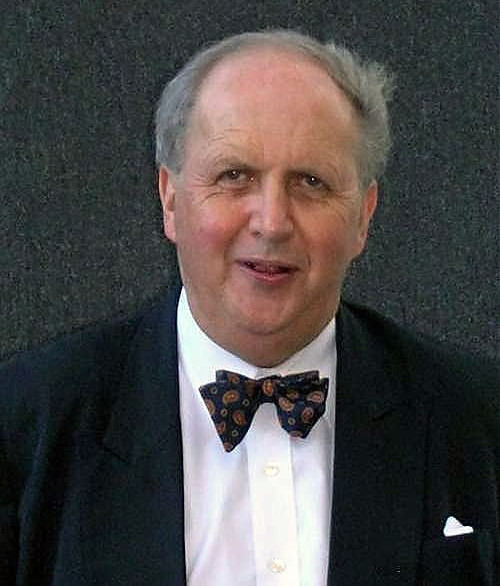
Alexander McCall Smith - A Modern-Day Jane Austen?

What do the Georgian female writer Jane Austen and the prolific modern novelist Alexander McCall Smith have in common?

NPG 3630; Jane AustenFile:AlexanderMcCallSmith.jpg

  From http://bit.ly/bXEtHa                                      Image from Wikipedia: http://bit.ly/TGu57C.

You must have heard about McCall Smith’s immensely popular Ladies’ Detective Agency series. You might also have come across his Scottish amateur sleuth, Isabel Dalhousie’s adventures in Edinburgh, and about the amusing inhabitants of 44, Scotland Street. But how do these relate to the writings of Jane Austen?

Not only do both the novelists select intelligent women as their main characters; they have created a range of characters both likeable and odious, with their little quirks and idiosyncrasies, which are largely revealed through clever, witty dialogue. Neither writer describes the great events of the world, but rather about a small community of people, a microcosm of the society at large.  They both write about everyday life and things that might happen to normal people, with a humorous touch.

It therefore comes as no surprise that McCall Smith is an admirer of Jane Austen as a writer, and often refers to her in his novels. In this article from the Star Tribune, he admits that he is inspired by Jane Austen, praising her  novel of manners.

“I'm a great fan of Austen and also of Barbara Pym, who wrote wonderful social comedies that I find very amusing. I'm very interested in how important customs and social expectations are in creating and maintaining stable societies. I think if we ignore the small courtesies, we fundamentally weaken the bonds that make society possible. Then I'm afraid we're faced with people who can be quite feral in their approach to life.”

In his article “Beauty Locked Out”, published in the New Criterion, McCall Smith argues that the reason why Jane Austen remains such a popular novelist is that 

“Her novels seem to fulfil a deeper need in today's readers: the yearning for an ordered and innocent world in which violence and conflict are absent.”.

The same could be said about the novels of McCall Smith, where goodness always wins in the end. Like Jane Austen, McCall Smith makes fun of people’s “follies and inconsistencies”, as Jane Austen would put it. In his books, McCall Smith shows that each character has their flaws, and they can learn from these and turn things around.

In his upcoming 44 Scotland Street novel, McCall Smith jokes about Jane Austen in a chapter, which he recently released to his fans on Facebook. You should check out this highly amusing take on McCall Smith’s humour, if you haven’t experienced it yet!

Sunday, February 3, 2013

Pride and Prejudice Revisited

Still being kept super busy with my baby, I will try to post to my blog every now and then. I still actively follow other Jane Austen blogs, although I may not have the time to comment or contribute to them that often.

This month being the 200th anniversary of the publication of Pride and Prejudice, many bloggers have chosen to discuss themes related to Jane Austen’s most popular novel. Some time ago, I spotted this lovely little documentary on Pride and Prejudice in a Dutch blog,  Jane Austen.

Part 1

Pride and Prejudice Revisited interviews various well-known and established Jane Austen biographers and screenwriters for the adaptations, who each recount their experiences with Jane Austen. It is interesting to hear what first attracted them to Jane Austen and Pride and Prejudice in particular, and why they have continued their association with the writer.

The documentary also discusses the modern adaptations of Pride and Prejudice, from Bridget Jones’ Diary to Bride and Prejudice, pointing out why all the the vastly different adaptations have been ever so popular. This brings light to the immortality of Jane’s novels and their adaptability to modern culture.

According to the documentary – and I would have to agree – it was the ground-breaking 1995 adaptation of Pride and Prejudice that truly brought Pride and Prejudice to the masses and brought people to love Jane Austen. Perhaps the sexualisation of Mr Darcy with the ‘wet shirt scene’ had something to do with it…?!

The screenwriter for the 1995 miniseries, Andrew Davies, points out how Jane Austen’s novels read differently in different eras, resulting in very different adaptations of the same novels. Wouldn’t you agree that the popular 2005 film with Keira Knightley  caters much more to the modern taste than the tamer, more slow-paced 1980 version for instance? (I will, however, stay partial to Davies’ 1995 version, with its amazing period detail, witty dialogue and slow progress towards culmination, as in the novel).

The documentary also analyses why people have grown to adore and admire the character of Elizabeth, who has become the ideal woman for many – she is, after all, both beautiful and intelligent, with “a twinkle in her eye” (well said!) and a wit unmatched in the world of literature.

Part 2

The second part of the documentary discusses, for example, why the proud, arrogant Mr Darcy remains so attractive to readers.

Sue Birtwistle, the producer for the 1995 Pride and Prejudice, makes the interesting point how most stories in romantic fiction actually retell the story of Elizabeth and Darcy and how they become attracted to each other against all odds.

She also draws attention to how the characters in the novel are archetypes, characters that live on in literature as well as in life. We all know a flirtatious, attention-seeking Lydia and an odious, off-putting Mr Collins, don’t we?

Part 3

Something that often goes unnoticed is how Jane Austen, through her stories, brings light to the snobbery and injustice in society. The third part of the documentary reveals how this translates to other cultures as well, showing the examples of the cultures of Iran and India, where women sometimes have to go against their family and society, just like the characters in Pride and Prejudice. Pride and Prejudice is a story that could very well happen in modern-day Asia. 

The documentary points out the the huge effect that the 1995 adaptation of Pride and Prejudice has had on the world of costume drama. Can you honestly say that you remember any quality costume drama before the year 1995?

xxx

I really enjoyed the documentary, as I always love to hear opinions on my favourite novel, and what could be more interesting than to hear the viewpoints of those who are experts on the subject! I also love the snippets from  various adaptations that make up this lovely documentary.

Have you already seen this and did you learn anything interesting from watching it?

Wednesday, January 2, 2013

A Walk With Jane Austen by Lori Smith

WalkWithJaneAusten

Happy New Year to my readers! Hope you have had lovely holidays and have been able to relax in the company of our favourite writer…

Did you receive any exciting Jane Austen-related gifts?

I got this delightful read as a present for Christmas and thought I’d share my experience of reading it with you.

“A Walk With Jane Austen” is a memoir and a travelogue written by Lori Smith, an American writer who may be better known for her recent book “The Jane Austen Guide to Life”. You might have also visited her popular blog, Jane Austen Quotes.

Written six years ago, “A Walk” is still relevant to any fan of Jane Austen. The author has many parallels with Jane Austen; both are women, authors, single and Christian. In the book, the author travels to places where Jane Austen lived and visited, reflecting on how she herself relates to Jane Austen at various levels and what she can learn from her. As she travels around England, Smith compares her own experiences of faith, spirituality, family and relationships with those of Jane Austen.

Smith believes to be a similar Christian to Jane Austen, with a firm, pious faith, which is of a personal nature rather than fixed to the evangelical movement. Interestingly, Lori Smith, like Jane Austen, has grown up in an environment influenced by the evangelicals, which both authors criticise to some degree. However, the focus on Christianity in this work is perhaps a little too heavy for me personally.

“A Walk With Jane Austen” is a thoughtful, introspective memoir. The book is bound together with apt quotes from Jane Austen – a nice touch by someone who has worked hard to put those together in her blog. The assumed love story keeps one captivated till the very end, but Smith’s style may perhaps seem a little naive and desperate in places. “A Walk” being a travelogue, I would have liked to have my curiosity satisfied with a little more description of each place that Smith visited during her tour, instead of the lengthy self-reflections that dominate the book. However, “A Walk” was a pleasant enough read to snuggle up with during the cosy Christmas nights.

Friday, November 9, 2012

A Glimpse at Jane Austen’s Biographies

This post discusses some of the various biographies written on Jane Austen. Obviously there are plenty more biographies written on her life, but these are ones that I own.

A Memoir of Jane Austen: by  James Edward Austen-Leigh


Written by Jane’s nephew, James Austen’s son James Edward, this biography is the most authentic and thorough work on her life – I have described the book in more detail in this post. In addition to the  personal recollections and reminiscences that James Edward had of his aunt, the biography contains authentic information on Jane Austen collected from relatives and descendants.

The memoir is a fascinating read, given that it was written by those who knew her well, as opposed to the other biographies written posthumously. However, we must bear in mind that the book, written in the 1860’s, does cater to Victorian sensibilities and is a somewhat sanitised version, with some interesting details of her life and personality left out, perhaps to protect the family name.

Jane Austen – A Life: by Claire Tomalin

Tomalin

Apart from the Memoir, this is my favourite biography written on Jane Austen. Beautifully written and well-researched, Tomalin takes you on an adventure into the Georgian society. She provides delightful details into the life of the Austen family, following Jane’s life chronologically from birth to death with the movements of family and friends in mind. The book also sheds light into the community in which Jane lived, providing interesting bits of information on her neighbours and the scandals that affected them.

I find Tomalin’s description of Jane’s childhood particularly fascinating. I also like the psychological analysis of Jane’s character based upon her life experiences, written from a female point of view. Tomalin discusses how various major life changes and events must have affected Jane’s character and choices in life, such as being taken away from her parents in her infancy to be nursed in the village, having to move out of her beloved Hampshire to go to Bath, and the loss of sister-in-law after sister-in-law to childbirth. While the biography does analyse Jane’s character in detail, Tomalin does not make too many liberal assumptions beyond the obvious.

Jane Austen – Her Life: by Park Honan

IMG_6398

As opposed to Tomalin’s work, Honan’s biography is a masculine take on the life of Jane Austen. He begins the life story by describing her brother, Frank’s introduction into the navy, which to me, does not create interest in her life in particular. Writing from a man’s perspective, Honan points out that Jane’s brothers had a huge influence on her writing career.  While I agree that having several brothers must have increased her world view a great deal, hers was strictly a woman’s life and she must have learnt as much from reading books and from observing the community around her. 

Honan carefully unveils the historical context and the environment in which Jane Austen lived, providing a great deal of historical detail. However, I can’t help but feel that he spends too much time discussing Nelson, for example, rather than focussing on Jane Austen’s quiet life back in the village.

With his careful study of family correspondence and other archives, Honan does make interesting speculations about where Jane Austen must have drawn her ideas and inspirations for the novels, providing names of people and places that Jane Austen must have come across in her lifetime. He is, perhaps, slightly too liberal with these assumptions in places, considering that Henry Austen points out on his Biographical Notice in the Memoir– “she drew from nature…never from individuals” (p.141). On the one hand, Honan is highly biased in his preface, claiming that other biographers have “misinterpreted” data, while on the other hand, he tends to be fairly liberal with his own conclusions.

Jane Austen: by Carol Shields

Shields

Carol Shields’ biography does not attempt to give a detailed account of Jane Austen’s life, but is more of a discussion on Jane Austen as an author. Shields describes Jane Austen’s development as a writer from childhood into middle age and focuses on events that might have encouraged her to write or discouraged her from writing. Shields discusses things that inspired Jane Austen and how she developed her style as an author.

While the biography lacks detail, it is a beautiful account on Jane’s character and personality and an interesting viewpoint into how she created her art. Written from an author’s perspective, this is an interesting, philosophical work with many poignant thoughts and observations.

Becoming Jane Austen: by Jon Spence

This light and entertaining work on the life of Jane Austen focuses on Jane’s presumed love affair with Tom Lefroy and acted as an inspiration for the film “Becoming Jane”. Catering to the romantically minded, the book takes liberties in drawing conclusions about Jane’s personal relationships with less caution than most of the other biographies. Like Honan, Spence claims that many of the characters in Jane Austen’s novels are inspired by real people, such as Jane’s brother Henry and her cousin Eliza, who are described as having a passionate relationship from their teens. While the book is certainly more entertaining than the average biography, it is probably less based on facts and more on the personal opinions of the author.

Jane Austen: by Marghanita Laski

Laski

This short biography is a compact account of Jane Austen’s life. Dotted with delightful  illustrations on each page, the biography makes an interesting read. The biography is, however, very factual with little analysis beneath the surface, adding little to the other established works written on Jane Austen’s life.  Having been written in the 1970’s, some of the information in the book can now also be considered outdated.

The Immortal Jane Austen: by Maggie Lane

Lane

I bought this booklet at the Jane Austen Centre in Bath. This is a beautifully written brief introduction to the life of Jane Austen. Like Laski’s book, it delights us with plenty of illustrations, but it is written in a more modern style. The style is light and flows as if narrating a documentary. Catering to the lay person, the booklet explains the society of the time, which helps make it more accessible to a person with no background knowledge on Jane Austen and her times.


Have you read any of these?

Which biography do you think best represents Jane’s life and personality?

Are there any other biographies that you would recommend reading?

Monday, October 29, 2012

Miss Benn– An Inspiration for Miss Bates?

I have recently been reading Park Honan’s biography of Jane Austen, “Her Life”. In his work, Park Honan  draws various inferences on where Jane might have got the inspirations and ideas for her novels. Unlike James Edward Austen-Leigh who, in his “Memoir” maintained that Jane Austen did not draw from life, Honan firmly seems to believe that many of her characters are based on actual people who lived around her. Some of the conclusions made are more liberal than others; however, one reference that I found interesting was that of a Miss Benn. 

I remember coming across her house when I visited Chawton a couple of years ago. Located just down the road from Chawton Cottage, Thatch Cottage is, as its name suggests, a thatched cottage built in Tudor style.  The cottage looks ancient, though well-maintained – like the scenery, the cottage must have changed very little in the last 200 years or so. That set my imagination racing…

Who lived there?

DSCN3604ThatchCottage

Thatch cottage was the home of Miss Benn, a middle-aged sister of a poor clergyman with a large family. An impoverished spinster, Miss Benn was reduced to renting this old labourer’s cottage and was dependent upon the charity of others.

In Emma, Miss Bates is a poor “old maid” who lives with her elderly mother. Miss Bates is generally liked in the community and kind to everybody.She is described as “a great talker upon little matters…full of trivial communications and harmless gossip” ( p. 14). Although Emma visits her regularly, bringing gifts and exchanging gossip, she also puts her down as being “So silly – so satisfied – so smiling – so prosing – so undistinguishing and unfastidious…” (p. 179).

image

Tamsin Greig as Miss Bates in Emma (2009).

Likewise, Jane Austen used to visit Miss Benn, bringing her gifts in kind. Miss Benn was also invited to dine at Chawton Cottage and Jane actually read out her manuscript of Pride and Prejudice to her, without disclosing her authorship. Jane listened to Miss Benn, although she was boring and talked of next to nothing.

A penniless spinster like Miss Bates, Miss Benn was a lady of modest means. When Martha suggested giving her the gift of a shawl, Jane said “but it must not be very handsome or she would not use it”. She wore a “long, fur tippet” (Honan, p. 267), which I assume was not at the height of fashion at the time - she must have been considered terribly old-fashioned and shabby. “Poor Miss Benn”, Jane often wrote in her letters.

Was it Miss Benn that inspired Jane Austen to draw the caricature of Miss Bates?


References:

Austen-Leigh, J. E. (2002) A Memoir of Jane Austen and Other Family Recollections. Oxford World Classics.

De La Faye/Austen-Leigh, W. (2004) Jane Austen - A Family record. CUP.

Honan, P. (1987). Jane Austen – Her Life. Bath: Phoenix Giant.

Tomalin, C. (1997). Jane Austen – A Life. Great Britain: Viking.

Saturday, May 12, 2012

Regency Childbirth and Other Musings…

BlackAndWhiteFeet

Wow! It has been a long time since I last worked on this blog. I have been totally engaged by the life-changing event of the birth of my child and looking after my baby, with very little time to dedicate to my research on Jane Austen. In fact, I seem to have forgotten to post the Conclusion to my last series of articles, which I have only just posted! Apologies for disappearing from the blogosphere! I hope I will be able to post something every now and then, although my baby is still keeping me extremely busy.

This post will be a bit of a personal ramble, really. Last night, as I was lying awake in bed in between feedings, having been woken up about 10 times so far and unable to fall back asleep, something shocking occurred to me. As a person who adores the Regency era and would love to be taken back to those times, it disturbed me to realise that, had I given birth in those days, I would probably have died at childbirth together with my child!

I went through a long labour of 12 hours, only to find out at the end that the baby was unable to descend due to “something wrong in the bone structure”. Although I tried pushing the baby out, in the end the Dr sent me to the OT for an emergency Caesarean section – that was the only way to get the baby out on time. Thank goodness, we were both fine at the end of it and my baby is now thriving! But it scares me to think that, without the modern invention of a Caesarean section, I would not have been able to deliver my baby. 

That reminded me of my last post, where I explored Jane Austen’s romantic connections and analysed why Jane Austen perhaps chose never to marry. She was aware that, (quoting myself) “after marriage, her life would be a stretch of continuous pregnancy and child-bearing, and having seen her sisters-in-law suffer from bad health and even die of childbirth, she was probably not attracted to the idea of motherhood. “

Now I wrote this before I myself went through a partly dramatic childbirth, the idea of which now seems distant. But is it by fate that I live in the modern era and have had the fortune to avail of modern medicine to help me survive? Would I actually have been so fortunate, had I lived at Regency times?

Perhaps Jane Austen did make a wise choice never to marry. Though - before you point out - she did of course die of other reasons in the end – but very few people survived to ripe old age in those days. Had I been informed, knowing the situation of my own health, I probably would have made the same choice as her. But here end my melancholy thoughts…

Saturday, April 14, 2012

Jane Austen’s Love Mystery: Conclusion

Some people say that Jane Austen’s genius in creating the perfect romance is thanks to her own romantic experiences. That she experienced great love, enabled her to create such powerful romances as Pride and Prejudice and Persuasion.

However, Jane herself made it quite plain that, in her writing, she did not copy individuals from her own experience but created her characters from imagination. According to her nephew James Edward, her family members never recognised any individuals in her characters. Jane declared that “I am too proud of my gentlemen to admit that they were only Mr A. or Colonel B.” Perhaps she never met a great love and that is why she made them up?

As her niece Catherine wrote, “her books were her children”. Jane was aware that, after marriage, her life would be a stretch of continuous pregnancy and child-bearing, and having seen her sisters-in-law suffer from bad health and even die of childbirth, she was probably not attracted to the idea of motherhood. She certainly enjoyed flirting, as we hear from various sources, but she was aware that the only way she could continue her writing career was to remain single.

At that day and age, remaining single can’t have been an easy choice to make – Jane’s acceptance and immediate rejection of Harris Bigg-Wither is proof of that. With financial insecurity in the horizon, the life of a spinster was hardly a lucrative prospect for any lady. But our Jane seems to have had an early feminist streak in her; she was proud of her “children” and the fact that she could make money through writing; she loved her freedom.

Had she met a great love and had marriage worked out for her, things might have been different. However, according to her niece Caroline, romances never caused her great sorrow. And - unless Jane was an extremely private person - we can assume that those who knew her well – her family members – would be the best people to rely on for any judgment on her feelings or character.


References:

'Austen-Leigh, J. E. (2002) A Memoir of Jane Austen and Other Family Recollections. Oxford World Classics.

De La Faye, D./Austen-Leigh, W. (2004) Jane Austen - A Family record. CUP.

De La Faye, D. (1995) Jane Austen’s Letters. OUP.

Norman, A. (2009) Jane Austen: An Unrequited Love. History Pr Ltd.

Spence, J. (2003) Becoming Jane Austen. Hambledon and London.

Tomalin, C. (1997) Jane Austen – A Life. Viking.