Search this Blog

Thursday, August 4, 2016

My Pilgrimage to Steventon - "The Cradle of Jane Austen's Genius"

In June I finally had the chance to realise one my dreams - to visit Steventon - the birthplace of Jane Austen and an inspiration for her early novels. This is where she was born, grew up, and wrote the first drafts of Pride and Prejudice, Sense and Sensibility and Northanger Abbey. Steventon always had a special place in her heart, and this is the place that she was so sad to leave that she fainted on hearing the news about the move.

"Three or four families in a country village is the very thing to work on", she advised her niece, Anna, in 1814, who was also writing a novel. Jane Austen's home in Steventon must have provided her with plenty of inspiration for her novels - it was, as her nephew James-Edward Austen-Leigh wrote, the "cradle of her genius".

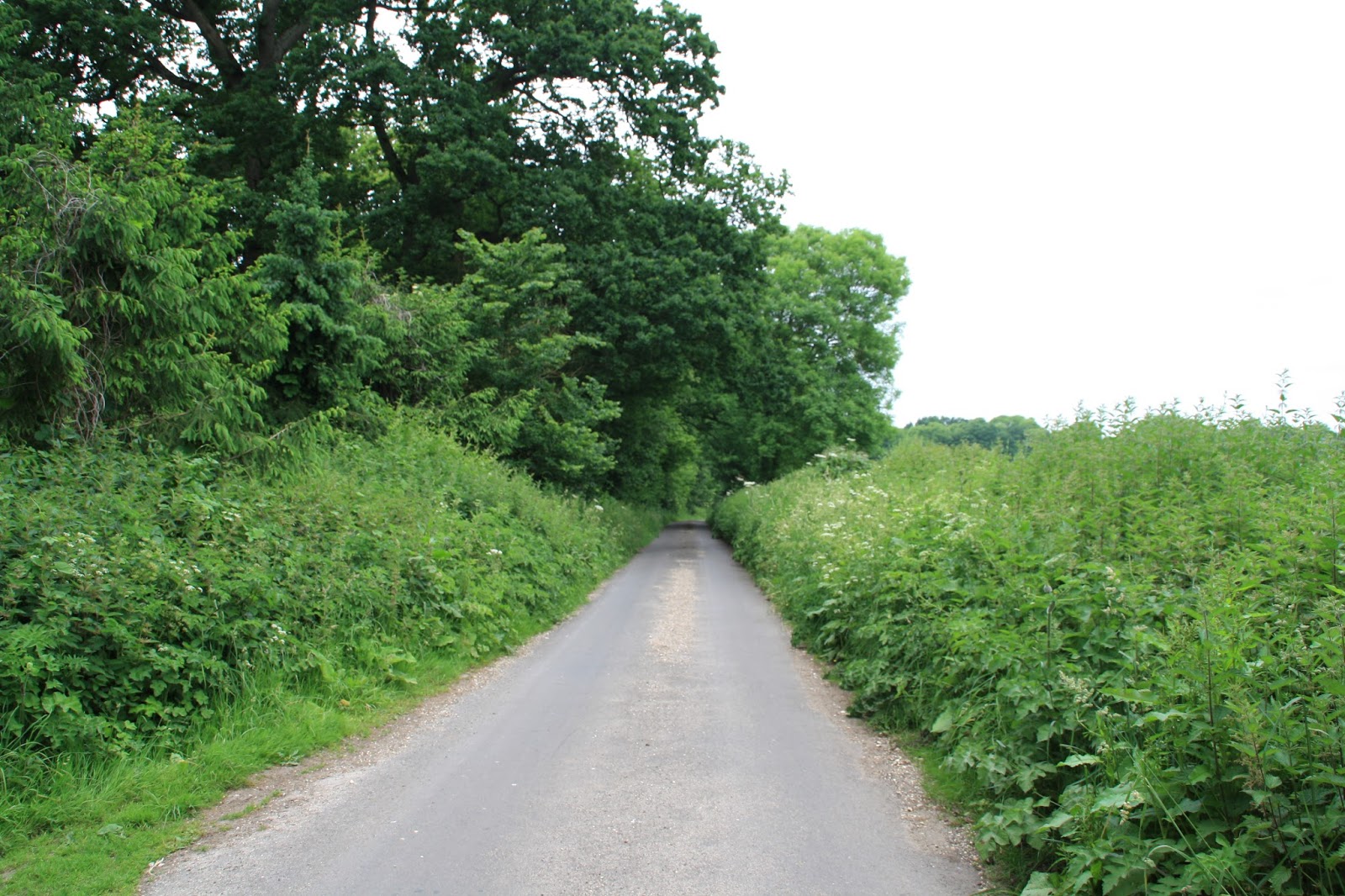

Steventon is a tiny village situated six miles west of Basingstoke, between the villages of Ashe and Deane, in the most beautiful, green, lush Hampshire countryside.


Tall hedgerows line up tiny, ancient roads that lead up to Steventon, and tall arches of age-old trees shade the roads. Sheep dot the fields, and the many manor houses and thatched cottages in the area are not a far cry from Jane Austen's era. Indeed, the only thing that seems to have changed is that there are cars and tractors driving along the tiny roads instead of horses and carriages.

As you enter the village road from the motorway, you pass a pub called the Wheatsheaf, which used to be a coaching inn in Jane Austen's times. It was here that she often walked to pick up the post, as mail coaches would stop here on this busy London road to change horses.


As you drive through the village, you pass some quaint cottages along the way. After the village, continue for some time towards St Nicholas Church. As you come to the place where the road from the village meets the lane to the church where Jane Austen's father was Rector, there is an empty field on the right where Steventon Rectory once stood.


The Austen family moved into Steventon Rectory in 1768, and Jane Austen was born there in 1775 and spent the first 25 years of her life in the Rectory. Jane's brother, James, took over the Rectory in 1801, and unfortunately, the house was demolished in ca 1823. There are no visible signs of the Rectory left, but we have a fair idea of where the house was and how large it was after the recent archaeological excavations in the field where the building foundations were discovered. There is a slope at the back of the field, and many have suggested that Jane Austen would roll down the hill as a child, just like Catherine Morland in Northanger Abbey who "loved nothing so well in the world as rolling down the green slope at the back of the house".

The well used by the Austen family is still quite visible from the road and is surrounded by iron railings (now covered by bushes). 


The well was in the backyard of the Rectory, which suggests that the house must have been situated quite close to the road. The site for Steventon Rectory is a beautiful, peaceful location and nothing like the busier, more centrally located Chawton Cottage. 


There is a tall lime tree near the hedge (on the left), which was planted by Rev. James Austen who remained Rector of Steventon following his father from 1805 until 1819. In 1823, before the old Rectory was demolished, a new rectory was built by Jane Austen's brother, Edward Austen Knight who owned the land here, for his son, Rev. William Knight. You can see the house in a prominent location on the hillside opposite, image below (it is now privately owned).  


Turn towards the church. In Jane Austen's day, the road was a rutted cart track, which required Jane and Cassandra to wear pattens under their shoes in muddy weather! About 1/3 mile up the road, you see Steventon Manor on your right. This is newly constructed; Jane knew the original Elizabethan manor well as the Austen's friends, the Digweeds, were tenants at the manor.


Steventon manor 

On your left is the Church of St Nicholas, where George Austen was Rector. The church is believed to be as old as 12th Century, and I was pleased to find out that it has changed very little since Jane Austen's days. 


The Church of St Nicholas


The church looked quite modest and simple from the outside, which added to its charm. The ancient yew tree in front of the church is estimated to be over 900 years old. The original key used to be kept in the hollow trunk of the tree, but it disappeared mysteriously a few years ago. 

You know that you've come to the right place when you see this plaque on the signboard! 


The church is very pretty inside, with colourful Victorian wall murals adorning the walls. This is where Jane came with her family every Sunday for the first 26 years of her life, to hear her father preach and to meet all the members of her community. The church really is very small, and can't have had a congregation of more than 40 people or so. 


There is a plaque dedicated to Jane Austen on the wall, donated by her great grandniece. 


There is a monument for James Austen, erected by his widow and children, on the wall. There are monuments for his wives, Anne and Mary, as well. (Apologies for the blurred photos!)


There were also some memorials for members of the Digweed family who had their own Digweed Pew as well, as they lived here for 100 years. This is one of the only remaining pieces of furniture to have survived the Victorian renovations. 

Outside, right by the door, there is an old sundial - a scratch on the wall, which marked the time at which people were expected to be at the church for worship. 


We had a look at the churchyard as well, to find the grave of James Austen. 


There was also the grave of William Knight and his family members. 


As I left from Steventon, full of excitement at the beauty and serenity of the place, I decided to have a look at the nearby villages, Ashe and Deane, as well. George Austen was also in charge of the parish of Deane, and Jane Austen frequently walked to Ashe to meet family friends. 


This beautiful building is Ashe Rectory, where Jane's best friend and mentor, Madame Lefroy, lived. She was the aunt of Jane's love interest, Tom Lefroy, and he stayed at the Rectory for some time until his aunt sent him away, perhaps worried that Jane might get hurt. I have to admit I fell a little in love with this house myself, with the gorgeous roses and vines adorning the glorious Georgian facade. 

Jane visited her friends, the Harwoods, at Deane House, a beautiful eighteenth-century mansion with large grounds. Jane and Tom danced together in a ball at Deane House, and she also visited her close friends, Martha and Mary Lloyd, at nearby Deane Rectory.


The three villages are all nearby, but too far to walk by modern standards. It does make you realise just how much walking Jane Austen must have done on a daily basis and perhaps this is why she loved her Hampshire countryside so much?

Having seen Steventon, Ashe and Deane, I now feel a tad closer to the world of Jane Austen and can imagine her walking around the fields and woods in her bonnet and gown, hem 6 inches deep in mud...


References and further reading:

Austen-Leigh, W. /Austen-Leigh, R. (2009) Jane Austen, Her Life and Letters - A Family Record. Echo Library.

Edwards, A-M. (1991). In the Steps of Jane Austen – Walking Tours of Austen’s England. Wisconsin: Jones Books.




Thursday, July 21, 2016

A Walk Through the Neighbourhood of Fanny Price in Portsmouth

It was a beautiful, sunny summer's day and we decided to venture back to Portsmouth as we had purchased a season ticket for the Old Naval Dockyard on our previous visit to see HMS Victory. Sadly, the fascinating Mary Rose exhibition wasn't open yet, but we enjoyed a lovely stroll along the sea promenade and a walk through the old town. 

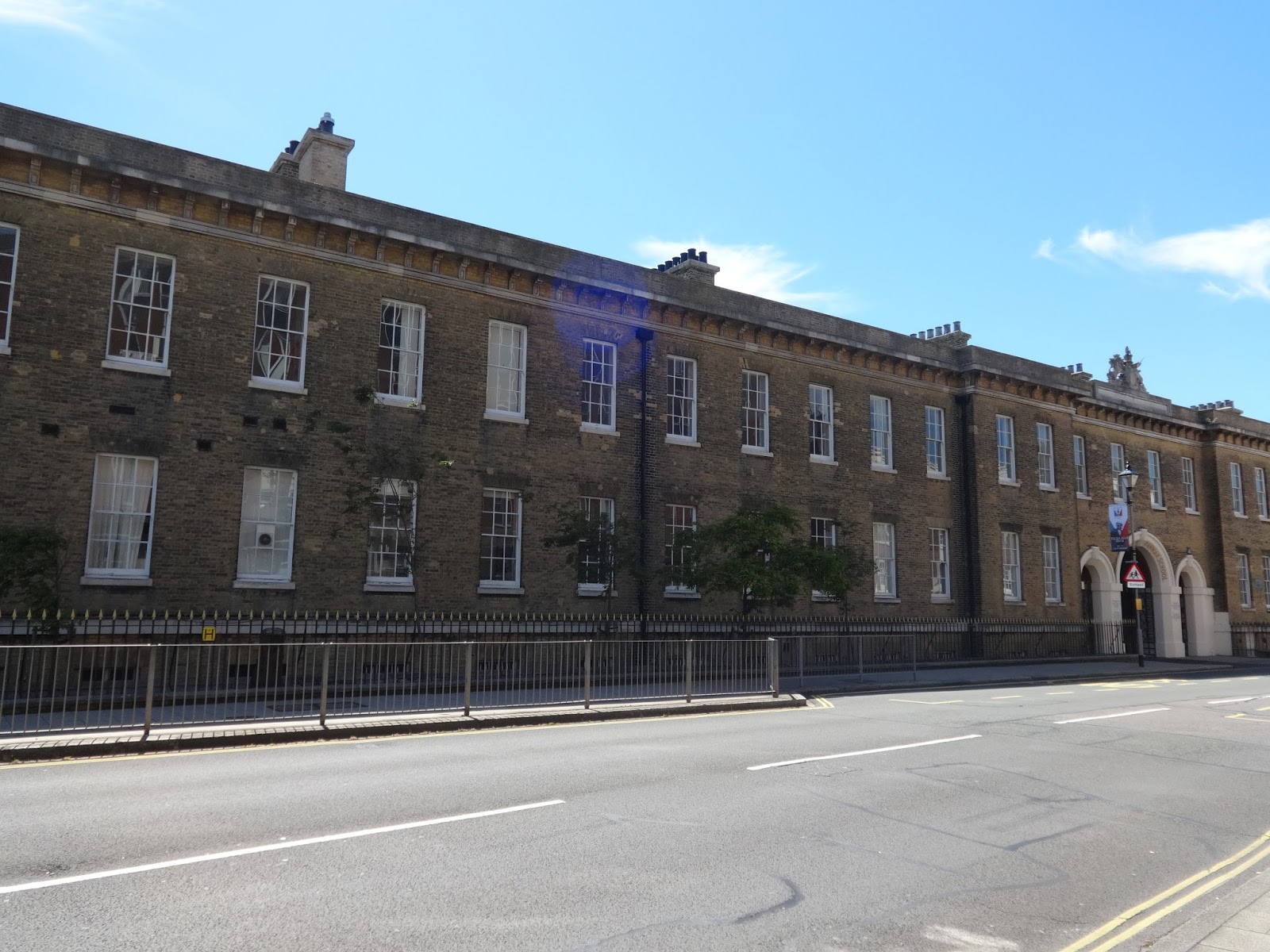
The Portsmouth of today is really a mismatch of the old and new, but fortunately the old town has retained many of the Georgian and Victorian facades and some of the streets must still look the same as they did in Jane Austen's times. 


At the time, Portsmouth was a military and naval town of some 7000 people. The High Street had several handsome Georgian houses, which would have been homes to the wealthy, while the poorer, dirtier areas were outside of the main thoroughfare. Georgian Portsmouth was a noisy, filthy place and its inhabitants less sophisticated than what Jane Austen was used to. Quoting Fanny Price “The men appeared to her all coarse, the women all pert, every body under-bred” (MP, p. 395). Portsmouth was a haven for drunkenness and riotous and immoral behaviour. 


Walking along the streets of the old town, I started browsing the houses, imagining with my mind's eye which one would belong to Fanny Price's family...


We passed the beautiful, old Portsmouth Cathedral with a golden ship for a windwane. 


Nelson's presence is still felt in Portsmouth. The George Inn, which was destroyed in the Second World War, was a popular resting- inn for the leading naval officers and Nelson often stayed there. He had his last breakfast here before embarking on HMS Victory. 


The man himself. 


The roofless ruin of the medieval church, Domus Dei, or Royal Garrison Church, is at the seafront. This church was also destroyed in the Second World War. This is where Fanny Price worships. 


“The Prices were just setting off for church … when Mr. Crawford appeared again …. he was asked to go with them to the Garrison chapel, which was exactly what he had intended” (MP, p. 408).

“In chapel they were obliged to divide, but Mr. Crawford took care not to be divided from the female branch; and after chapel he still continued with them, and made one in the family party on the ramparts” (ibid.)


The ramparts completely surrounded the land, and it is on these stretches that Mr Crawford and the Price family would walk. “It was [Mrs. Price’s] public place; there she met her acquaintance, heard a little news, talked over the badness of the Portsmouth servants, and wound up her spirits for the six days ensuing” (ibid.).


One of the several memorials to sailors to be found in the port. 

What did Jane Austen think about Portsmouth? To be sure, it was a rough place, a place not fit for fine ladies. As the female villain of Mansfield Park, Mary Crawford, says,  “My dear little creature, do not stay at Portsmouth to lose your pretty looks.  Those vile sea-breezes are the ruin of beauty and health” (MP, p. 416). But as we know, Jane Austen loved the sea and the sea-breeze - however, she would certainly have preferred a seaside resort like Lyme Regis to the vices of Portsmouth. 


References and further reading: 
Honan, P. (1987). Jane Austen – Her Life. Bath: Phoenix Giant.
Thomas, B. C. Portsmouth in Jane Austen's time. Persuasions #12, 1990. 
Honan, P. 


Friday, June 24, 2016

Insights into Regency Fashion - Alton Regency Week

Did you know that paddings were used to accentuate certain body parts as early as Regency times? That women would use shoulder paddings to puff up their upper arms and men would accentuate the bulging muscles on their thighs using paddings underneath their light, figure-hugging pantaloons? 

You hear about women of the Regency period making shirts for their husbands and brothers, but did you realise that they also made shoes for themselves or their children?

Well, neither did I, but I learnt some interesting details about Regency Fashion as I attended a talk on Fashion of the Regency Period yesterday at Chawton House Library


The talk was one of the many interesting events held during the Regency Week in Alton. I would have loved to participate in all of them, but being a busy mum, I only had the chance to attend one of the events. Having written a blog about Regency Fashion before, I opted for the talk on fashion as I was curious to see if I could learn something new and get a glimpse of some authentic Regency fashion accessories. 

The informative talk was given by Dr Kathrin Pieren, curator at the Petersfield Museum and a history fellow at Southampton University. Dr Pieren began by describing the political background and the earlier, highly frilly and decorative rococo fashions. She explained how the radical changes brought about by the French revolution and the Napoleonic wars influenced the fashion, the constrictive corsets and crinolines giving way to the more practical, free-flowing statue-like dresses in the style of Roman statues and military styles. Using various images from the Petersfield Museum collection amongst others, Dr Pieren also demonstrated the significant influence that the Prince Regent and the fashion icon, Beau Brummel had on the fashions of the day, and how the fashion gradually changed back towards more restrictive styles after the end of the Regency period. 

The highlight of the talk was the brief display of fashion accessories that Dr Pieren had brought from the Petersfield Museum collection. 


This embroidered gentleman's silk waistcoat from the 1770's is exquisite, with beautiful detail and shiny fabric. The earlier fashions were much more elaborate and the waistcoats were still visible,  as opposed to later on in the Regency period when the light-coloured waistcoats were plain and hardly visible, worn under a the dark coat. 


The later waistcoats were a lot shorter, like this one worn after the Regency period. 


Walking sticks were an important accessory for Regency gentlemen, giving them a sense of stature as well as something to hold and "play with". This black example has an ivory dog carving as a handle. 


These Regency ladies' shoes puzzled me as they seemed quite tiny and narrow. Were people really much smaller than us back then? The shoes remind me of Jane Austen's glasses which were absolutely tiny and looked like something a 7-year-old might wear. The shoes do look comfortable, but not particularly long-lasting, and I assume that ladies must have spent a great deal of time mending as well as making shoes. 


This beautifully embroidered, sheer child's dress is extremely light and made of white Indian muslin as per the fashion of the Regency period. The material reminds of the dresses that I have seen worn by ladies in India even today. Muslins were the order of the day, but it does make you wonder how ladies and children survived in these materials throughout the cold English winters. To be sure, there were layers of undergarments underneath, but it must have been a relief to wear heavier garments (with more restrictive undergarments however) in the Victorian era. 

Petersfield Museum has a Historic Costume Gallery and it would be lovely to go and see the entire collection on display at the museum. 

At Chawton House, I also bumped into fellow blogger, the lovely Sophie Andrews of the Laughing With Lizzie blog (in the blue spencer) and her friends who have formed The Jane Austen Pineapple Appreciation Society (!!), all in costume. It was lovely meeting the young ladies and sharing our passion with all things Jane Austen and Regency!


Some lovely photo opportunities later, I was sad to leave the beautiful Chawton House, basking in atmospheric midsummer's evening sunshine, but pleased to have finally made it to Regency Week.