Alton Regency Week - one of my favourite events of the year - started off with the traditional Regency Market last Saturday. The atmosphere was quiet but festive, with tempting stalls, carriage rides, Morris dances and guided walks. It was wonderful to see so many in costume, enjoying the sunny day in gorgeous Alton.
Search this Blog
Thursday, June 27, 2024
Another Exciting Regency Week!
Wednesday, May 10, 2023
East Meets West at Brighton Pavilion
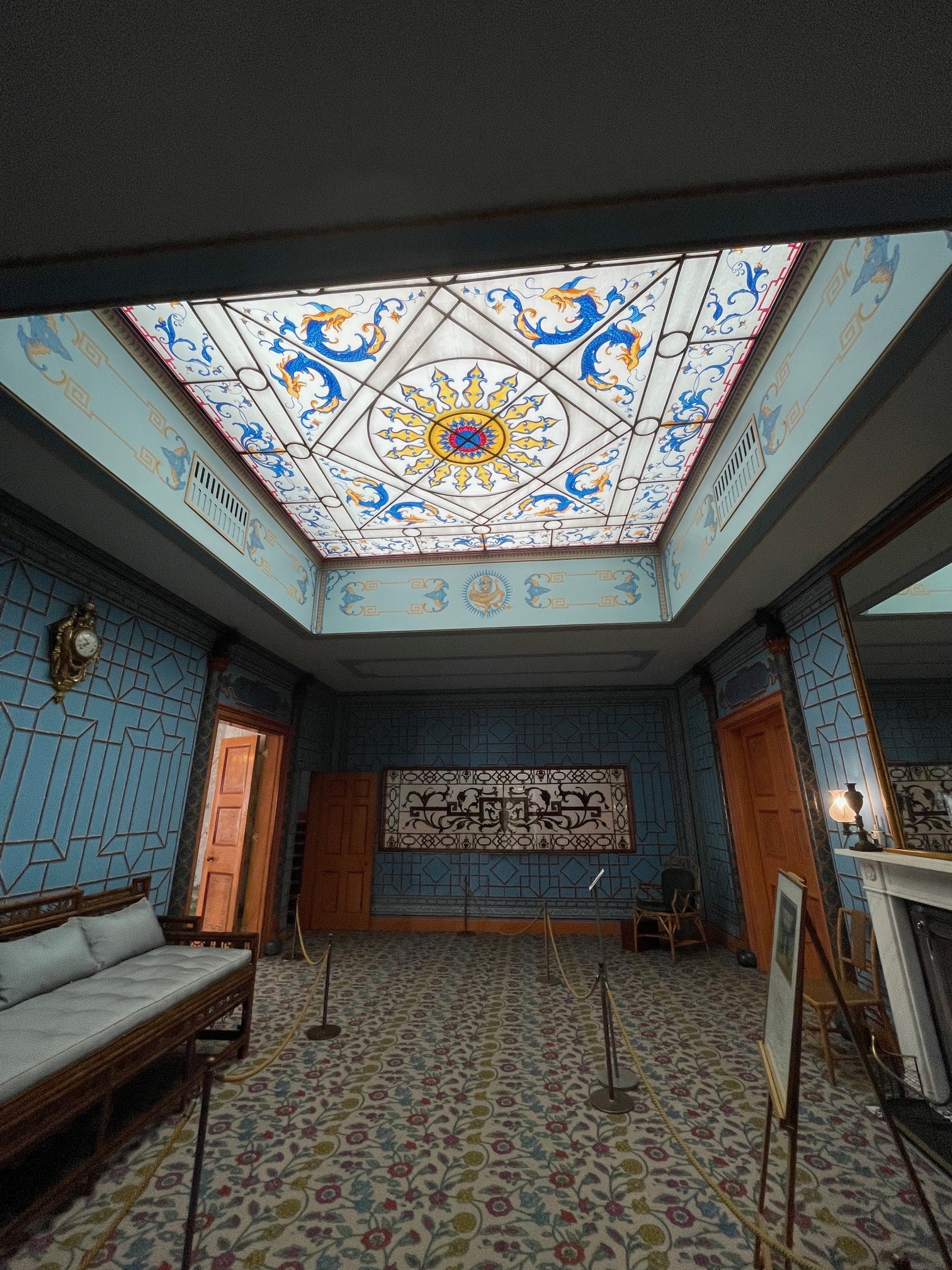
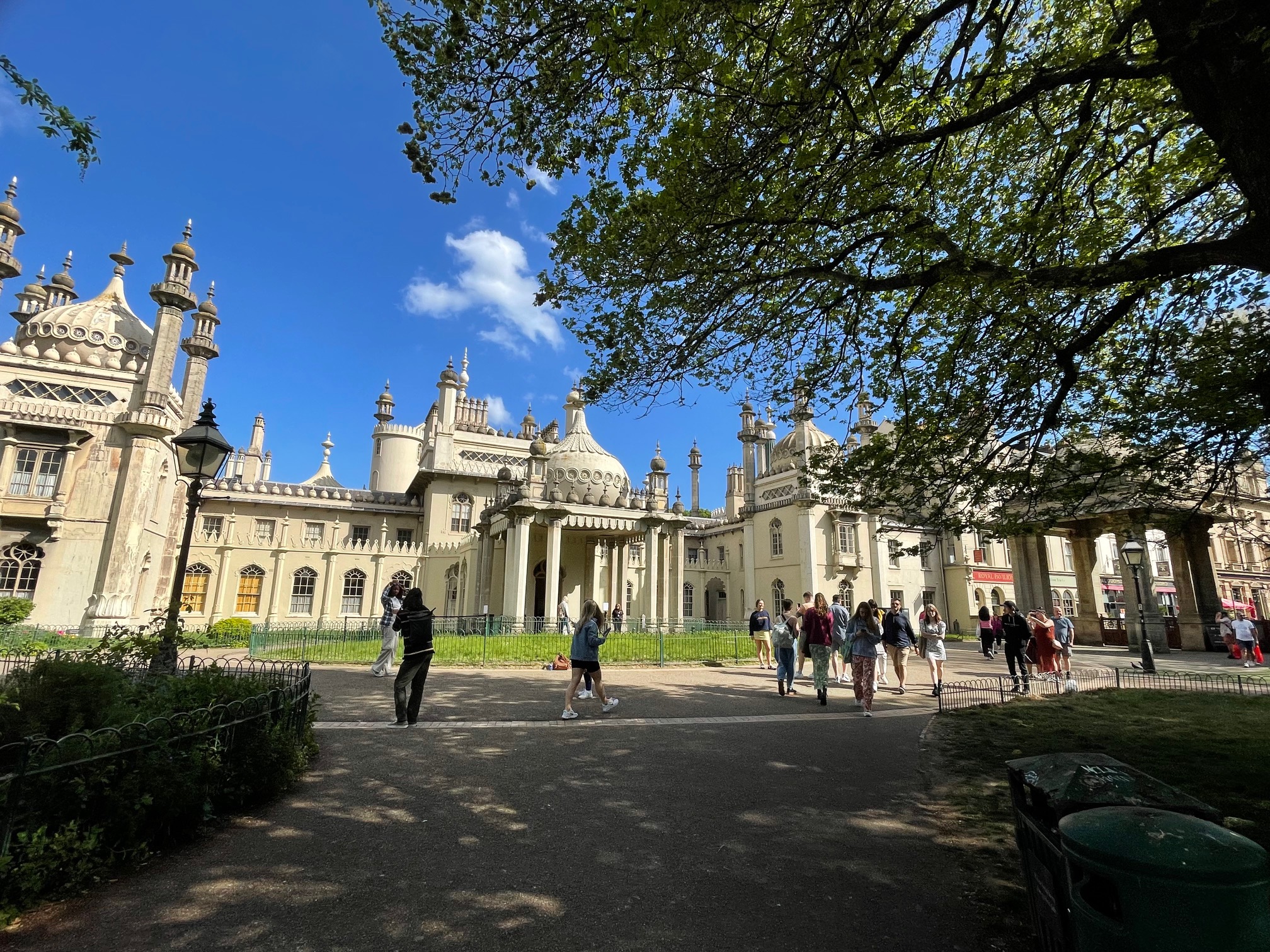
In May last year, I visited Brighton on a beautiful, sunny day and was as excited as Lydia Bennet herself. I had long planned to visit Brighton Pavilion to get a real feel of Regency Britain and the opulence that the Prince Regent represented through his lavish style.
Brighton Pavilion was one of the royal residences of the Prince Regent, who replaced his father, King George III, whilst he was unable to reign the country due to mental illness, and later became King George IV. The Prince Regent lead an extravagant lifestyle, building expensive estates and throwing lavish parties, and he was widely considered an irresponsible monarch and had a scandalous reputation.
This fascinating portrait of the Prince Regent by Domenico Moglia (1829) is unbelievably a micro-mosaic made of tiny pieces of marble and semi-precious stones and weighs close to half a ton. The Prince Regent had sent a portrait of himself painted by Sir Thomas Lawrence as a gift to Pope Pius VII, and in return, the Pope had commissioned this fascinating portrait. I believe the portrait shows the Prince Regent in a more favourable light and is likely to be an "airbrushed" version of him.
Detail of the portrait where you can see some of the tiny pieces of marble.In 1787, The Prince Regent commissioned Henry Holland to create his pavilion in Brighton, as it had become a fashionable seaside resort and here, away from London, he could enjoy his clandestine affair with his mistress, Maria Fitzherbert (as despised by Jane Austen herself). Later, in 1815-1822, the building was extended and redesigned by John Nash, whose designs are still visible today.
The design of the building is heavily influenced by Indian and Chinese style. The exterior is typically indo-islamic with its distinctive domed turrets, as seen in many Indian palaces, such as the Chowmahalla Palace in Hyderabad I visited years ago (my image below).
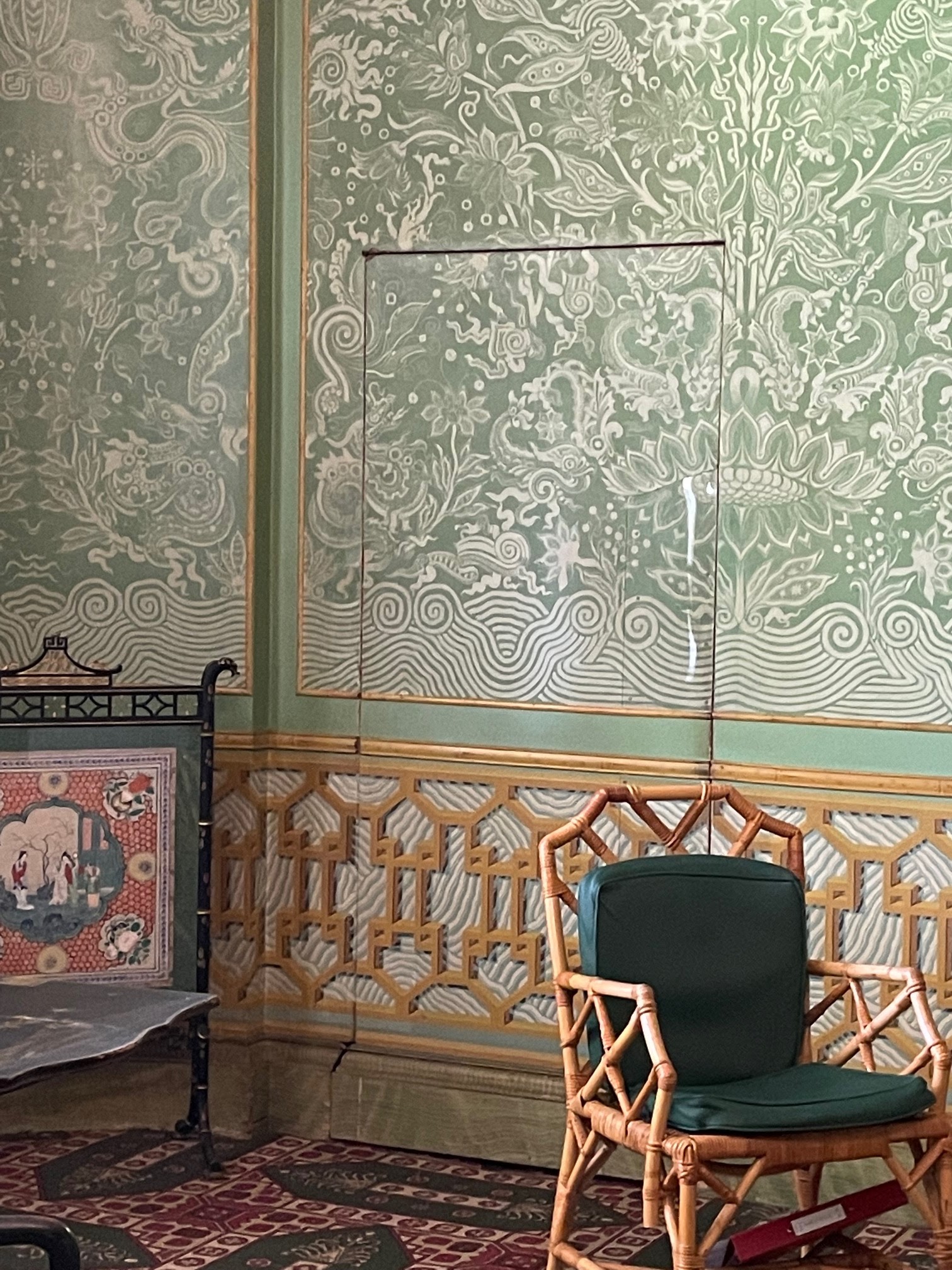
The Chowmahalla Palace in Hyderabad.Chinese influences are visible throughout the interiors of the building.
The opulent banqueting room with its stunning chandeliers is a sight worth seeing. Food and feasting were key to the royal lifestyle here, and one can only imagine the grand dinners that took place in this room.
The chandeliers inspired by Chinese mythology are exquisite. The central chandelier hangs from the claws of a gilded dragon and weighs a ton! The walls are adorned with Chinese wall art and everything around you is gilded, shiny, luxurious.
The saloon was the formal reception room where the Prince Regent would greet his guests before taking them to the banqueting room. The gold theme with Eastern influences continues here in a repetitive, symmetrical design.
The music room was stunning as well. The Prince Regent entertained his guests with music here, had his own band and often got involved in music making too. This room must have looked incredible at night when illuminated by the many chandeliers.
The Prince Regent threw lavish parties and you can imagine large balls happening at the ballroom below.
The king's living areas were moved to the ground floor due to his growing ill health and obesity later in life. The bedroom is less opulent but the oriental influences and Regency style follow through these rooms.
Queen Victoria, who spent time at the Pavilion later on in the 19th Century, had another bedroom made, which is gorgeous - I adore the handpainted wallpaper that features birds and flowers.
The kitchen has a unique look to it with cast iron columns topped with palm tree leaves central to the room. The heavily obese, indulgent Prince Regent loved food and entertaining amd his kitchen was technologically advanced. For each banquet, 70 dishes were prepared in this impressive kitchen by French chefs.
A visit to the Brighton Pavilion is certainly memorable and the Pavilion is still a popular picnic spot today with its lush gardens and vibrant outdoor space.
Wednesday, October 5, 2022
Look Inside A Typical Regency Wedding
Having seen a glimpse of a Regency wedding in most adaptations of Jane Austen, you must have wondered what a wedding would be like? Would there be lots of planning involved? What would people wear and eat? Would there be dancing?
Well the answer is: Regency weddings were very simple affairs. Caroline Austen, Jane's niece, wrote a fascinating memoir in her old age during the Victorian times, and recalls the weddings of her childhood being very quiet occasions.
In 1814, Caroline Austen writes about her sister's wedding to Benjamin Lefroy in Steventon: "Weddings were then usually very quiet. The old fashion of festivity and publicity had quite gone by, and was universally condemned as showing the great bad taste of all former generations."
Unlike in modern days, where brides and grooms plan their special day for months, even years in advance, in Regency times there was less planning involved. Unless she was of royalty, the bride would not wear a unique dress but wear her "best dress" and it wouldn't always be white - although white was a fashionable colour to wear to any occasion at the time.
Caroline was one of the bridesmaids together with Anne Lefroy. "I and Anne Lefroy, nine and six years old, wore white frocks and had white ribband on our straw bonnets, which, I suppose, were new for the occasion."
People would often walk to the wedding, although some went by carriage. Caroline writes, "We in the house had a slight early breakfast upstairs; and between 9 and 10 the bride, my mother, Mrs Lefroy, Anne and myself, were taken to church in our carriage. All the gentlemen walked."
At the church. there would be a simple ceremony and traditional readings from the Book of Common Prayer. As is still common today, fathers would walk their daughters down the aisle. Caroline writes, "Mr Lefroy read the service, my father gave his daughter away." Rings were then exchanged and the church books were signed. When Jane Austen was a child and spending time at Steventon Church where her father was Rector, Jane Austen imagined herself to be married to fashionable imaginary men and mischieviously wrote in the church records:
"The Banns of Marriage Between Henry Frederic Howard Fitzwilliam of London and Jane Austen of Steventon".
After the ceremony, a wedding breakfast would follow, just for the close family circle. The breakfast sounds like a fairly normal breakfast with the addition of a few special items, as described by Caroline: "The clerk was there... nor was anyone else asked to the breakfast, to which we sat down as soon as we got back... The breakfast was such as best as breakfasts then were: some variety of bread, hot rolls, buttered toast, tongue or ham and eggs. The addition of chocolate at one end of the table, and the wedding cake in the middle, marked the speciality of the day." "Soon after breakfast, the bride and bridegroom departed" for their new home, some would have a short honeymoon the week after.
It sounds like there weren't many invitees to weddings, but the generosity of the family did extend to the servants: "The servants had cake and punch in the evening".
References and further reading:
Reminiscences of Caroline Austen. (1986) The Jane Austen Society.
https://janeaustensworld.com/tag/regency-weddings/
https://englishhistoryauthors.blogspot.com/2016/11/short-simple-and-to-point-regency.html
Wednesday, September 28, 2022
The Fascinating Story of Hester Wheeler - an Inspiration for Colonel Brandon's foster child?
Whenever I study the life and times of Jane Austen, I come across interesting stories of her contemporaries. One such story is that of Hester Wheeler - foster child of the Chute family, who lived at the Vyne, an estate close to my home. Did the story of Hester Wheeler inspire Jane Austen in her writing?
The Vyne from across the river.
You may remember reading about my earlier visits to the Vyne. The Vyne is a tudor mansion located in Sherborne St John, close to Basingstoke, and was the home of John and Eliza Chute, friends of the Austen family. James Austen was vicar of Sherborne St John and the Austen brothers were close to the Chutes. The brothers often went hunting with John Chute, and the Austen family sometimes visited the Vyne. Jane, however, didn't seem to warm to Eliza Chute, as discussed in my blog.A botanical painting by the talented Eliza Chute.
After 10 years of marriage, the Chutes adopted Caroline Wiggett, a distant cousin of Mr Chute, in 1803 when she was 3 years old.
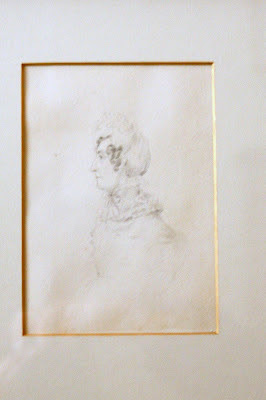
Caroline Wiggett
Caroline considered Eliza and John as her aunt and uncle, and some say that the story of Caroline's adoption inspired the story of Fanny Price. She is said to have had a lonely childhood at the Vyne (like Fanny Price), but Jane Austen seems to have considered Eliza Chute a loving foster mother, as in 1817 when Caroline Wiggett was severely ill, she writes, "I am sorry to hear of Caroline Wiggetts being so ill. Mrs Chute would feel almost like a mother in losing her". Adoption by wealthy relatives was relatively common at the time and, despite the similarities, I feel that Fanny's story may equally well have been inspired by Jane's own brother, Edward's story, don't you think?
The Chutes then took in another child, Hester Wheeler, to live with them in 1814. Caroline Austen, Jane Austen's niece, was very fond of Hester and fascinated by her dramatic life story, and recalls in 1814: "In the summer of this year, I had the great pleasure of a friend and companion in Hester Wheeler, a girl about thirteen, whom Mrs Chute had brought to The Vyne about twelvemonth before. I had heard a great deal of her from my brother and brother's being so often there...To me she was a very delightful companion, the first I had ever felt really fond of, and it seemed afterwards that our intimacy must have lasted much longer than the twelve days, which I see was the term of her visit, so deep was the impression she made on me. Long before, I had eagerly listened to her history, all that I could hear of it, and how it was that she came to be at The Vine."
Eliza Chute
John Chute
Caroline explains how Hester's great-aunt had been governess to the Chute family and Mrs Chute had acknowledged "a strong claim of charity towards the family". "They were in very humble life, as Hester never sought to conceal. They must have at one time kept a shop, for she told me of a recollection of standing on her grandmother's counter."
And now to the scandalous part, as Caroline recollects: "Hester's mother was singularly beautiful; and unhappily a Captain Wheeler, stationed in the town, fell in some sort of love with her, and married her. He also deserted her, a few months afterwards, before Hester's birth, and never reappeared. In time it came to be rumoured that he was a married man when he first made her acquintance, and even that Wheeler was not his real name - but nobody ever knew. How much his young wife had loved him, and how much she grieved for him, as I never heard I will not pretend to say; but she was left in sad straits and difficulties, and had to seek maintenance for herself and her child, and leaving the little girl with her relations, she entered the family of Mr Beach as governess to his daughter. The position was different then from what it is now; for she acted as lady's maid to my Aunt Mrs Fowle... her health soon failed, and she fell into a decline."
Caroline then recounts how Hester's mother (and Hester) had been looked after by the Chutes at The Vyne until she died, and had then taken Hester in to live with them. Hester had been home educated and grew up to become quite a rebellious teenager, and eventually became a governess like her mother and died young of the same disease as her mother had.
The story of Hester echoes that of Colonel Brandon and his foster child by Eliza. Hester's story may well have inspired Jane Austen when writing about Eliza, but Captain Wheeler's promiscuous character also reminds me of Willoughby and Wickham. Jane Austen certainly drew inspiration from the local gossip and stories whispered by her friends and neighbours, and wrote about things actually happening around her.
References and further reading:
Reminiscences of Caroline Austen. (1986) The Jane Austen Society.
Jane Austen’s Letters Collected and edited by Deirdre Le Faye (Third Edition). Oxford University Press (1997).
Tomalin, C. Jane Austen - A Life. Viking (1997).
My visit to the Vyne: https://austenised.blogspot.com/2016/08/visiting-chutes-at-vyne.html
Tony Grant's visit to the Vyne (Jane Austen's World): https://janeaustensworld.com/tag/chute-family/


.jpg)