Search this Blog

Monday, October 29, 2012

Miss Benn– An Inspiration for Miss Bates?

I have recently been reading Park Honan’s biography of Jane Austen, “Her Life”. In his work, Park Honan  draws various inferences on where Jane might have got the inspirations and ideas for her novels. Unlike James Edward Austen-Leigh who, in his “Memoir” maintained that Jane Austen did not draw from life, Honan firmly seems to believe that many of her characters are based on actual people who lived around her. Some of the conclusions made are more liberal than others; however, one reference that I found interesting was that of a Miss Benn. 

I remember coming across her house when I visited Chawton a couple of years ago. Located just down the road from Chawton Cottage, Thatch Cottage is, as its name suggests, a thatched cottage built in Tudor style.  The cottage looks ancient, though well-maintained – like the scenery, the cottage must have changed very little in the last 200 years or so. That set my imagination racing…

Who lived there?

DSCN3604ThatchCottage

Thatch cottage was the home of Miss Benn, a middle-aged sister of a poor clergyman with a large family. An impoverished spinster, Miss Benn was reduced to renting this old labourer’s cottage and was dependent upon the charity of others.

In Emma, Miss Bates is a poor “old maid” who lives with her elderly mother. Miss Bates is generally liked in the community and kind to everybody.She is described as “a great talker upon little matters…full of trivial communications and harmless gossip” ( p. 14). Although Emma visits her regularly, bringing gifts and exchanging gossip, she also puts her down as being “So silly – so satisfied – so smiling – so prosing – so undistinguishing and unfastidious…” (p. 179).

image

Tamsin Greig as Miss Bates in Emma (2009).

Likewise, Jane Austen used to visit Miss Benn, bringing her gifts in kind. Miss Benn was also invited to dine at Chawton Cottage and Jane actually read out her manuscript of Pride and Prejudice to her, without disclosing her authorship. Jane listened to Miss Benn, although she was boring and talked of next to nothing.

A penniless spinster like Miss Bates, Miss Benn was a lady of modest means. When Martha suggested giving her the gift of a shawl, Jane said “but it must not be very handsome or she would not use it”. She wore a “long, fur tippet” (Honan, p. 267), which I assume was not at the height of fashion at the time - she must have been considered terribly old-fashioned and shabby. “Poor Miss Benn”, Jane often wrote in her letters.

Was it Miss Benn that inspired Jane Austen to draw the caricature of Miss Bates?


References:

Austen-Leigh, J. E. (2002) A Memoir of Jane Austen and Other Family Recollections. Oxford World Classics.

De La Faye/Austen-Leigh, W. (2004) Jane Austen - A Family record. CUP.

Honan, P. (1987). Jane Austen – Her Life. Bath: Phoenix Giant.

Tomalin, C. (1997). Jane Austen – A Life. Great Britain: Viking.

Saturday, May 12, 2012

Regency Childbirth and Other Musings…

BlackAndWhiteFeet

Wow! It has been a long time since I last worked on this blog. I have been totally engaged by the life-changing event of the birth of my child and looking after my baby, with very little time to dedicate to my research on Jane Austen. In fact, I seem to have forgotten to post the Conclusion to my last series of articles, which I have only just posted! Apologies for disappearing from the blogosphere! I hope I will be able to post something every now and then, although my baby is still keeping me extremely busy.

This post will be a bit of a personal ramble, really. Last night, as I was lying awake in bed in between feedings, having been woken up about 10 times so far and unable to fall back asleep, something shocking occurred to me. As a person who adores the Regency era and would love to be taken back to those times, it disturbed me to realise that, had I given birth in those days, I would probably have died at childbirth together with my child!

I went through a long labour of 12 hours, only to find out at the end that the baby was unable to descend due to “something wrong in the bone structure”. Although I tried pushing the baby out, in the end the Dr sent me to the OT for an emergency Caesarean section – that was the only way to get the baby out on time. Thank goodness, we were both fine at the end of it and my baby is now thriving! But it scares me to think that, without the modern invention of a Caesarean section, I would not have been able to deliver my baby. 

That reminded me of my last post, where I explored Jane Austen’s romantic connections and analysed why Jane Austen perhaps chose never to marry. She was aware that, (quoting myself) “after marriage, her life would be a stretch of continuous pregnancy and child-bearing, and having seen her sisters-in-law suffer from bad health and even die of childbirth, she was probably not attracted to the idea of motherhood. “

Now I wrote this before I myself went through a partly dramatic childbirth, the idea of which now seems distant. But is it by fate that I live in the modern era and have had the fortune to avail of modern medicine to help me survive? Would I actually have been so fortunate, had I lived at Regency times?

Perhaps Jane Austen did make a wise choice never to marry. Though - before you point out - she did of course die of other reasons in the end – but very few people survived to ripe old age in those days. Had I been informed, knowing the situation of my own health, I probably would have made the same choice as her. But here end my melancholy thoughts…

Saturday, April 14, 2012

Jane Austen’s Love Mystery: Conclusion

Some people say that Jane Austen’s genius in creating the perfect romance is thanks to her own romantic experiences. That she experienced great love, enabled her to create such powerful romances as Pride and Prejudice and Persuasion.

However, Jane herself made it quite plain that, in her writing, she did not copy individuals from her own experience but created her characters from imagination. According to her nephew James Edward, her family members never recognised any individuals in her characters. Jane declared that “I am too proud of my gentlemen to admit that they were only Mr A. or Colonel B.” Perhaps she never met a great love and that is why she made them up?

As her niece Catherine wrote, “her books were her children”. Jane was aware that, after marriage, her life would be a stretch of continuous pregnancy and child-bearing, and having seen her sisters-in-law suffer from bad health and even die of childbirth, she was probably not attracted to the idea of motherhood. She certainly enjoyed flirting, as we hear from various sources, but she was aware that the only way she could continue her writing career was to remain single.

At that day and age, remaining single can’t have been an easy choice to make – Jane’s acceptance and immediate rejection of Harris Bigg-Wither is proof of that. With financial insecurity in the horizon, the life of a spinster was hardly a lucrative prospect for any lady. But our Jane seems to have had an early feminist streak in her; she was proud of her “children” and the fact that she could make money through writing; she loved her freedom.

Had she met a great love and had marriage worked out for her, things might have been different. However, according to her niece Caroline, romances never caused her great sorrow. And - unless Jane was an extremely private person - we can assume that those who knew her well – her family members – would be the best people to rely on for any judgment on her feelings or character.


References:

'Austen-Leigh, J. E. (2002) A Memoir of Jane Austen and Other Family Recollections. Oxford World Classics.

De La Faye, D./Austen-Leigh, W. (2004) Jane Austen - A Family record. CUP.

De La Faye, D. (1995) Jane Austen’s Letters. OUP.

Norman, A. (2009) Jane Austen: An Unrequited Love. History Pr Ltd.

Spence, J. (2003) Becoming Jane Austen. Hambledon and London.

Tomalin, C. (1997) Jane Austen – A Life. Viking.

Thursday, September 1, 2011

Jane Austen’s Love Mystery: Part 5

5. “The nameless, dateless lover” – Jane Austen’s seaside romance
According to family tradition, the most likely person to have touched Jane Austen’s heart, was someone whom Jane met during a seaside holiday between 1801 and 1804. Jane’s nephew James Edward and niece Caroline both mention this event as Jane’s most significant romantic alliance.
torquay_paignton_270
In her letter, Caroline remembers that at the time when the Austens lived in Bath, they went to the Devon seaside in the summer, where they met a “charming man”. She wrote, “I never heard Aunt Cass. speak of anyone else with such admiration – she had no doubt that a mutual attachment was in progress between him and her sister. They parted – but he made it plain that he should seek them out again – & shortly afterwards he died! - My Aunt told me this in the late years of her own life.”
No one in the family has confirmed the identity of the person, apart from Jane’s niece Catherine Hubback who seemed to think that Dr Blackall was the person in question. Author Dr Andrew Norman recently wrote a book, resulting in wide publicity, about Dr Blackall being Jane’s true love, her one and only “Mr Darcy”.
However, Catherine was not sure about Blackall being the person in question and did not seem to think that their parting caused Jane great misery. She wrote that her aunt “always said her books were her children, and supplied her sufficient interest for happiness; and some of her letters, triumphing over the married women of her acquaintance, & rejoicing in her own freedom from care were most amusing”.
Although Caroline thought that the seaside lover may have been the greatest of all of Jane’s loves, she did not seem to think that the relationship had gone on long enough to overcloud her happiness. After all, Jane had her books, her freedom and her leisure – to write and dream about her perfect Mr Darcy.

Wednesday, August 31, 2011

Jane Austen’s Love Mystery: Part 4

4. Edward Bridges

To this day, mystery surrounds Jane’s relationship with Edward Bridges. You may have seen him as one of Jane’s persistent suitors in Miss Austen Regrets, but in actual fact there is very little that we know about the nature of their relationship.

Mr Bridges played by Hugh Bonneville in Miss Austen Regrets.

Image from http://bit.ly/mOP2c5.

The Reverend Brook Edward Bridges of Goodnestone Farm was Jane’s brother, Edward’s brother-in-law. Son of a baronet, he became a clergyman like his other brothers. Jane became familiar with Edward during her visits to Godmersham in the mid-1790’s and seemed to enjoy his company.

During a visit in 1805, Jane noticed that Edward was being particularly attentive to her. She wrote to Cassandra, "We could not begin dinner till six. We were agreeably surprised by Edward Bridges's company to it. . . . It is impossible to do justice to the hospitality of his attentions towards me; he made a point of ordering toasted cheese for supper entirely on my account". As I wrote before, toasted cheese was a favourite supper of Jane Austen’s.

A few years later, in 1808, Jane wrote to Cassandra from Godmersham, “[Lady Bridges’] son Edward was also looking very well, & with manners as un-altered as hers". In another letter written later that year, Jane mentioned an “invitation” that Edward had made to her: “I wish you may be able to accept Lady Bridges's invitation, though I could not her son Edward's”.

Now whatever this invitation may be, remains a mystery to us. Biographers Deirdre La Faye and the flighty Jon Spence certainly seem convinced that Edward proposed to Jane in 1808 and was politely rejected. If his proposal was indeed turned down, there seems to have been no hard feelings on either side, as the friendship continued after that. When Edward became engaged to Harriet Foote later in the same year, she wished him well.

Tuesday, August 30, 2011

Jane Austen’s Love Mystery: Part 3

3. Harris Bigg-Wither

The story of Harris Bigg-Wither’s proposal to Jane must have baffled her biographers for years. What made Jane Austen accept an offer of marriage and then turn it down overnight?

File:Harris Bigg-Wither.jpg

Harris Bigg-Wither. Image from Wikipedia.

In December 1802, Jane and Cassandra were invited to stay with their friends, the Bigg sisters, at Manydown Park. Alethea and Catherine Bigg were childhood friends of the Austen children and Jane and Cassandra enjoyed staying with them. Their brother, Harris Bigg-Wither, was heir to the Manydown estate, and Jane remembered him from her childhood as being a plain and awkward boy with a stammer. He had by now grown somewhat more confident and was of a good height.

On the eve of 2 December, Harris proposed to Jane and was accepted. She was fond of him, liked the family, and was comfortable at Manydown, being so close to Steventon. Everyone rejoiced and celebrated the engagement that evening. However, Jane must have spent the night going over her decision, considering the fact that Harris was 6 years younger than her, she was not attracted to him, and that she could not be happy being married to someone she didn’t love. She explained her change of heart to Harris in the morning, and asked her brother James to take her and Cassandra back to Steventon immediately and from there on home to Bath.

The situation must have been awkward for both the families, but fortunately the Austen and the Bigg sisters’ friendship was not affected by it. Later, though, Caroline Austen asked Jane’s biographer, James Edward Austen-Leigh, not to mention the event in his memoirs, as it would have caused embarrassment to the family.

No doubt, Jane must have occasionally regretted her decision. As mistress of a large estate, her future would have been secured, she would have been able to help her ageing parents and sister, and she would have lead a life of comfort. However, for Jane, marrying without love was not an option. As she advised her niece Fanny later on, “Anything is to be preferred or endured rather than marrying without Affection.” And she certainly did not love Harris Bigg-Wither, as her niece Caroline remembered in her old age.

Monday, August 29, 2011

Jane Austen’s Love Mystery: Part 2

2. Dr Samuel Blackall

GeorgianAcademic

Image: An unknown young scholar.

There are several references to Dr Samuel Blackall in Austen’s biographies. Dr Blackall was a theology student and fellow of Emmanuel College in Cambridge. Jane and Dr Blackall met in 1798 when he was staying with his family friends, the Lefroys. Despite the Tom Lefroy affair, Jane had remained friends with Mrs Lefroy and was a frequent visitor to Ashe.

At the time, Dr Blackall was believed to be “in want of a wife”, as he was about to give up his fellowship and settle down at a parish. Perhaps Mrs Lefroy thought that Dr Blackall would be a good match for Jane. However, despite several matchmaking efforts, it appears that neither party warmed up to the idea. Mrs Lefroy later showed her a letter from Dr Blackall, of which Jane wrote, “There seems no likelihood of his coming into Hampshire this Christmas, and it is therefore most probable that our indifference will soon be mutual, unless his regard, which appeared to spring from knowing nothing of me at first, is best supported by never seeing me.'

Despite the “mutual indifference” admitted by Jane herself, some people do believe that Dr Blackall was Jane’s one true love. Amongst these was her niece Catherine Hubback who wrote, “if she ever was in love, I believe it was with Dr Blackall whom they met at some watering place…there is no doubt she admired him extremely, and perhaps regretted parting”. We do know that she met someone at a watering place years later, but there is some confusion between the nieces and nephews as to the identity of this person. I will come back to the seaside mystery in Part 5.

Sunday, August 28, 2011

Jane Austen’s Love Mystery: Part 1

1. Tom Lefroy

Biographer Jon Spence is convinced that Thomas Langlois Lefroy was Jane Austen’s one and true love and that she suffered for years following her loss. His book Becoming Jane Austen inspired the film, Becoming Jane, in which Jane’s relationship with Tom is portrayed as a full-blown romantic affair. Other biographers have also stressed the importance of the affair in Jane’s life.

Tom Lefroy

Young Tom Lefroy. Image from Wikipedia Archives.

Jane and Tom met during the Christmas season of 1795, when Jane was 20 years old. He was visiting his aunt and uncle, George and Anne Lefroy, at Ashe Parsonage, on his way to London where he was to study law. Anne Lefroy was a close friend of Jane Austen’s and a neighbour to the Austen family. Jane and Tom met at 4 balls and danced together. Jane obviously liked him, describing him as “a very gentlemanlike, good-looking, pleasant young man”.

Jane told Cassandra, “imagine to yourself everything most profligate and shocking in the way of dancing and sitting down together”. Lively Jane must have flirted with Tom very openly, as Tom was “excessively laughed at about me at Ashe”, to the point that he once ran away when she visited Ashe!

Jane always describes Tom with light humour in her letters. Before a ball at Ashe, she wrote “I look forward with great impatience to it, as I rather expect to receive an offer from my friend… I shall turn it down, however, unless he promises to give away his white coat”. She also joked, “I mean to confine myself in the future to Mr Tom Lefroy… for whom I do not care a sixpence.”

The flirtation with Tom was not to last. Before their last ball together, Jane ironically wrote, “at length the day is come on which I am to flirt my last with Tom Lefroy & when you receive this it will be over. My tears flow, as I write, at the melancholy idea.” Tom was to proceed to London and the young couple never met again. It was Mrs Lefroy who sent him away, realising that the youngsters were about to form an attachment and neither of them had money to sustain a good living. He was certainly a practically-minded man, as on his return to Ireland, he married a rich heiress and moved on in life.

Tom Lefroy later became Chief Justice of Ireland and lived up to the old age of 93. In his last years his nephew asked him if he had loved Jane Austen, and he admitted that he had been in love with her, although it had been “a boyish love”.

TomLefroy2

The Chief Justice. Image from Wikipedia.

It is clear that there was a romance between the two, but how much this affected Jane Austen is unknown. According to Jane’s nephew James Edward Austen-Leigh and niece Caroline, the romance had been nothing out of the ordinary. Caroline wrote, “there was something in it, is true – but nothing out of the common way…nothing to call ill usage & no very serious sorrow endured” - a youthful, innocent flirtation, perhaps. There is no evidence to suggest that she had been deeply touched by this affair.

Saturday, August 27, 2011

Jane Austen’s Love Mystery

- For a mystery it is, thanks to the lack of  biographical data from the bulk of her twenties and the discreteness with which Jane Austen handled her personal feelings in her letters.

I am sure that all fans of Jane Austen are intrigued to know if Jane Austen was ever in love, and why she never married. What inspired her to write 5 such influential novels about love and marriage?  No one knows for sure, but all her biographers seem to have their own ideas about Jane’s romantic leanings.

You must have seen the heavily dramatised, fictional film, Becoming Jane, based on Jon Spence’s biography, which portrays Jane Austen madly in love with Tom Lefroy in her early twenties, up to the point of nearly eloping with him. And the slightly more biographical, yet fictional Miss Austen Regrets, which assumes that later in life, Jane probably regretted having never married and secured a safe future for her and the ladies in her family.

Why did Jane Austen decide not to marry? Did she ever love a man enough to marry him, and lose him? Or was she simply not a romantic person at all?

In this series of articles I will now discuss some of Jane’s romantic connections and how they might have influenced the choices she made in life.

Before I begin, can you identify any of these 5 people thought to have been Jane’s lovers? And who – if any - do you think was Jane’s great love?


1

2

3

Tom Lefroy

File:Harris Bigg-Wither.jpg

4

5


Saturday, August 20, 2011

Meet Kaitlin Saunders, Author of “A Modern Day Persuasion”

About the Author

Kaitlin Saunders


Kaitlin Saunders, a fresh name in the Austenite world, is inspired by the works of Jane Austen. She first began writing at the age of sixteen with a period-style screenplay called “Caroline”, which was later made into a film. She has now brought Jane Austen to the 21st Century with her novel “A Modern Day Persuasion”, a modern but faithful adaptation of Jane Austen’s Persuasion.

Book Synopsis

Nearly eight years ago, Anne’s family, specifically her father, convinced her that she was too young to wed and insinuated that her fiancé Rick was solely interested in her wealth and status. Against her better judgment, Anne agreed to postpone the marriage, only to watch the love of her life walk away, never to be heard from again. Since then, time has not been kind, and with the family fortune now gone and Anne unable to move on with her life romantically, she struggles to make a name for herself as a greeting card designer. However, a series of serendipitous events causes Rick to re-enter her life, and at the same time a new beau seeks to claim her affections. The question that needs answering, however, remains the same: Can Anne recover from her previous rejection and love again?


Meet Kaitlin

Anna: Hi Kaitlin! Welcome to Austenised. Congratulations on publishing your book “A Modern Day Persuasion” and bringing Jane Austen to life. It was interesting to read your novel and see how Persuasion would fit into the modern context. I would like to know more about your experience of writing the novel and your inspirations for writing it.

Could you start by describing your biggest challenge in adapting a Jane Austen novel?

Kaitlin: My biggest challenge was taking Jane's premise for Persuasion and placing it into a modern context without perverting her original intent. Sure, you can write a modern day tale of her original idea, but will it really be Austen's beloved characters brought to life in our century? My number one goal while writing this novel was to simply modernize the circumstances and occupations of her characters, not alter who they are or how the story plays out.

Anna: In your dedication, you mention that your mother introduced you to Jane Austen. How did this happen and what was it that made you fall in love with her novels in the first place?

Kaitlin: My mother and I would have regular “girls nights” when I was growing up and watch old classics, including the 1980's Pride and Prejudice and any other adaptations we could get our hands on. I became entranced with the language, the manners and style of dress. As I grew older, I read the novels for myself and later, it was my mother who encouraged me to write A Modern Day Persuasion.

Anna: Which is your favourite Jane Austen novel? How did you choose to adapt Persuasion in particular?

Kaitlin: Persuasion is my favourite Jane Austen novel with Mansfield Park and Sense and Sensibility tying for a close second. I think I appreciate these three novels in particular because Anne, Fanny, and Elinor are so overlooked yet, because they are good and patient, they are given their heart's desires in the end. I chose to adapt Persuasion because I've heard it's one of the least popular of Austen's Major Six, and that's a pity if you ask me! Hopefully my modern day re-telling will help it gain popularity.

Anna: Your novel carefully follows the sequence of events in the original novel. How did you set off planning your novel?

Kaitlin: If you want the inside scoop, I first wrote A Modern Day Persuasion as a screenplay—which is why some readers comment that if flows like a movie and easily creates images. And Anna, I'm so glad you noticed how closely I tried to follow the original's sequence of events.

Anna: You have set your novel in modern California and Oregon. How did you select the settings for your novel?

Kaitlin: I am an Oregon-born and bred woman with family in California. Not only did it ease the writing process by keeping some familiarity to my story, but it also accommodated much of the settings necessary for the book's plot.

Anna: Your story is very faithful to the original. Did you face any difficulty in adapting any of the storyline or characters to the modern day context?

Kaitlin: Thank you! Yes, I did face some complications when adapting Persuasion. For starters, Rick couldn't make a fortune through the Navy like in days past; Anne would have a career; and it would be gross if Mr. Elliot, Anne's first cousin, was still pursuing her in this present day world!

Anna: Jane Austen’s main character, Anne, is a reserved and sensible, yet sweet woman with strong moral feelings. How do you think the character of Anne relates to a modern reader?

Kaitlin: It was important to me that Anne remain Jane's Anne. Anne is that shy girl in the background whom when you get to know one-on-one might have a lot to say! She's loyal, sensible, will listen to you, and feels things very deeply. Anne is the type of friend we all want standing beside us through the ups and downs, and that's what I call an ideal lady.

Anna: I enjoyed your hilarious adaptation of the hypochondriac Mary Musgrove. Who is your favourite character in “A Modern Day Persuasion” and why?

Kaitlin: Mary is a handful, isn't she! You should have heard my mother reading Mary's dialogue when completing some editing for me—hilarious! Mary was definitely one of the funniest characters to write, but it is Anne whom I so admire. Her patience, strong character, sweetness and especially her caring attitude is an everyday inspiration and standard to aspire to.

Anna: Jane Austen wrote in a unique style of her own, and there have been many attempts to replicate it since her lifetime. How is your style of writing inspired by Jane Austen?

Kaitlin: I want my stories to be relatable and Jane, I believe, was the master at making a circumstance hit home. She wrote about what she knew and had learned from those around her. Jane was a very observant lady! She brought to life characters that ring true even in this day and age and it inspires to me to likewise capture some of the ironic things we all encounter everyday.

Anna: Who is your target audience with “A Modern Day Persuasion”? Do you think that your novel will inspire new readers to explore the classic?

Kaitlin: My target audience is anybody and everybody! And yes, I hope my novel will inspire new readers to explore Austen's work as well as other classics. Ideally, after completing my novel, readers will desire to read the original and see how it compares and differs from mine.

Anna: Last, but not least, I would be curious to know if you are planning to write any more adaptations of Jane Austen’s novels - or are you planning to venture to something completely different?

Kaitlin: That's a great question. I'm currently working on two more modern day adaptations while writing several new and completely different stories. I like to keep busy!

Anna: Thank you for the interview, Kaitlin – looking forward to seeing more of you!


You can read more about Kaitlin Saunders on her website at http://www.kaitlin-saunders.com/.

Sunday, July 31, 2011

Snippets of Georgian Pop Music by Lady Georgianna

Jane Austen is known to have played classical music on the pianoforte and attended classical concerts. However, there existed a more light-hearted, teasing, popular style of music in the Georgian times that you may not be aware of: the music of the pleasure gardens of London, which reminds one of various scenes in Fanny Burney’s Evelina with its rogues and harlots.

Lady Georgianna

Image from http://www.lady-g.co.uk/.

The newest issue of Jane Austen’s Regency World (52) writes about an 18th-century girl band called Lady Georgianna (purposefully with two n’s to differentiate themselves from Lady Georgiana Cavendish, a famous 18th-century socialite). The band consists of three members who dress up in elaborate, 18th-century costumes to perform pop music of the Georgian times:

  • Allegra (Abigail Seabrook) – Mezzo Soprano
  • Isabella Wrighten (Hetti Price) – Cello
  • Signora Storace (Micaela Smitz) – Harpsichord

To get a feel of the humorous, light-hearted music performed by this fun-loving group of musicians, click http://www.lady-g.co.uk/media/audio. The group will be performing at the Jane Austen Festival in Bath this September, so some of you may get the opportunity to hear them live.

Sunday, July 24, 2011

Jane Austen’s Colonial Connections

Having lived in India and travelled widely across the country, it has been fascinating for me to explore the connections between Jane Austen and India’s colonial past. While Jane Austen herself never travelled beyond southern England, the affairs of her well-travelled aunt Philadelphia Hancock (née Austen) and captivating, beautiful cousin Eliza De Feuillide were widely discussed at the rectory. According to Jane’s nephew, William Austen-Leigh, these discussions must have generated an interest in Jane in the affairs of France and India.
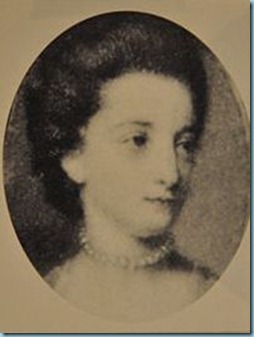
Philadelphia_Hancock

Philadelphia Hancock. Image from: http://bit.ly/nVVc2W

Jane’s aunt, Phila, certainly lead an eventful life. A penniless orphan, she ventured to India at the age of 21 in search of a husband. At the time, men would travel to India to make a fortune in trade, while women would travel East in search of a profitable marriage.
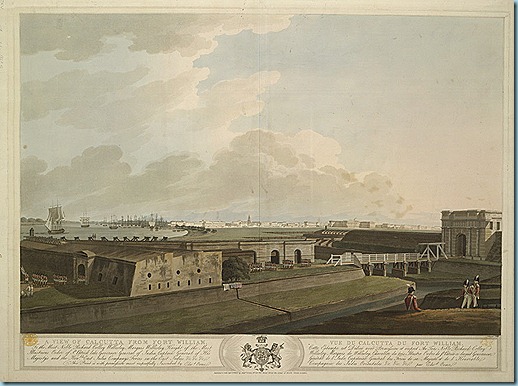
FortWilliam

                 Fort William, the centre of British power in Calcutta. Image from http://bit.ly/n3VODN

Six months later, Phila was married to Tysoe Hancock, a man 20 years older than herself, who was working as a surgeon for the East India Company. The marriage was unlikely to have been a happy one. Hancock was apparently a melancholy, sickly man who seemed older than his years. Jane wrote about her aunt as follows:

“She had been… unhappily married…united to a man of double her own age, whose disposition was not amiable, and whose manners were unpleasing, though his character was respectable.” (p. 27, Austen-Leigh)

In 1759, the Hancocks moved from Madras to Calcutta and formed a friendship with Warren Hastings, an administrator with the East India Company, who was later made the first Governor General of Bengal. Hastings was an influential administrator who laid the foundation for British power in India but had respect on the local ways of government or culture. In Calcutta, the Hancocks became close to Hastings and they set up various business ventures together. 

NPG 4445, Warren Hastings

Warren Hastings. Image from: http://bit.ly/nmdmRv

Warren Hastings had lost a daughter, and he soon became a widower as his wife, Mary, died at childbirth. At Phila’s recommendation, Hastings sent his son, George, to England to be under the care of Mr Austen who may have been acquainted with Hastings from his youth. Frail George, however, died of diphtheria at the age in of 6. Mrs Austen is said to have felt great grief at the demise of George and Hastings always remained grateful to the Austens for looking after him.

Warren Hastings’ house in Calcutta. Image from: http://bit.ly/qIf56J

In the meanwhile in India, Phila became pregnant and in 1761, a daughter was born: Elizabeth, to be known as Bessy and, later, Eliza. Hastings was made her godfather and she was probably named after Hastings’ stillborn daughter, Elizabeth.

The Hancocks’ marriage had been childless for 8 years and there is some speculation amongst biographers as to whether Bessy really was Hancock’s son. Unsurprisingly, malicious rumours began to spread about a possible affair between Phila and Hastings. Lord Clive, who was the Governor of India at the time, wrote to his wife, saying Mrs Hancock “abandoned herself to Mr Hastings”, urging his wife not to keep company to Philadelphia. We do not know whether these rumours reached Steventon, but perhaps the Austens had their own doubts about Bessy’s father. 

ElizaHancock

Bessy Hancock/Eliza de Feuillide. Image from http://bit.ly/oadRhx.

The Hancocks later moved to England. While Warren Hastings never officially acknowledged paternity, he stayed closely in touch with the Hancocks , supervising Bessy’s education and providing for her upkeep. He set up a trust fund of £10,000 for Bessy, which would support her for years to come. When Eliza was 10 years old, her mother told her that her godfather had left her a fortune. Mr Hancock warned his wife not to talk to anyone about it.

“Let me caution you not to acquaint even the dearest friend you have with this circumstance. Tell Betsy only that her godfather has made her a great present, but not the particulars” (AP, p. 68) .

Perhaps Mr Hancock was insecure about his status as Bessy’s father?

After Mr Hancock died in 1774, Phila’s income reduced more than expected, and she decided to take Bessy to the Continent where the cost of living was lower than in England. They stayed in touch with Hastings, who was becoming more influential  in India. In a letter, Hastings affectionately writes  to Phila,

“My dear and ever-valued friend…Kiss my dear Bessy for me, and assure her of my tenderest affection. May the God of goodness bless you both!” (AP, p. 59-60).

Later in life, Bessy – then known as Eliza – married a French count, Comte De Feuillide, and had a son whom she called Hastings in honour of her loyal godfather. After the Comte was guillotined in the French Revolution, she went on to marry her cousin, Henry Austen (Jane’s brother), who also corresponded with Hastings.

The Austens had a lasting admiration for Warren Hastings.  When Hastings was in England, the Austens probably met him. With a taste for classical learning as well as a great knowledge of the Indian culture, Hastings was an inspiration for the Austens. The scholarly Mr Austen was impressed by his knowledge and urged his sons to emulate his learnings.  When Hastings stood trial for charges for corruption in London, the Austen family were ready to defend him. Mr Austen also approached Hastings for help with Jane’s brother, Frank’s naval career in the East Indies.

Warren_HastingsOld

An older Warren Hastings. Image from http://bit.ly/nAAPFo.

During his reign in India, Hastings was a patron of the arts and literature, and it is no wonder that Jane Austen approved of him. When Pride and Prejudice was published, Hastings wrote about it admiringly. Jane was delighted and wrote to Cassandra,

“I long to have you hear Mr H.’s opinion of P. & P. His admiring my Elizabeth so much is particularly welcome to me.” (p. 197, Austen-Leigh)

IMG_1628

This imposing structure is the Victoria Memorial in Calcutta, which I visited in 2006. It was built in 1921 in honour of Queen VIctoria and houses a statue of Warren Hastings, his ivory chair and pistols.


Hastings had a successful career and he died in India at the mature age of 86. While it is not known whether Hastings really was Eliza’s natural father, the evidence does seem to point towards his paternity. If you look at their portraits carefully, you can actually see a resemblance between godfather and goddaughter. But perhaps we will never know for sure…

NPG 4445, Warren HastingsElizaHancock - Copy


References:

Austen-Leigh, R.A. (ed.) 1942. Austen Papers, 1704-1856. (cited in Tomalin, C. )

Austen-Leigh, W. /Austen-Leigh, R. (2009) Jane Austen, Her Life and Letters - A Family Record. Echo Library.

Le Faye, D. (2002) Jane Austen – The World of Her Novels. Frances Lincoln.

Tomalin, C. (1997) Jane Austen – A Life. Viking.